Dynamo hubs turn your pedaling energy into electricity, powering bike lights and small devices sustainably without batteries. While they offer reliable, eco-friendly power, you’ll need to accept some trade-offs. They add weight and can increase rolling resistance slightly, which may impact handling and effort during climbs. Compatibility and maintenance are also factors to contemplate. To fully understand how to balance these pros and cons, keep exploring what you need to know.
Key Takeaways
- Dynamo hubs generate power from pedaling, providing free energy for lights and devices without batteries.
- They add weight and can slightly increase rolling resistance, affecting bike handling and acceleration.
- Installation must ensure proper fit and maintenance to optimize performance and prolong lifespan.
- Dynamo hubs may impact bike aesthetics and aerodynamics, especially at high speeds.
- Alternative power sources like batteries or portable generators avoid some trade-offs but may lack seamless integration.
How Do Dynamo Hubs Generate Power?

Have you ever wondered how a dynamo hub produces electricity while you ride? It works by converting your bike’s rotational energy into electrical power through a small generator built into the hub. When you pedal, the hub’s internal mechanism uses a magnetic field that spins past coils of wire, creating an electric current via electromagnetic induction. To ensure proper operation, you need to contemplate bike frame compatibility, as not all frames can accommodate the hub’s size or axle type. Power output considerations are also important; most dynamo hubs generate a steady 3 Watts, which is enough for lights and small devices. Additionally, these hubs are designed to be energy-efficient, aligning with sustainable practices. Proper installation and maintenance also play a role in maximizing your dynamo hub’s performance and longevity. Regularly checking the component quality can prevent failures and ensure consistent power output. Understanding how these components work can help you select the appropriate power generation system for your cycling needs. Moreover, choosing the right hub can influence the overall cycling experience by providing reliable power without added batteries.
What Are the Benefits of Using a Dynamo Hub?

Using a dynamo hub gives you reliable power on the go, so you won’t worry about running out of battery. It’s also an eco-friendly option since it generates energy from your ride without harmful emissions. Plus, you reduce your dependence on batteries, making your cycling experience more sustainable. Additionally, the high efficiency of modern dynamo hubs ensures you get consistent power without significantly affecting your cycling performance. Regular maintenance and understanding auditory processing skills can help optimize the performance and longevity of your hub. Incorporating Free Floating principles can further enhance your bike’s versatility and overall riding experience. Improving your magnet alignment can also optimize energy transfer and prolong the lifespan of your dynamo hub. Moreover, maintaining proper water resistance is crucial to prevent corrosion and ensure durability in various riding conditions.
Reliable Power Generation
A major advantage of a dynamo hub is its ability to provide reliable power generation, ensuring your lights stay on regardless of battery life. With a steady flow of energy through your bike’s charging systems, you never have to worry about losing visibility during night rides or bad weather. This consistent power means your bike accessories—like front and rear lights—are always ready to keep you safe. Plus, you skip the hassle of carrying extra batteries or charging devices. Feel confident knowing that your ride is secured with a dependable, self-sustaining source of electricity. Incorporating principles from deep-sky imaging can help you understand how consistent, reliable power sources improve overall performance and results. Advances in nanotechnology could further enhance the efficiency and durability of dynamo hubs in the future, leading to even more reliable energy output. Additionally, understanding appliance maintenance plans can help ensure your bike’s electrical components stay in optimal condition for long-term use. Proper maintenance and understanding of power management can extend the lifespan and efficiency of your dynamo hub system.
Eco-Friendly Energy Source
Because it generates power through your bike’s movement, a dynamo hub offers an eco-friendly alternative to battery-powered lights and devices. Unlike solar panels or wind turbines, which depend on external conditions, a dynamo hub uses your pedaling to produce electricity continuously. This reduces reliance on disposable batteries, lowering waste and environmental impact. It’s a clean energy source that doesn’t emit emissions or require fossil fuels. While solar panels and wind turbines are great for larger-scale energy production, a dynamo hub provides a sustainable, portable solution for powering bike accessories. By choosing a dynamo hub, you contribute to reducing your carbon footprint and promote greener transportation options. It’s a simple way to harness natural movement for ongoing, eco-friendly energy. Renewable energy sources like dynamo hubs are increasingly popular for their sustainability benefits. Additionally, they support the development of green transportation initiatives that help combat urban pollution. Incorporating energy-efficient solutions like dynamo hubs into daily routines can further enhance environmental benefits. Moreover, innovations in energy storage can optimize the usability of generated power during variable riding conditions.
Reduced Battery Dependency
By relying on your pedaling to generate power, a dynamo hub considerably reduces your dependence on batteries for lighting and electronic devices. This means you won’t need to worry about frequent replacements or running out of charge during your rides. With less reliance on energy storage, your battery life lasts longer, and you stay prepared, no matter how long your journey. Imagine the freedom of knowing your lights stay bright without constantly monitoring battery levels. Plus, you contribute to a greener environment by cutting down on battery waste. Electric dirt bikes with regenerative features can further enhance your eco-friendly riding experience, and understanding backup power options can help you make more sustainable choices. Regular maintenance and seasonal checks of your dynamo hub can ensure optimal performance and longevity. Additionally, choosing a high-quality dynamo hub can maximize efficiency and durability over time, and being aware of energy conservation methods can help you get the most out of your system.
What Are the Trade-Offs of Installing a Dynamo Hub?
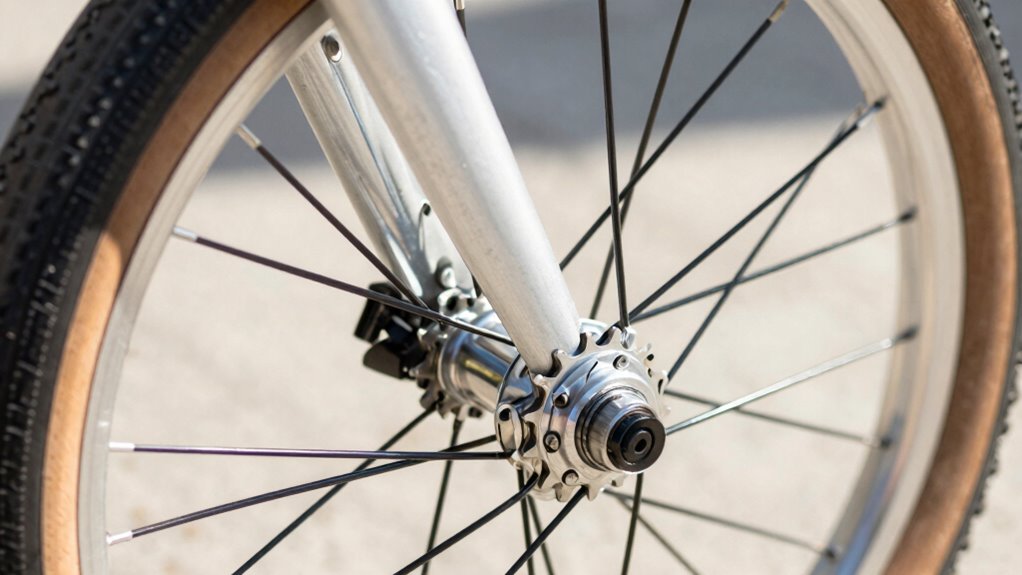
Installing a dynamo hub offers the benefit of powering lights and electronics without relying on batteries, but it also comes with some trade-offs. One major consideration is bike weight; dynamo hubs add extra grams, making your bike slightly heavier, which might affect handling on steep climbs or long rides. Additionally, the aesthetic impact is noticeable—dynamo hubs often have a bulkier look compared to traditional hubs, which can alter your bike’s clean, sleek appearance. Some riders find this change less appealing, especially on bikes with a minimalist style. While the power generation is reliable, you might also notice a slight increase in rolling resistance. Understanding bike dynamics can help you better evaluate how these changes might influence your riding experience. Moreover, dynamo hub efficiency varies depending on the model and setup, which can influence overall energy output and performance. Weighing these factors helps you decide if the convenience of free power outweighs the potential impact on your bike’s weight and look.
How Do Dynamo Hubs Affect Bike Performance?
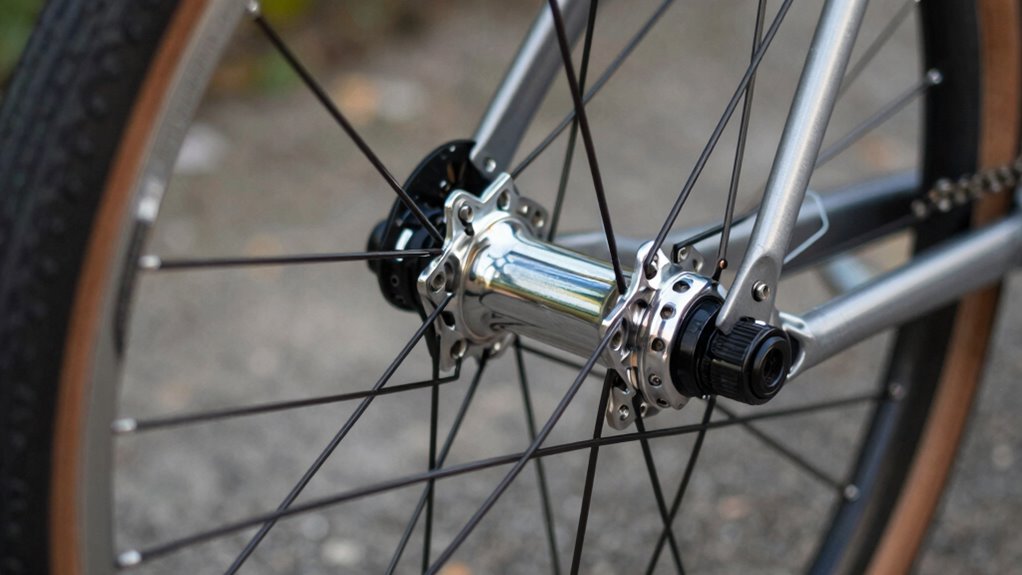
Dynamo hubs can influence your bike’s performance in several ways, primarily through their impact on rolling resistance and weight distribution. The added weight and components can slightly increase the bike’s overall weight, affecting acceleration and climbing. The aerodynamic impact is minimal but can matter at high speeds, as the hub’s shape may influence airflow. These factors can alter how smoothly and efficiently you ride.
- Feel the extra effort needed during sprints or climbs due to increased weight considerations.
- Notice subtle changes in handling and balance because of weight distribution shifts.
- Experience a slight decrease in aerodynamics, especially at higher speeds, impacting your top-end performance.
What Should You Consider Before Choosing a Dynamo Hub?

Before choosing a dynamo hub, you need to take into account if it fits your bike frame and meets your power needs. Think about how much maintenance it requires and whether it’s built to last in your riding conditions. Making these choices ensures you get a hub that works smoothly and suits your riding style.
Compatibility With Bike Frame
Choosing the right dynamo hub begins with ensuring it fits your bike’s frame properly. You need to take into account frame compatibility and mounting options to avoid headaches later. Make sure your bike’s fork and rear stays can accommodate the hub’s specifications. Some hubs are designed for specific axle standards or rim diameters, so check compatibility beforehand. The mounting options also matter—whether it’s bolt-on, quick-release, or thru-axle—so your setup matches your bike’s design.
- Feel confident knowing your hub is a perfect match for your bike’s frame, ensuring safe and reliable rides
- Avoid costly modifications or incompatible parts that could compromise your ride
- Enjoy peace of mind knowing your setup is optimized for durability and performance
Power Output Needs
Understanding your power output needs is essential when selecting a dynamo hub, as it determines how effectively your setup can charge devices or power lights. Consider your battery capacity: if you need to charge larger devices or run multiple accessories, you’ll require a higher power output. Conversely, for simple lighting, lower power levels may suffice. Power efficiency also plays a role; a more efficient hub delivers more usable energy with less energy lost during conversion. Assess how much energy your devices consume and match that to the hub’s capacity, ensuring you don’t overestimate or underestimate your needs. Choosing a hub with appropriate power output helps optimize performance, extend battery life, and prevent unnecessary strain on your system.
Maintenance And Durability
When selecting a dynamo hub, it’s essential to take into account its maintenance requirements and durability, as these factors directly impact your bike’s performance and lifespan. You’ll want a hub that withstands wear and tear without constant fuss. Consider the lubrication requirements—some hubs need regular lubrication to stay smooth, while others are low-maintenance. Durability is key; a sturdy hub resists damage from rough rides and long-term use.
- Feel confident knowing your hub will last through countless adventures without frequent repairs
- Avoid unexpected breakdowns caused by neglecting lubrication or ignoring wear and tear
- Save time and money by choosing a hub built for durability and minimal maintenance needs
Are There Alternatives to Dynamo Hubs?
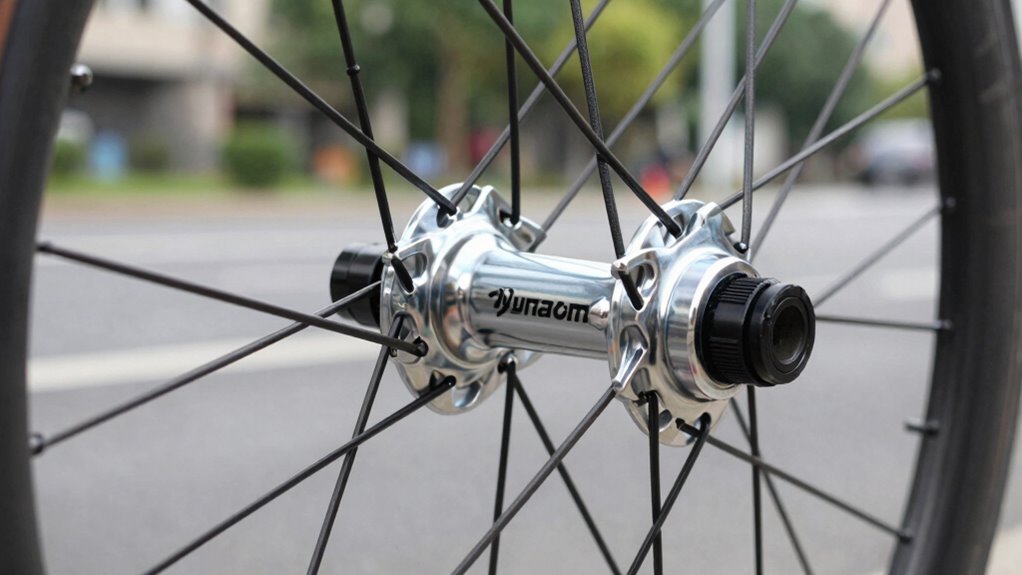
While dynamo hubs are popular for their integrated power generation, there are several alternatives if you’re looking for different options. One common alternative is using portable generators, which can provide reliable power without adding weight to your bike. These generators are versatile and can charge batteries or run small devices directly. Another option includes battery-based systems like solar chargers or portable power banks, which eliminate the mechanical complexity of hubs and offer silent operation. Some cyclists opt for hub motors combined with external power sources, especially on e-bikes. While these alternatives may lack the seamless integration of a dynamo hub, they often reduce maintenance and can deliver more consistent power output, making them suitable for long-distance rides or off-grid adventures.
Frequently Asked Questions
How Long Do Dynamo Hubs Typically Last Before Maintenance Is Needed?
Dynamo hubs typically last between 10,000 to 20,000 miles before needing maintenance. You should expect to check your hub’s condition regularly, especially if you ride frequently. Regular maintenance, like lubrication and cleaning, can extend its lifespan. Keep an eye out for unusual noise or resistance, which signals it’s time for servicing. With proper care, your dynamo hub can serve you reliably for many years.
Can Dynamo Hubs Be Used With Disc Brake Systems?
Think of your bike as a well-oiled machine—yes, dynamo hubs can be used with disc brake systems. They’re designed for brake compatibility, meaning they work seamlessly with disc brakes. Just like fitting a new engine into a car, ensuring disc compatibility is key. So, you won’t have to worry about switching wheels or sacrificing braking performance; your setup stays smooth and reliable.
Are There Specific Bike Types Best Suited for Dynamo Hubs?
You’ll find dynamo hubs suit touring, commuter, and adventure bikes best because of their bike compatibility and reliable power. Keep weight considerations in mind; dynamo hubs add weight, which may affect performance on lightweight racing bikes. For everyday riding or long-distance touring, they’re a smart choice. Just make certain your bike’s wheel size matches the hub specifications for seamless integration and peak performance.
How Do Weather Conditions Impact Dynamo Hub Performance?
Rain impact can cause your dynamo hub’s performance to dip, making lighting and charging less reliable. Cold temperatures may stiffen the internal components, reducing efficiency and increasing wear over time. Conversely, warmer weather generally keeps the hub functioning smoothly. So, you should expect weather conditions to influence your hub’s output, with rain and cold posing more significant challenges, while dry, moderate temperatures help maintain ideal performance.
What Is the Typical Cost Difference Between Dynamo and Traditional Hubs?
You’ll find that the cost comparison between dynamo and traditional hubs varies, with dynamo hubs generally costing $50 to $200 more upfront. Installation expenses are similar, but dynamo hubs may require extra effort or specialist help, adding to the overall cost. While the initial investment is higher, many riders consider it worthwhile for the free power they generate, especially for long-distance or commuter cyclists relying on integrated lighting.
Conclusion
Ultimately, choosing a dynamo hub means weighing convenience against potential drawbacks. Do you value having always-on power for lights and devices, or do you prefer a lighter, more responsive ride? While they offer “free” energy, the trade-offs can impact your bike’s performance and efficiency. Consider your riding style and priorities carefully—are the extra benefits worth the possible compromises? After all, isn’t your riding experience worth making the right choice?