
To optimize your recovery and cycling performance, focus on key sleep metrics like total duration, efficiency, and the stages of sleep—deep and REM phases are essential. Track your resting heart rate, heart rate variability, and breathing patterns for signs of fatigue or stress. Consistent sleep times and a good environment boost quality and impact your energy levels. Keep an eye on these metrics, and you’ll discover how small adjustments can make a big difference in your ride.

Get sports gear delivered free — and shop member deals
- Fast, free delivery on millions of items
- Access to Prime Big Deal Days deals on October 6–7
- Prime Video, Amazon Music and more included
Key Takeaways
- Track sleep duration and efficiency to optimize recovery and cycling performance.
- Monitor sleep stages and cycles, especially REM and deep sleep, for better muscle repair and mental clarity.
- Use HRV and stress levels to prevent overtraining and assess recovery readiness.
- Observe sleep latency and wake times to identify disturbances and improve sleep quality.
- Maintain consistent sleep routines and a conducive environment to enhance sleep quality and cycling endurance.
As an affiliate, we earn on qualifying purchases.
Total Sleep Duration
Getting enough sleep is essential for cyclists to perform at their best and recover properly. Total sleep duration directly impacts your energy levels and training progress. Tracking how much sleep you get each night helps identify patterns and areas for improvement. Your sleep environment plays a key role in ensuring you get enough rest—keep it cool, dark, and quiet. Dream analysis can sometimes reveal underlying stress or unresolved issues that affect your sleep duration. If you notice restless nights or insufficient sleep, adjusting your sleep environment or addressing dreams that disturb your rest can make a difference. Remember, consistently achieving adequate sleep duration supports muscle recovery, mental clarity, and overall performance, making it a necessary health benefit to monitor as part of your cycling routine. Monitoring sleep quality along with duration can further optimize your recovery and performance.
Sleep Efficiency

Sleep efficiency measures how much of your time in bed is actually spent sleeping, revealing your sleep quality. Better efficiency means more restorative rest, which can boost your cycling performance. Understanding this link helps you optimize recovery and stay at your best on the road. For cyclists seeking to improve their performance, tuning your sleep habits can be as impactful as modifying your bike. Adequate sleep efficiency also supports metabolism and overall health, further enhancing your athletic capabilities. Incorporating protective styling benefits like crochet styles for locs may encourage better sleep by reducing hair discomfort during rest. Additionally, maintaining consistent sleep routines can help safeguard your retirement income by ensuring you remain healthy and energetic for training and competitions.
Sleep Quality Indicators
Sleep efficiency is a key indicator of sleep quality that reflects how much time you actually spend asleep relative to the total time you spend in bed. When your sleep environment is ideal, it supports uninterrupted sleep and a healthy dream cycle. Poor sleep environment—noise, light, or uncomfortable bedding—can lower sleep efficiency, leaving you restless and fatigued. Tracking this metric helps you identify patterns and adjust your surroundings for better rest. A high sleep efficiency means you’re maximizing your sleep time, which is vital for recovery and overall cycling performance. Remember, quality sleep isn’t just about quantity; it’s about how well you sleep. Focus on your sleep environment, and you’ll notice improvements in your dream cycle and waking energy. Additionally, understanding how celebrity lifestyle insights influence relaxation techniques can inspire you to create a more restful space. Incorporating sleep hygiene practices can further enhance your sleep quality and efficiency, leading to better recovery and performance. Monitoring sleep cycles can also reveal disruptions that impact your rest quality, allowing for targeted adjustments. Furthermore, optimizing your sleep environment can mitigate external cybersecurity vulnerabilities, ensuring a secure and undisturbed rest.
Impact on Performance
When your sleep efficiency is high, your body recovers faster and your energy levels stay sustained throughout the day, directly boosting your cycling performance. Better sleep efficiency means you spend more time in restorative sleep stages, which helps repair muscles and replenish energy stores. Dream analysis can reveal whether unresolved stress or anxiety is disrupting your sleep, so addressing these factors improves efficiency. Additionally, optimizing your sleep environment—such as reducing noise, controlling light, and maintaining a cool temperature—can enhance your sleep quality. When your sleep environment supports uninterrupted rest, your sleep efficiency improves, leading to better recovery and performance on the bike. Data privacy challenges and the growing complexity of algorithms can also influence how sleep-tracking devices collect and store your personal data, emphasizing the need for trustworthy technology. Incorporating insights from industry transformations can also help you stay ahead in optimizing your recovery strategies. Furthermore, understanding cultural sleep habits can provide additional context for improving your sleep routines. Recognizing sleep tracking limitations is important, as some devices may not yet accurately measure all sleep stages or disruptions, which could impact your overall assessment.
Sleep Stages Breakdown
Understanding the different stages of sleep is essential for cyclists aiming to optimize recovery and performance. Sleep occurs in cycles, including light sleep, deep sleep, and REM phases, which collectively support physical and mental restoration. During the dream cycle, REM phases are especially important for memory and learning, helping you process daily experiences and prepare for upcoming rides. Recognizing how these stages fluctuate can help you improve sleep quality and, in turn, boost your cycling performance. Additionally, the contrast ratio of your sleep environment can influence the quality of your sleep stages. Maintaining a consistent sleep schedule can also promote healthier sleep cycles and enhance overall restorative benefits. Proper sleep hygiene practices can further optimize these stages, ensuring you wake up feeling refreshed and ready for your cycling pursuits. Being aware of factors like light exposure and temperature control can also impact your sleep quality and the duration of each sleep stage.
Resting Heart Rate During Sleep
Monitoring your resting heart rate during sleep offers valuable insights into your recovery and overall fitness. A lower, stable rate indicates good rest, while fluctuations can signal overtraining or stress. To optimize this metric, consider these factors:
Tracking your resting heart rate during sleep reveals recovery status and overall fitness.
- Ensure your sleep environment is cool, dark, and quiet to promote relaxation.
- Stick to consistent bedtime routines that wind down your mind and body.
- Avoid caffeine or heavy meals before bed, which can elevate your heart rate.
In addition, maintaining proper sleep hygiene can further enhance your sleep quality and recovery. Tracking these patterns helps you identify how well you’re recovering from cycling workouts. If your resting heart rate remains high or irregular, it might be time to adjust your sleep environment or routines. Prioritizing these small changes can lead to better sleep quality and improved athletic performance. Additionally, data processing speeds improvements in sleep tracking devices allow for more real-time insights, helping you make quicker adjustments to your routines. Incorporating proper recovery techniques such as stretching or relaxation exercises can further enhance your sleep quality and overall recovery process. Paying attention to skincare routines, like using exfoliating toners, can also support better skin health, which indirectly benefits your overall well-being and recovery.
Heart Rate Variability

Heart rate variability (HRV) offers valuable insights into your body’s stress recovery and overall resilience. Tracking HRV helps you understand how well your training is adapting and if you’re at risk of overtraining. Maintaining ideal HRV levels ensures you’re ready for your next ride without pushing too hard. Incorporating personalized workspace adjustments based on HRV data can further optimize your training routine. Selecting a dog name that matches your dog’s personality can enhance your training motivation and consistency.
Stress Recovery Indicator
Since stress recovery directly affects your overall performance, tracking your Heart Rate Variability (HRV) provides valuable insights into how well your body is recovering after rides. The Stress Recovery Indicator, based on HRV, helps gauge your mental resilience and readiness. Here’s what to look for:
- Higher HRV levels signal good recovery and strong mental resilience.
- Lower HRV indicates stress accumulation and slower recovery.
- Consistent monitoring helps identify patterns, so you know when you’re ready for intense rides or need rest.
Training Adaptation Insights
Tracking your Heart Rate Variability (HRV) offers direct insights into how your training fosters adaptation. A higher HRV typically indicates your body is recovering well and ready for more intense efforts. Conversely, a declining HRV suggests the need for rest or lighter training. To optimize HRV, consider your sleep environment—cool, dark, and quiet settings support better recovery. Dream analysis can also provide subtle clues about your sleep quality and stress levels, influencing your HRV trends. Consistently monitoring these metrics helps you understand how your body adapts to training stimuli, allowing you to fine-tune your cycling routine. By paying attention to both your sleep environment and dream patterns, you gain a clearer picture of your body’s readiness to perform and adapt effectively.
Overtraining Prevention
Monitoring your HRV is a key strategy to prevent overtraining and maintain ideal performance. A declining HRV signals your body may be under stress, making it essential to adjust your training. To support this, consider these factors:
- Nutritional factors: Proper nutrition, hydration, and supplements can influence HRV, helping your body recover efficiently.
- Ambient noise: Excessive noise can elevate stress levels, negatively impacting HRV and recovery.
- Rest environment: Creating a quiet, comfortable sleep space reduces disruptions and improves sleep quality, supporting HRV stability.
Tracking your HRV regularly helps you identify early signs of overtraining. Adjust your training intensity, prioritize rest, and pay attention to environmental and nutritional factors to stay in exemplary condition.
Sleep Latency and Wake Time
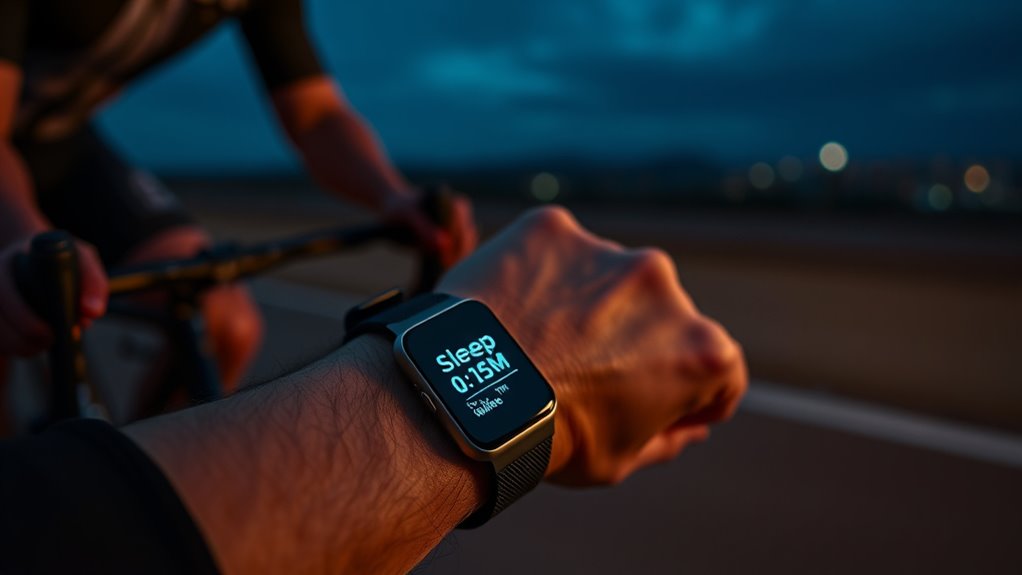
Understanding your sleep latency—the time it takes to fall asleep after going to bed—and wake time, the moment you get out of bed, is essential for optimizing your cycling performance. Sleep latency reveals how easily you transition into restful sleep; long durations may indicate stress or sleep disturbances. Wake time shows how well you’re recovering and resetting overnight. Consistently measuring these metrics helps identify patterns that could affect your energy levels and endurance. If your sleep latency is high, you might need to adjust your bedtime routine or reduce pre-sleep screen time. Short wake times suggest restful sleep, while frequent awakenings can impair recovery. Monitoring these metrics enables you to fine-tune your sleep habits, ensuring you’re well-rested and ready to perform at your best on your next ride.
Breathing Patterns and Oxygen Levels

Your breathing patterns and oxygen levels during sleep play a crucial role in your overall recovery and cycling performance. When breathing efficiently, your oxygen saturation stays stable, supporting muscle repair and energy restoration. Poor breathing efficiency can lead to decreased oxygen saturation, impairing recovery and endurance. To optimize this, focus on these key points:
- Monitor your oxygen saturation levels to detect dips that may indicate breathing issues.
- Maintain steady breathing patterns, avoiding irregularities like shallow or rapid breaths.
- Use sleep tracking devices to assess breathing efficiency and identify irregularities like apnea or hypopneas.
Sleep Consistency and Regularity

Consistent sleep schedules are essential for peak recovery and cycling performance. Maintaining good sleep consistency and regularity helps your body adapt, ensuring you get restorative rest night after night. When your sleep times fluctuate, your circadian rhythm becomes disrupted, leading to poorer sleep quality and increased fatigue. Prioritizing a set bedtime and wake time helps stabilize your internal clock, making it easier to fall asleep and wake refreshed. Tracking your sleep consistency reveals patterns that may interfere with recovery, allowing you to adjust your routine accordingly. Regular sleep habits promote better hormone regulation, mood, and energy levels—crucial for pushing your limits on the bike. Ultimately, sticking to a predictable sleep schedule enhances both your physical recovery and mental readiness for every ride.
Impact of Sleep on Recovery and Performance

When you prioritize regular sleep schedules, you set the stage for ideal recovery and peak performance on the bike. Good sleep impacts more than just rest; it enhances dream quality and supports dream enhancement, which can boost motivation and mental clarity. A proper sleep environment—dark, cool, and quiet—further improves sleep quality, helping your body repair faster. To optimize recovery and performance:
Prioritize consistent sleep to boost recovery, mental clarity, and overall cycling performance.
- Maintain consistent bedtimes to regulate your sleep cycles.
- Create a sleep environment that minimizes disruptions.
- Focus on quality sleep to support dream enhancement, aiding mental sharpness and motivation.
Conclusion
Tracking your sleep isn’t just about numbers—it’s about understanding how rest impacts your cycling. For example, if you notice lower heart rate variability after poor sleep, you might see decreased performance on your next ride. Prioritizing consistent, quality sleep helps your body recover faster and perform better. So, pay attention to these metrics; they’re your secret weapon for riding stronger and feeling fresher every day. Sleep smart, ride better.
Halloween Picks
halloween
As an affiliate, we earn on qualifying purchases.