Your e-bike range anxiety often starts with bad math because you tend to overestimate your battery’s capacity and overlook important factors like terrain, maintenance, and riding style. Many riders assume the manufacturer’s ideal range applies always, but actual distance varies due to terrain and environmental conditions. Ignoring these details leads to miscalculations and surprises during rides. If you want to better understand how these variables affect your range, there’s more to discover below.

Get sports gear delivered free with Prime
- Fast, free delivery on millions of items
- Prime Video, Amazon Music and more included
- Member-only deals all year
Key Takeaways
- Overestimating battery capacity without considering terrain and environmental factors leads to inaccurate range expectations.
- Ignoring battery efficiency variations causes riders to misjudge actual usable distance per charge.
- Relying solely on manufacturer’s ideal range figures neglects real-world riding conditions and maintenance impact.
- Failing to monitor and maintain battery health results in unexpected range drops and misinformed planning.
- Not accounting for terrain and riding style creates flawed math, increasing range anxiety and ride disruptions.
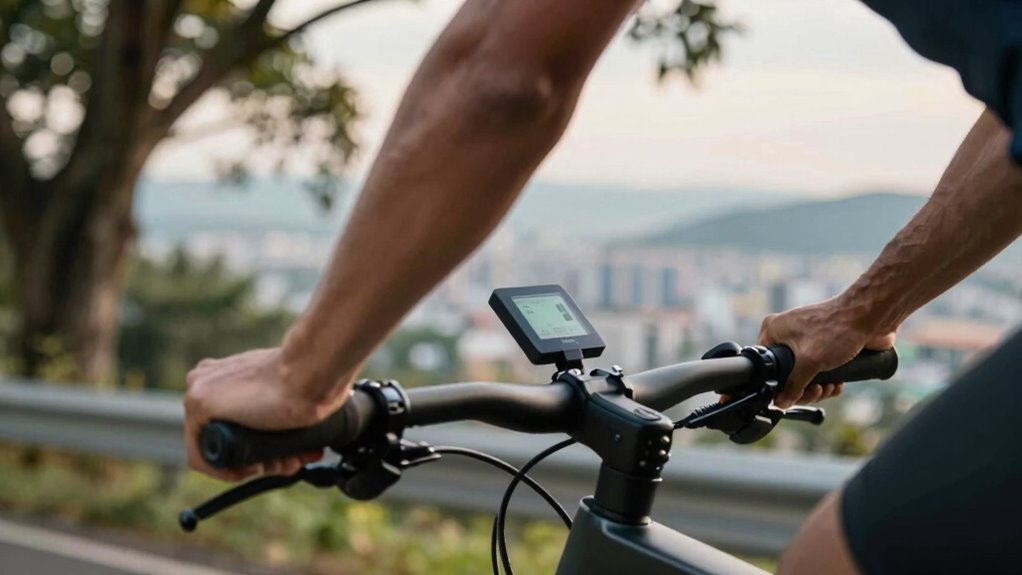
Many e-bike riders worry about running out of battery mid-ride, a concern known as range anxiety. This worry often stems from misconceptions about how far you can go on a single charge. A lot of riders assume that their e-bike’s range is fixed, but that’s rarely the case. Instead, it’s heavily influenced by factors like battery efficiency and terrain impact. Understanding these elements helps you make smarter estimates and avoid unnecessary anxiety during your rides.
Battery efficiency plays a major role in determining how far you can travel. It’s not just about the size of the battery but also how well it converts stored energy into usable power. High-quality batteries with better efficiency deliver more miles per charge, meaning you get a longer ride without needing to recharge. However, many riders overlook this and rely solely on manufacturer’s claimed range, which often assumes ideal conditions. The reality is that battery efficiency varies depending on how you ride and environmental factors, so your actual range can be *considerably* less. Additionally, battery health significantly impacts efficiency, and neglecting its maintenance can lead to unexpected range reductions. Regularly monitoring and maintaining your battery can help preserve its efficiency over time. Recognizing that battery performance can fluctuate based on usage conditions encourages more accurate planning. A comprehensive understanding of these factors can help you better anticipate your e-bike’s capabilities.
Battery efficiency, not just size, determines your actual e-bike range, which varies with riding style and environment.
Terrain impact is another critical element that many riders underestimate. Flat, smooth roads demand less energy from your e-bike, allowing you to go farther on a single charge. Conversely, hilly trails or rough terrains require more power, draining the battery faster than expected. When you plan your ride based purely on the stated range without considering terrain, you’re setting yourself up for disappointment. The mistake is assuming that your e-bike’s range remains consistent regardless of the route. Instead, you should factor in terrain impact by adjusting your expectations: steep inclines or uneven surfaces will cut into your range more than you might think. Route planning can help you optimize your ride and avoid surprises. A common mistake is doing bad math by ignoring these variables. For example, if you see a range of 50 miles and assume you’ll get exactly that, you’re ignoring how terrain and battery efficiency can reduce that number. If you’re riding hilly terrain, your actual range might be closer to 30 or 40 miles. Similarly, if your battery isn’t well-maintained or is old, its efficiency drops, further reducing your ride distance. Failing to account for these factors leads to overconfidence and, ultimately, range anxiety. Recognizing the dynamic nature of e-bike range can help you plan more effectively and enjoy a smoother ride.
As an affiliate, we earn on qualifying purchases.
Frequently Asked Questions
How Accurate Are E-Bike Range Estimates in Real-World Conditions?
E-bike range estimates can be somewhat accurate but often vary in real-world conditions. Battery calibration, which guarantees your battery’s readings are precise, plays a big role. Your user behavior, like pedal effort and speed, also impacts how far you go. Factors like terrain, wind, and load influence the range too. So, while estimates give a good idea, expect some variation based on how you ride and maintain your bike.
Do Weather Conditions Significantly Impact E-Bike Battery Performance?
Yes, weather conditions considerably impact your e-bike’s battery performance. Cold weather can reduce battery capacity due to battery degradation over time, limiting range. Similarly, extreme heat accelerates battery aging, affecting longevity and performance. Climate impact plays a key role in how well your battery performs in different conditions. To maintain ideal range, keep your battery stored in moderate temperatures and avoid exposing it to harsh weather whenever possible.
Can Riding Style Affect the Actual Range of an E-Bike?
Yes, your riding style can considerably affect your e-bike’s range. Using efficient riding techniques, like smooth acceleration and maintaining steady speeds, helps conserve battery life. Pedal assist settings also play a role; higher assist levels drain the battery faster, while lower levels extend your range. By adjusting your riding technique and pedal assist wisely, you can maximize your e-bike’s battery life and enjoy longer rides without worrying about running out of power.
How Does Terrain Influence E-Bike Battery Life?
Think of terrain variability as a wild river that shapes your e-bike’s journey. Uphill climbs drain your battery faster, like a thirsty traveler seeking water, while smooth paths conserve energy. Rough terrain accelerates battery degradation, shortening overall life, while gentle trails preserve it. So, your ride’s landscape directly impacts battery longevity, making it essential to choose routes wisely. Embrace varied terrains, but mind their toll on your e-bike’s power reserve.
Are There Ways to Improve an E-Bike’s Range Without Upgrades?
Yes, you can improve your e-bike’s range without upgrades by practicing smart riding techniques and focusing on battery conservation. Use smooth acceleration and gentle braking to reduce energy use. Maintain steady speeds and avoid frequent stops. Additionally, plan your routes to avoid steep hills and obstacles that drain the battery. These strategies help maximize your current battery capacity, giving you a longer ride without needing any hardware upgrades.
Conclusion
Don’t let bad math turn your e-bike adventure into a stormy sea of doubt. When you understand your bike’s true range and plan accordingly, you’ll sail smoothly, no matter the distance. Range anxiety is like a shadow—only as big as you let it. So, take control with the right calculations and enjoy the ride. After all, once you master the numbers, the open road becomes your playground, not a puzzle to solve.
Halloween Picks
halloween
As an affiliate, we earn on qualifying purchases.