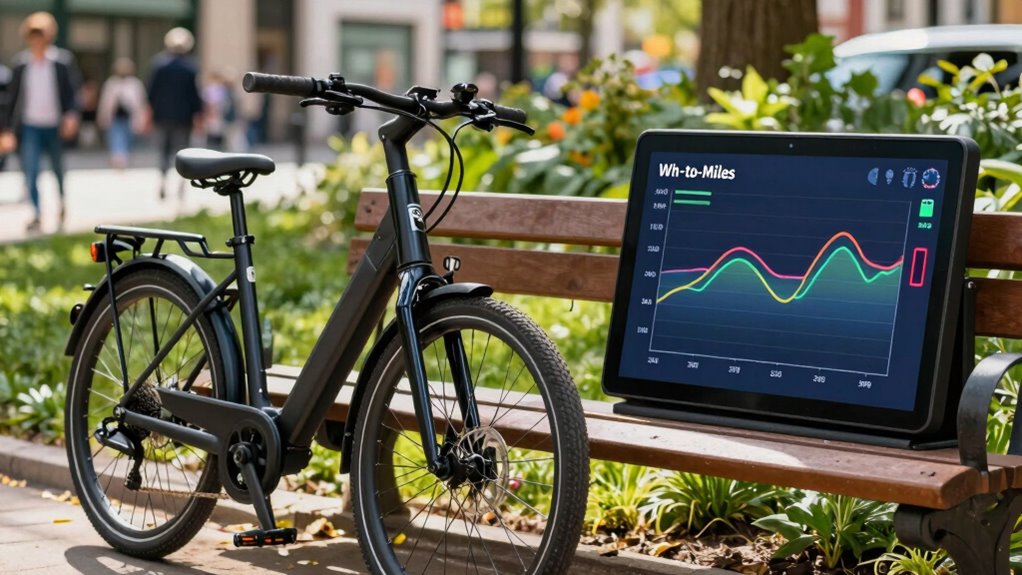

To accurately predict your e-bike’s range, multiply your battery’s watt-hours (Wh) by the average Wh used per mile. For example, if your battery is 360Wh and you use about 20Wh per mile, you can expect roughly 18 miles per charge. Factors like terrain, rider weight, and riding style affect this, so understanding your battery’s capacity helps you plan better. Keep exploring to learn how to refine this estimate for your rides.

Get sports gear delivered free with Prime
- Fast, free delivery on millions of items
- Prime Video, Amazon Music and more included
- Member-only deals all year
Key Takeaways
- Calculate your battery’s watt-hours (Wh) by multiplying voltage (V) by amp-hours (Ah).
- Determine your bike’s average Wh per mile through real-world riding data.
- Estimate range by dividing total battery Wh by the Wh/mile value.
- Adjust predictions for terrain, rider weight, and riding style for accuracy.
- Use consistent data and maintenance to improve the reliability of your Wh-to-miles estimate.
As an affiliate, we earn on qualifying purchases.
Why Knowing Your E-Bike Battery Capacity Matters
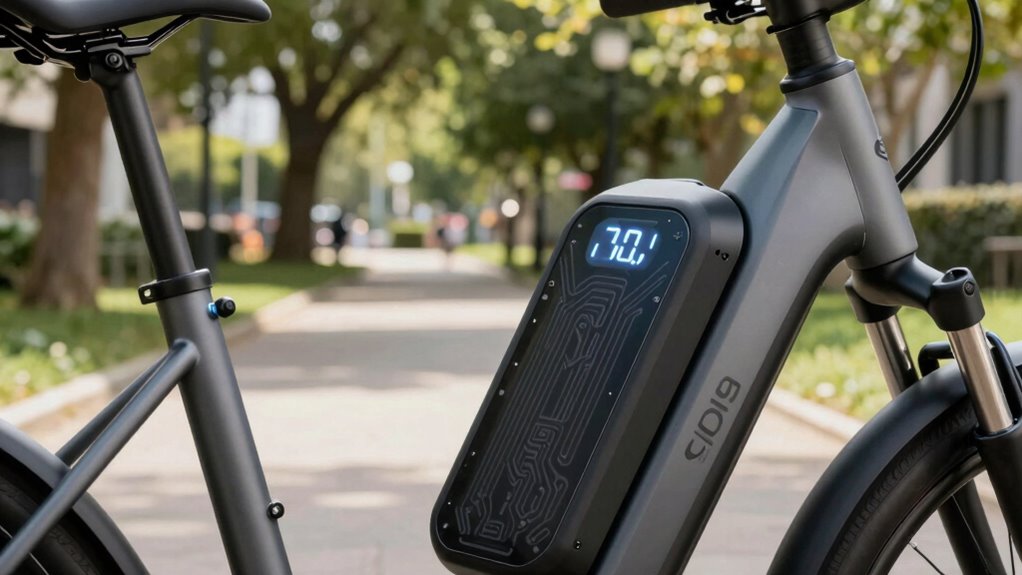
Understanding your e-bike’s battery capacity is essential because it directly impacts how far you can ride on a single charge. Knowing this helps you plan your trips better and maximize your riding experience. Proper charging habits are key to maintaining battery longevity, ensuring your battery stays healthy over time. If you frequently overcharge or let your battery fully drain, it can reduce its overall lifespan and performance. By understanding your battery capacity, you can avoid unnecessary charges and optimize your riding routines. This knowledge also allows you to accurately estimate how much energy you need for your typical routes, preventing surprises and ensuring dependable range. Additionally, understanding your battery capacity can help you identify quality and durability aspects of your e-bike’s components, which is crucial for long-term performance. Recognizing the impact of battery care on overall longevity empowers you to make smarter choices that preserve battery health and extend your e-bike’s usability. Being aware of the Wh-to-miles relationship also helps you compare different e-bike models effectively, especially when considering battery efficiency and overall value.
What Are Watt-Hours (Wh), and Why Are They Important?
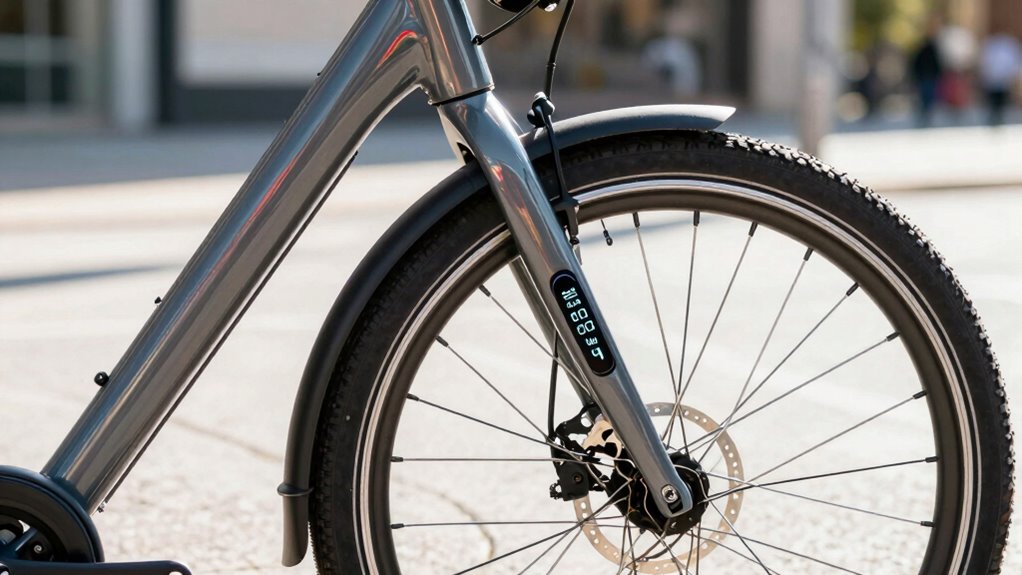
Have you ever wondered how to accurately compare e-bike batteries? Watt-hours (Wh) measure battery capacity, representing the total energy stored. They are essential because they help you understand an e-bike’s energy efficiency and range potential. To grasp this better, consider these points:
- Wh combines voltage and amp-hours to show total energy.
- A higher Wh indicates more stored energy and potentially longer range.
- Comparing Wh across batteries allows for a fair assessment of size and capacity.
- Knowing Wh helps you predict how far your e-bike can go on a single charge.
Key Factors That Affect Your E-Bike Range
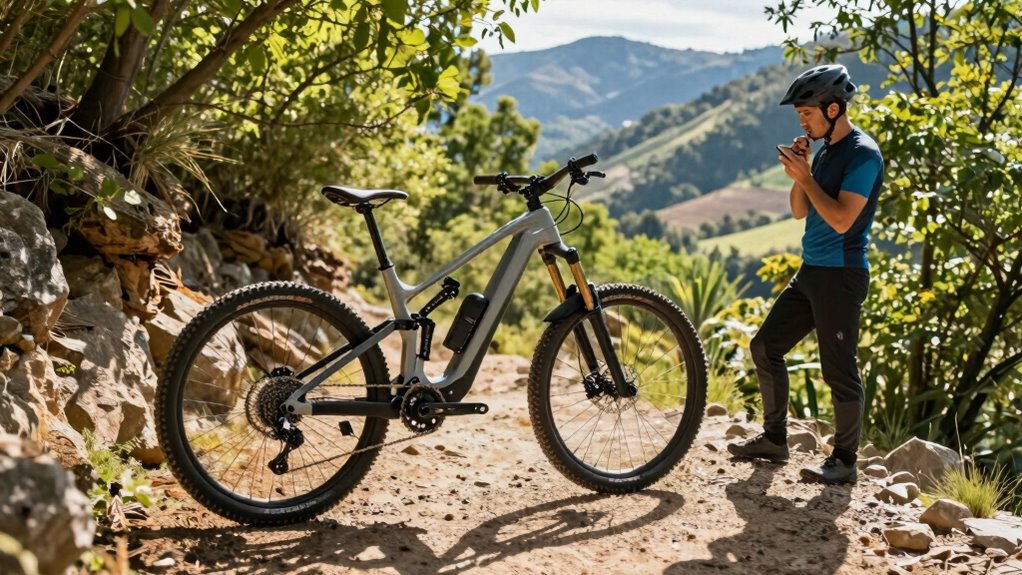
Several factors directly influence how far your e-bike can take you on a single charge. One key element is battery health; as your battery ages or degrades, its capacity diminishes, reducing range. Keeping it well-maintained and avoiding extreme temperatures helps preserve its performance. Proper battery maintenance can significantly extend your battery’s lifespan and efficiency. Additionally, understanding battery chemistry can help you optimize charging habits for better longevity. Terrain challenges also play a significant role—hilly or uneven terrains demand more power, draining your battery faster. Flat, smooth surfaces conserve energy, allowing for longer rides. Moreover, factors like rider weight, riding style, and tire pressure can impact range, but battery maintenance and terrain are the most critical. Recognizing these influences helps you better understand your e-bike’s limits and plan your trips accordingly. Proper route planning and routine maintenance can maximize your range and ensure a smoother ride. Using high-quality components can further improve efficiency and durability, ultimately extending your riding distance.
Understanding the Wh-to-Miles Formula for Range Estimation

To estimate your e-bike’s range, you need to understand how to calculate power consumption in watt-hours. Once you have that, you can apply the Wh-to-miles formula to predict how far you can go on a full charge. Let’s explore how to do both steps accurately. Additionally, considering factors like Free Floating can help optimize your riding experience and improve range predictions. Understanding the Youngster Choice can also influence how you manage your e-bike’s energy use for longer trips. Being aware of Battery Capacity is crucial for precise range calculations, as it directly impacts the total energy available.
Calculating Power Consumption
Understanding how much energy your e-bike consumes is essential for accurately estimating its range. To do this, you need to calculate your power consumption, which directly affects battery life and motor efficiency. Here’s how you can approach it:
- Measure the total watt-hours (Wh) used during a ride.
- Note the distance traveled in miles.
- Divide the Wh used by the miles to get Wh per mile.
- Use this value to predict range by dividing your battery’s total Wh by Wh per mile.
- Keep in mind that motor efficiency can vary based on riding conditions and maintenance, influencing your overall range.
This process helps you understand how your riding style impacts energy use, ensuring more precise range estimates. Remember, better motor efficiency and careful riding can extend your battery life and overall range.
Applying the Formula
Once you have your Wh per mile figure, applying the formula becomes straightforward. Simply divide your battery capacity (in Wh) by your energy consumption (Wh/mile). This calculation gives you an estimate of your e-bike’s range. To clarify, here’s a quick breakdown:
| Battery Capacity (Wh) | Energy Consumption (Wh/mile) | Estimated Range (miles) |
|---|---|---|
| 500 | 20 | 25 |
| 600 | 25 | 24 |
| 750 | 15 | 50 |
| 1000 | 30 | 33 |
| 400 | 10 | 40 |
Understanding energy efficiency is crucial for optimizing your e-bike experience and planning longer rides with confidence. Additionally, being aware of battery health can help maintain accurate range estimates over time.
How to Calculate Your Battery’s Watt-Hours (Wh)

To calculate your battery’s watt-hours, start by noting the voltage (V) and amperage (A) listed on the label. Multiply these two values to find the watt-hours (Wh), which indicates your battery’s energy capacity. This simple step helps you understand how much power your battery can store and use. Additionally, understanding battery safety considerations can help you maintain optimal performance and prevent potential hazards during use. Proper handling and adherence to safety guidelines are essential to ensure a safe riding experience. Being aware of passive voice detection can also improve your overall writing clarity. Knowing your battery’s energy capacity is crucial for range prediction, allowing you to better plan your rides and avoid unexpected shortages. Recognizing how local terrain and conditions affect your riding distance can further refine your estimates and improve your riding experience.
Calculating Voltage and Amperage
Calculating your battery’s watt-hours (Wh) involves multiplying its voltage (V) by its amperage (Ah). To do this effectively, focus on accurate voltage calculations and amperage measurement. Here are key steps:
- Check your battery’s voltage rating, usually listed on the label.
- Measure the amperage, often found in the battery specifications or through a multimeter.
- Multiply voltage (V) by amperage (Ah) to get watt-hours.
- Use this value to estimate your e-bike’s range more precisely. Understanding battery capacity and how it relates to watt-hours can help you optimize your riding experience.
- Recognizing water retention in aquatic exercises can enhance recovery and improve overall flexibility. Being aware of essential oils and their properties, such as anti-inflammatory effects, can also support your physical performance. Incorporating knowledge of water-resistant technology in your e-bike accessories can further enhance durability and reliability during rides in wet conditions.
- Properly assessing your battery’s watt-hours can help prevent over-discharge and extend the lifespan of your e-bike’s power source.
Converting to Watt-Hours
Understanding how to convert your battery’s voltage and amperage into watt-hours is essential for estimating your e-bike’s range accurately. Watt-hours (Wh) measure your battery’s energy capacity, reflecting its total energy density. To find this, multiply the voltage (V) by the amperage (Ah). Here’s a quick reference:
| Voltage (V) | Amperage (Ah) | Watt-Hours (Wh) |
|---|---|---|
| 36 | 10 | 360 |
| 48 | 15 | 720 |
| 52 | 14 | 728 |
| 36 | 12 | 432 |
Knowing your battery capacity in Wh helps predict range more accurately, as energy density varies between batteries. This conversion is a key step in understanding how far your e-bike can go on a single charge.
Using the Formula: Real-World Examples
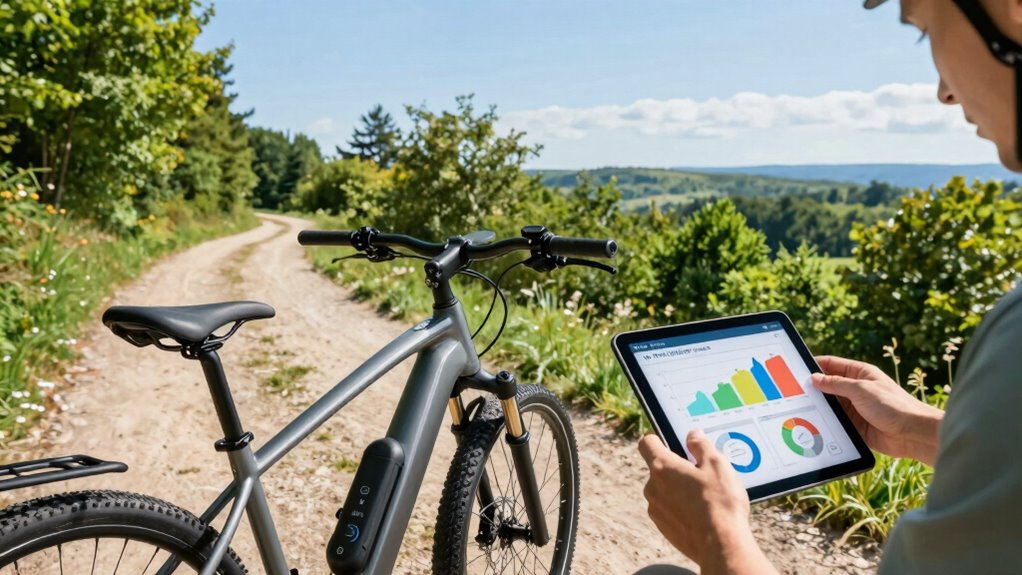
By applying the formula to real-world scenarios, you can see how different factors influence an e-bike’s range. For example, consider these situations:
- A well-maintained battery with good health extends range, even on hilly terrain.
- Consistent charging habits, like avoiding deep discharges, help preserve battery capacity.
- Riding at moderate speeds maximizes efficiency and range.
- Using assist levels wisely conserves energy and prevents unnecessary battery drain.
Understanding these factors lets you predict how your e-bike performs in daily use. If your battery health declines or you neglect proper charging habits, your range drops. By adjusting riding styles and maintaining your battery, you optimize your e-bike’s performance and get the most miles per charge.
Tips to Maximize Your E-Bike’s Range Per Charge
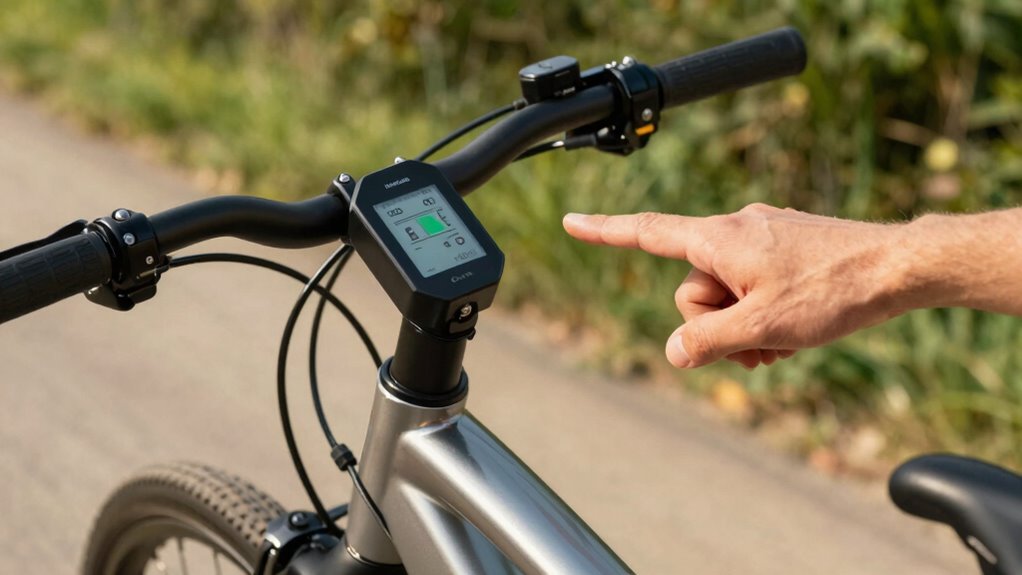
To get the most out of your e-bike’s battery, focus on proper tire inflation, which reduces rolling resistance. Using efficient riding techniques and maintaining ideal assist levels also help conserve power. Small adjustments in these areas can considerably extend your range per charge.
Proper Tire Inflation
Proper tire inflation is essential for maximizing your e-bike’s range because underinflated tires increase rolling resistance, making your motor work harder and draining your battery faster. Maintaining the correct tire pressure helps you ride more efficiently and reduces uneven tread wear. Here are four tips to optimize your tire inflation:
- Check your tire pressure regularly using a reliable gauge.
- Follow the manufacturer’s recommended psi for your tires.
- Avoid overinflating, which can cause uneven tread wear.
- Adjust pressure based on riding conditions and load for best performance.
Efficient Riding Techniques
Maximizing your e-bike’s range depends heavily on how efficiently you ride. To do this, focus on smooth acceleration and braking to reduce strain on the motor and conserve battery power. Keep your battery maintained by avoiding full discharges and storing it properly to preserve its health, which directly impacts range. Use moderate pedaling assistance instead of maximum levels to improve motor efficiency without draining the battery quickly. Maintaining a steady speed helps the motor operate more efficiently, reducing energy loss. Additionally, plan your routes to avoid steep climbs and stop-and-go traffic, which can increase power consumption. By practicing these riding techniques, you’ll extend each charge, making your e-bike more reliable and cost-effective over time.
Optimal Assist Levels
Choosing the right assist level is essential for extending your e-bike’s range. Higher assist levels drain your battery faster, reducing overall battery life per charge. To maximize your range, consider these tips:
- Use the lowest assist level necessary for comfort and control.
- Switch to higher assist only when tackling steep climbs or heavy loads.
- Monitor your battery gauge regularly to avoid unnecessary drain.
- Adjust assist levels based on terrain—use less power on flat surfaces, more on hills.
Common Mistakes When Estimating Your Range

One common mistake people make when estimating e-bike range is relying too heavily on ideal conditions and ignoring real-world variables. You might forget that factors like weather impact your battery’s performance and longevity. Poor battery maintenance can reduce capacity, leading to shorter rides. Additionally, riding in rain, wind, or extreme temperatures can drain your battery faster than expected. To understand these effects better, consider this table:
| Variable | Effect on Range |
|---|---|
| Battery maintenance | Maintains capacity, longer rides |
| Weather impact | Increases energy consumption |
| Terrain | Uphill drains more power |
| Assist level | Higher assist reduces range |
| Rider weight | Heavier riders use more energy |
Ignoring these factors skews your range estimates, leading to disappointment or unexpected stops.
When and How to Use the Formula for Planning Rides

To effectively plan your ride, you need to know when and how to apply the e-bike range prediction formula. Use it at the start of your planning to estimate if your route is feasible. Keep these tips in mind:
Plan your ride wisely by knowing when to apply the e-bike range prediction formula for accurate, stress-free trips.
- Check your battery maintenance before calculating; a well-maintained battery ensures accurate predictions.
- Consider motor efficiency, which can vary with terrain and riding style.
- Adjust the formula based on your typical riding conditions and recent battery performance.
- Use the prediction to set realistic expectations, avoiding overconfidence and conserving battery life.
Applying the formula helps you make smarter decisions and optimize your ride. Knowing when to use it ensures your e-bike’s range is maximized without surprises.
How to Improve Your E-Bike Range and Ride Longer

Improving your e-bike’s range requires a combination of smart riding habits and proper maintenance. Focus on battery maintenance by keeping it charged between 20% and 80%, avoiding full discharges, and storing it in a cool, dry place. Regularly check connections and clean contacts to guarantee optimal power flow. Enhancing motor efficiency is also essential; ride at steady speeds, avoid sudden accelerations, and reduce unnecessary weight on your bike. Proper tire inflation reduces rolling resistance, saving energy. Additionally, plan your routes to avoid steep climbs and high wind conditions when possible. By maintaining your battery and optimizing motor performance, you’ll extend your riding distances and get the most out of every charge.
Frequently Asked Questions
How Does Rider Weight Impact E-Bike Range?
Your rider weight directly impacts e-bike efficiency and range. Heavier riders put more strain on the motor and battery, causing the e-bike to use more energy per mile. As a result, increased rider weight usually decreases the overall range. To get the most out of your e-bike, keep your weight in mind and ride efficiently, knowing that lighter loads help extend your ride distance.
Do Different Terrains Affect the Wh-To-Miles Calculation?
While terrain variation can markedly reduce your e-bike’s range, it also accelerates battery degradation over time. Uphill climbs demand more watt-hours, decreasing miles per charge, whereas flat surfaces conserve energy. You might notice that rough terrain cuts your range faster than smooth roads, making the initial Wh-to-miles calculation less accurate in diverse conditions. So, adapting your expectations based on terrain helps you better estimate your e-bike’s true potential.
Can Weather Conditions Alter E-Bike Battery Performance?
Yes, weather conditions can alter your e-bike’s battery performance. Cold temperatures cause battery degradation, reducing capacity and range, while heat can lead to faster wear and potential overheating. Weather fluctuations impact how efficiently your battery operates, meaning you might see shorter distances on chilly or hot days. To get the most out of your ride, keep your battery protected from extreme temperatures and store it in a moderate environment.
How Often Should I Calibrate My E-Bike’s Range Estimate?
You should calibrate your e-bike’s range estimate every few months or after any significant ride. Regular calibration helps account for changes in battery health, ensuring your range predictions stay accurate. Keep in mind that factors like weather, terrain, and riding habits influence battery performance. By maintaining a consistent calibration schedule, you can better plan your rides and avoid surprises, maximizing your e-bike’s efficiency and longevity.
Are There Apps to Help Track and Predict My E-Bike’s Range?
Think of apps as your e-bike’s crystal ball, helping you see your ride’s future. Yes, many apps offer battery management and integrate seamlessly with your e-bike, tracking real-time data and predicting range based on your riding style. These tools turn guesswork into certainty, so you can plan longer trips without surprises. Download one compatible with your bike, and let technology keep you ahead of the battery drain.
Conclusion
Now that you’ve got the Wh-to-miles formula in your toolkit, you’re steering your e-bike adventures with confidence. Think of it as your trusty compass, guiding you through the ride’s twists and turns. With this knowledge, you’ll avoid dead-end surprises and ride farther on a single charge, like a bird soaring effortlessly across the sky. Embrace your newfound insight, and let your e-bike adventures unfold with the freedom and flair of a true explorer.
NFL season / tailgating Picks
team gear
As an affiliate, we earn on qualifying purchases.