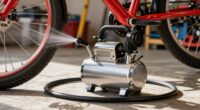
When choosing an electric bike pump, it’s tempting to rely on PSI or volume specs alone, but they can be misleading. PSI measures how firm your tire will be, affecting safety and comfort, while volume determines how quickly you can inflate your tires. Pump specs may highlight peak performance but don’t always account for real-world factors like battery drain or long-term reliability. To get the best ride, you’ll want to understand these differences better—keep going to find out more.

Get sports gear delivered free with Prime
- Fast, free delivery on millions of items
- Prime Video, Amazon Music and more included
- Member-only deals all year
Key Takeaways
- Pump specs often highlight maximum PSI without indicating real-world performance or sustained pressure capabilities.
- High PSI ratings can be misleading, as they don’t reflect the pump’s ability to efficiently deliver volume or maintain pressure.
- Volume per stroke affects inflation speed, especially in larger tires, which is often underemphasized in spec sheets.
- Manufacturers may list peak PSI or volume, but actual usability depends on factors like durability, battery efficiency, and user technique.
- Relying solely on spec sheet numbers can lead to overinflation or underinflation, compromising safety, comfort, and tire longevity.
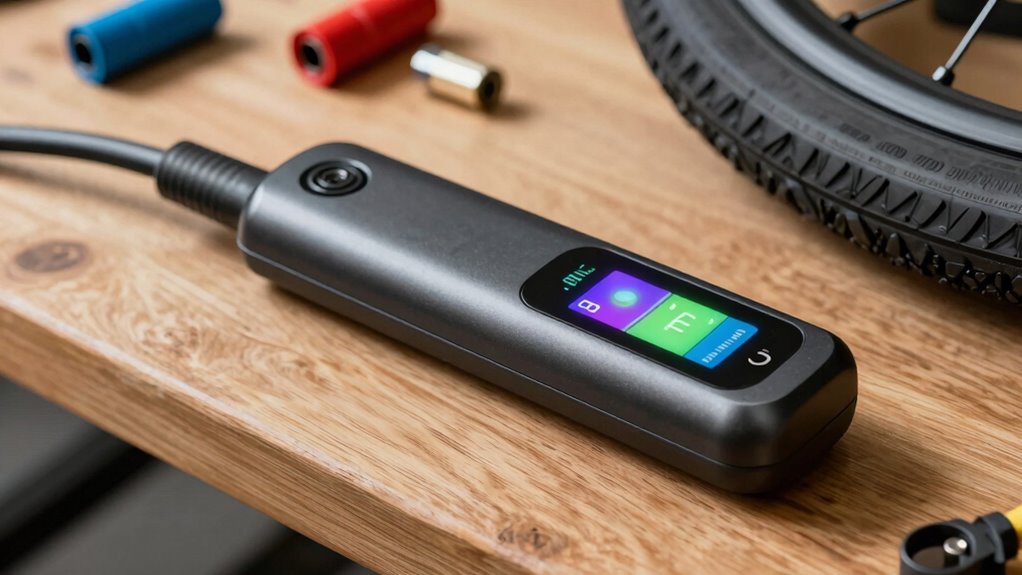
electric bike pump with high volume
As an affiliate, we earn on qualifying purchases.
As an affiliate, we earn on qualifying purchases.
What’s the Difference Between PSI and Volume When Inflating E-Bike Tires?
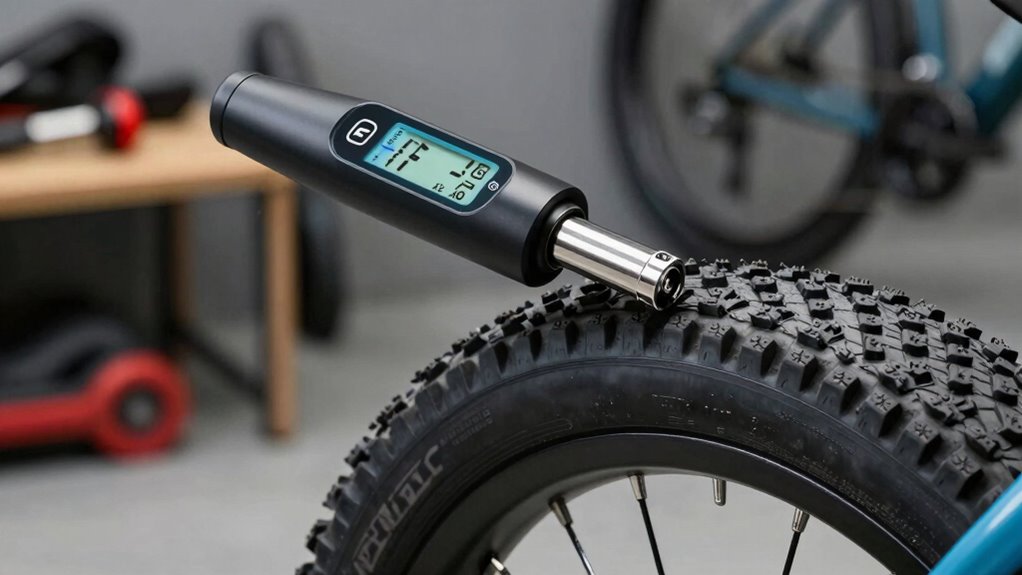
When inflating your e-bike tires, understanding the difference between PSI and volume is essential for safe and effective maintenance. Tire pressure, measured in PSI, determines how firm your tires are, affecting ride quality and safety. Volume refers to the amount of air your pump delivers with each stroke, which influences how quickly you reach the desired pressure. Pump compatibility matters because some pumps are designed to deliver higher volume at lower PSI, making inflation faster, while others focus on precise pressure control. Knowing this distinction helps you choose the right pump and avoid over- or under-inflating your tires. Proper understanding guarantees your e-bike performs ideally and prolongs tire life. Additionally, selecting a pump with the appropriate technology ensures accurate and efficient inflation. Always match your pump’s capabilities with your tire’s pressure requirements for best results. Being aware of pump types can help you optimize your inflation process and maintain optimal tire performance. Recognizing the performance characteristics of different pumps can further improve your inflation efficiency and safety, especially when considering natural airflow for energy-efficient pumping. Understanding airflow dynamics can also aid in selecting a pump that minimizes energy consumption during inflation.
Are Pump Specs Misleading for Electric Bike Tire Inflation?
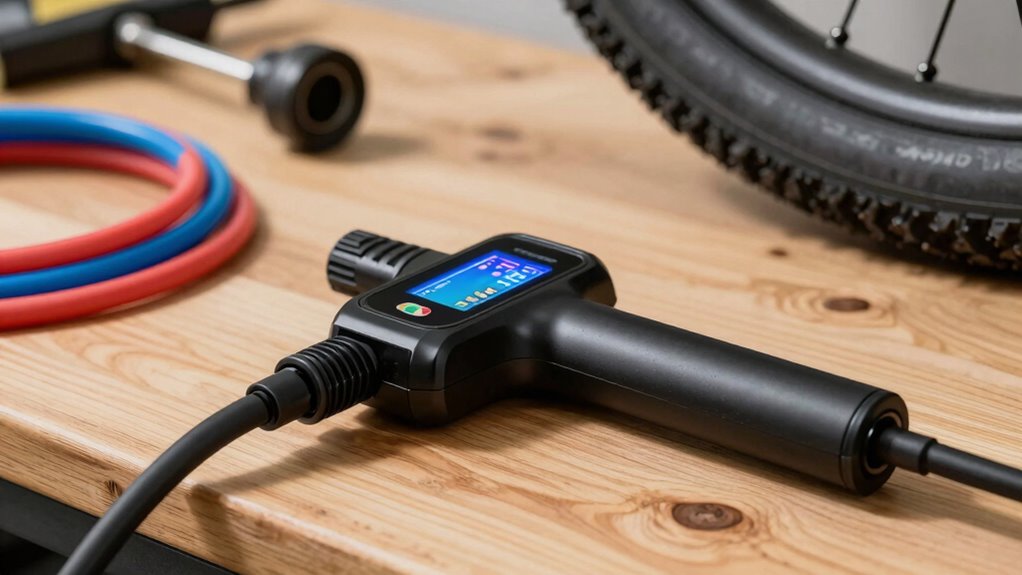
Pump specs can often be misleading when it comes to inflating e-bike tires because the numbers don’t always tell the full story. For example, a pump might boast high PSI ratings, but if it’s not designed for sustained use, your battery longevity suffers. A pump that quickly drains your battery reduces overall efficiency, forcing you to recharge more often. Additionally, motor efficiency impacts how well the pump performs under continuous use. A more efficient motor uses less power, helping preserve your battery life, especially during frequent inflation sessions. Understanding motor efficiency can help you select pumps that are both effective and gentle on your e-bike’s power system. When choosing a pump, consider not just the peak specs but also how it performs in real-world scenarios, ensuring it balances power with efficiency. Furthermore, evaluating performance durability ensures your pump remains reliable over time without unnecessarily taxing your battery. Paying attention to energy consumption helps you choose a pump that minimizes battery drain during operation. Incorporating a pump with energy-efficient design can further improve your overall e-bike experience by reducing unnecessary power use.
How Does PSI Impact Your Safety and Ride Comfort?
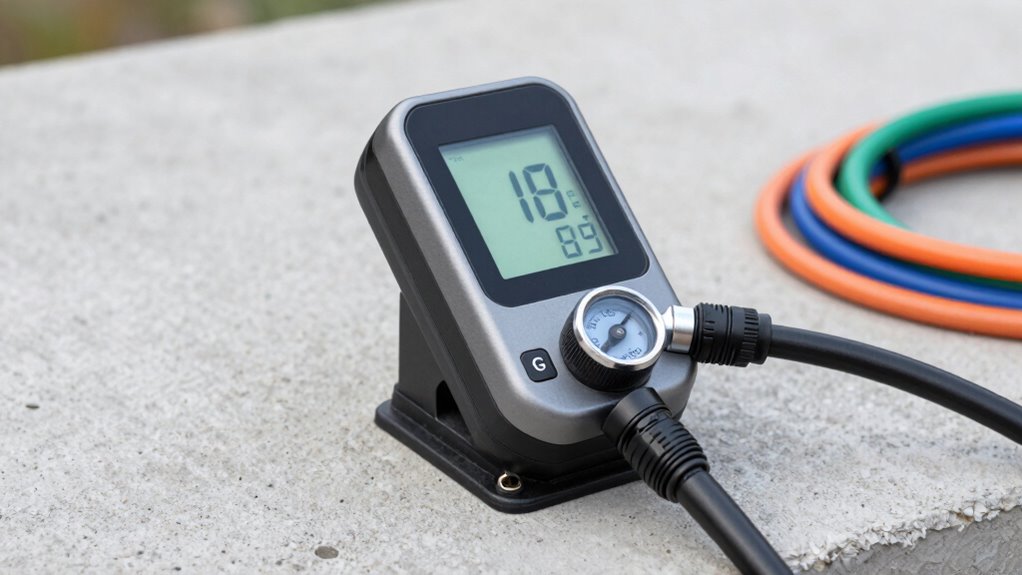
Maintaining the right PSI keeps your tires from puncturing or going flat, ensuring a safer ride. Overinflated tires can cause discomfort and reduce traction, making your ride less smooth. Correct PSI gives you better control, so you can ride confidently and comfortably. Additionally, understanding tire pressure standards helps you select the optimal PSI for your specific bike and riding conditions. Being aware of recommended PSI ranges tailored to your bike type and terrain can further improve your riding experience and safety. Knowing how tire pressure affects handling allows you to fine-tune your PSI for optimal performance and safety on different surfaces. Proper tire maintenance also plays a crucial role in maintaining consistent pressure and prolonging tire life, especially when considering inflation techniques to achieve the best results.
Proper Pressure Prevents Flats
Proper tire pressure is essential for preventing flats and ensuring a safe, smooth ride. When your tires are underinflated, you’re more prone to tire punctures, which can cause sudden flats. Maintaining the correct PSI helps distribute your weight evenly across the tire’s surface, reducing stress points that lead to damage. Using proper inflation techniques, such as checking tire pressure regularly with a reliable gauge, guarantees you stay within the recommended range. Overinflating can also cause issues, but underinflation is a common culprit for flats. Regularly monitoring PSI helps you catch potential problems early, keeping you riding safely and confidently. Additionally, understanding tire pressure and volume can help optimize your ride quality and longevity of your tires. Being aware of inverter generator features can also assist in choosing the right equipment for your needs, ensuring reliable power when you need it most. Staying informed about credit card security measures can also help protect your personal financial information while managing your equipment needs. Moreover, understanding proper inflation techniques can further enhance your riding experience by preventing unnecessary wear and tear on your tires.
Overinflation Causes Discomfort
When your bike tires are overinflated, you may notice increased discomfort during rides and a reduction in overall safety. Excessively high tire pressure makes the ride harsher, causing you to feel every bump and vibration. It also reduces your ability to absorb shocks, leading to fatigue. Proper tire pressure ensures a smooth, comfortable experience and better control. Maintaining optimal pressure can also help prevent sector performance issues that impact overall ride quality. Additionally, understanding the Law of Attraction principles can help you align your mindset with safe riding practices to enhance your overall cycling experience. Regularly checking your tire pressure and adjusting it according to your riding conditions can significantly improve your comfort and safety. Being aware of pressure fluctuations caused by temperature changes can further help you maintain safe and effective tire inflation. Recognizing inflation standards can guide you in setting the right PSI for different riding scenarios.
Accurate PSI Enhances Control
Having the correct PSI in your bike tires directly affects your control and safety on the road. When your tire pressure is accurate, you gain better control benefits, making steering and handling more responsive. Pressure accuracy ensures your tires grip the pavement properly, reducing the risk of slips or blowouts. Properly inflated tires absorb shocks effectively, improving ride comfort and stability. Underinflated or overinflated tires compromise your ability to maneuver confidently, increasing safety hazards. Maintaining the right PSI allows you to respond quickly to obstacles and changing road conditions. With precise pressure, you’ll notice improved control, confidence, and safety during every ride. Investing in an electric bike pump that provides accurate PSI helps you optimize your tire pressure for a smoother, safer cycling experience. Understanding tire pressure is crucial for maximizing your bike’s performance and safety.
Why Tire Volume Matters for Proper Inflation on Your E-Bike
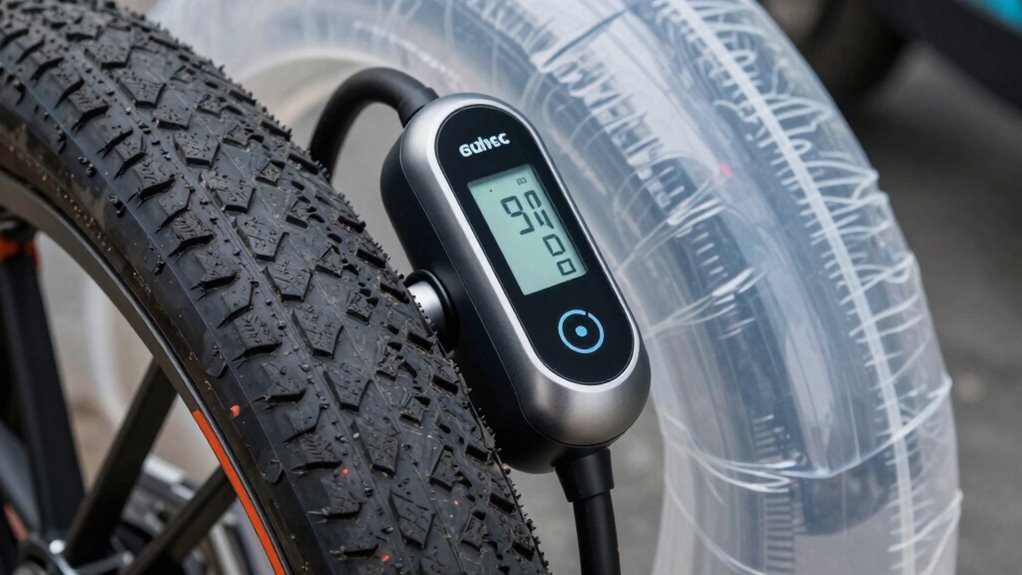
Understanding why tire volume matters is key to maintaining ideal inflation on your e-bike. Larger tires hold more air, so setting the correct tire pressure is essential for a smooth ride and safety. When inflating, consider these factors:
Proper tire volume awareness ensures safe, smooth, and efficient e-bike rides by maintaining correct inflation levels.
- Tire pressure distribution: Larger volumes require precise pressure adjustments to prevent under- or over-inflation.
- Pump accuracy: A pump that’s accurate ensures you reach the right volume, not just the target PSI.
- Volume impact: The bigger the tire, the more volume you need to fill, making correct pressure indispensable for peak performance and comfort.
Ignoring tire volume can lead to poor handling or faster tire wear. Proper understanding ensures you inflate correctly, maximizing your e-bike’s efficiency and safety.
How to Choose the Best Pump for Your E-Bike Needs
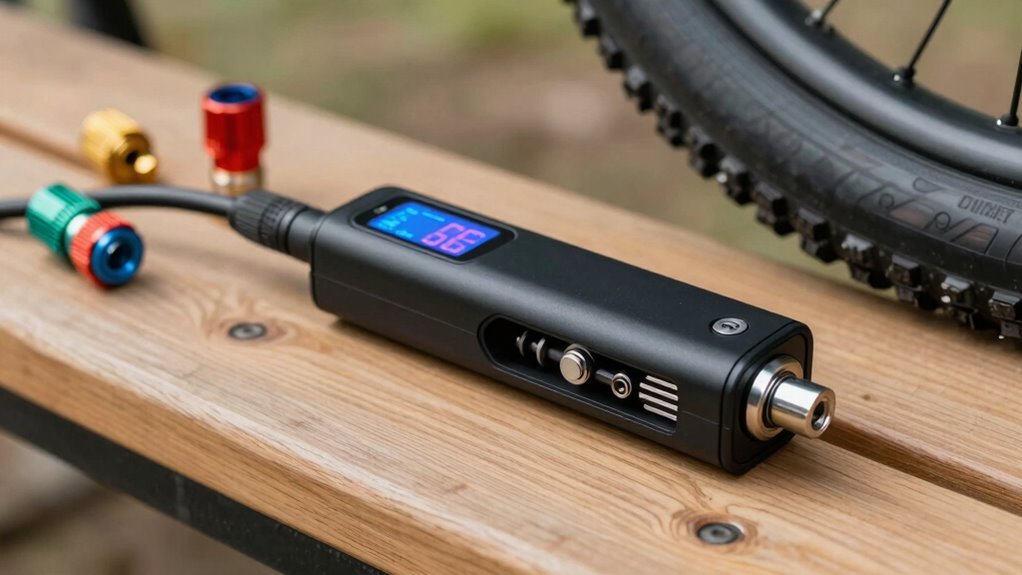
Choosing the right pump for your e-bike starts with understanding your tire size and inflation needs. First, check your tire sidewall for size and pressure recommendations. Then, consider battery compatibility—some pumps are electric and need to match your e-bike’s battery system. If you’re opting for a manual pump, ensure it’s sturdy enough to handle larger volumes efficiently. Motor power also matters; a powerful motor can inflate tires faster and more easily, especially for larger or high-pressure tires. Look for pumps with adjustable pressure settings to prevent over-inflation. Whether you choose a portable hand pump or an electric model, matching the pump’s capabilities with your tire specifications, battery compatibility, and riding style guarantees safe, accurate inflation every time.
Common Mistakes When Inflating E-Bike Tires and How to Avoid Them
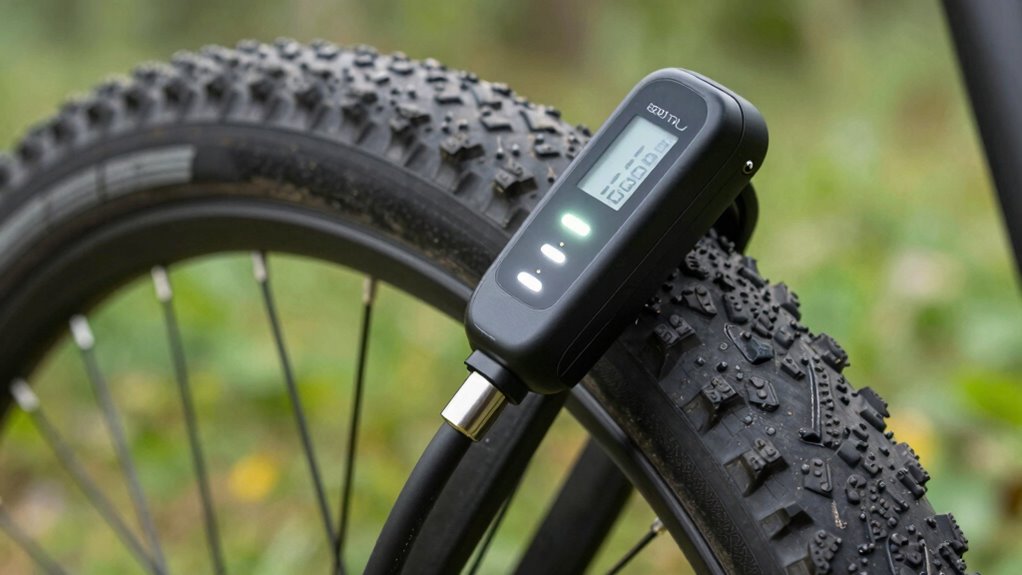
Inflating your e-bike tires correctly is key to ensuring safety and ideal performance, but it’s easy to make mistakes that can compromise both. Common errors include ignoring the recommended tire pressure, using improper inflation techniques, and rushing the process.
Properly inflating your e-bike tires is essential for safety and performance—avoid common mistakes like ignoring recommended pressure and rushing.
To avoid these pitfalls:
- Never guess the tire pressure—always check the manufacturer’s recommended PSI.
- Use steady, controlled inflation techniques to prevent over- or under-inflation.
- Avoid rushing—take your time to ensure even, accurate inflation for optimal ride quality.
Failing to follow proper inflation techniques or ignoring tire pressure guidelines can lead to poor handling, increased wear, or flats. Staying attentive to these details will keep your e-bike performing safely and efficiently.
Tips for Inflating E-Bike Tires Correctly for Optimal Performance
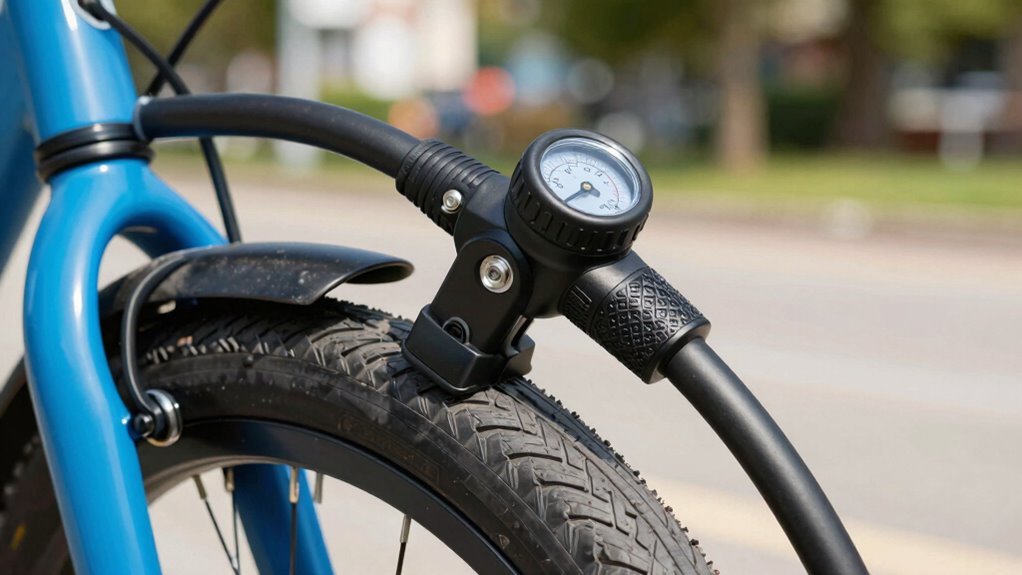
Getting your e-bike tires inflated correctly is essential for maximizing performance and safety. To achieve this, always check the recommended tire pressure printed on the sidewall. Use a pump with good accuracy to avoid over- or under-inflating. Rely on a pump that provides precise pressure readings and can hold steady during inflation. Before starting, verify the pump’s gauge for accuracy or use a separate, reliable pressure gauge. Inflate slowly and monitor the pressure as you go, stopping once you reach the recommended PSI. Remember, different riding conditions may require slight adjustments, but sticking close to the manufacturer’s specifications ensures ideal grip, efficiency, and comfort. Proper inflation with accurate pump readings keeps your e-bike running smoothly and safely.
What Features Should You Look for in an E-Bike Pump? Balancing PSI and Volume
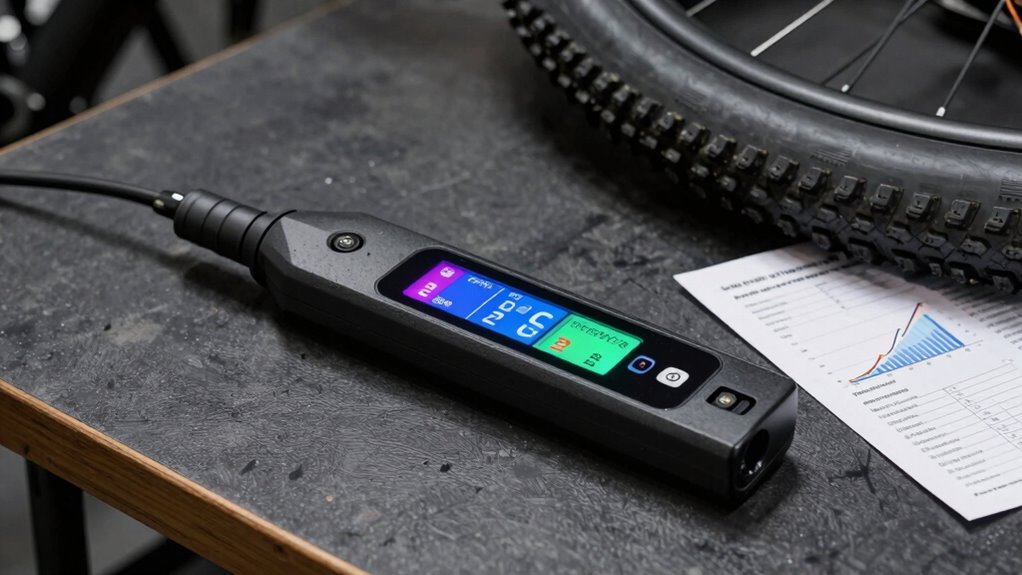
When selecting an e-bike pump, understanding how PSI and volume work together can make a big difference in your riding experience. You want a pump that balances high PSI for precise tire sealing and enough volume to inflate quickly. Look for a pump with these features:
- Adjustable pressure settings – Ensures accurate PSI for different tires.
- Robust build and pump durability – Handles frequent use without breaking down.
- Efficient airflow capacity – Reduces inflation time, especially for larger volumes.
A pump with these features helps you maintain proper tire pressure, optimize tire sealing, and withstand frequent use. Balancing PSI and volume guarantees you get reliable performance, saving you time and hassle on the road or trail.
Frequently Asked Questions
How Often Should I Check My E-Bike Tire Pressure?
You should check your e-bike tire pressure at least once a month to maintain ideal performance. Regularly inspect your tires for proper PSI, especially if you notice uneven wear or a change in ride quality. Also, keep an eye on tread depth and consider tire rotation if you see uneven wear. Properly inflated tires help prevent flats, improve range, and ensure a smoother ride.
Does Temperature Affect Tire Pressure Readings?
Did you know that temperature fluctuations can change your tire pressure by up to 3%? Yes, temperature affects pressure stability; as it drops, your tire pressure decreases, and it rises with heat. You should check your e-bike tire pressure regularly, especially in extreme weather. Keeping an eye on temperature changes helps maintain ideal pressure, ensuring a safer, more efficient ride. Always adjust your pressure accordingly for the best performance.
Can Over-Inflation Damage My E-Bike Tires?
Yes, over-inflation can damage your e-bike tires by compromising tire durability and risking blowouts. When you inflate beyond the recommended PSI, the tire becomes more prone to punctures, sidewall damage, and reduced lifespan. To guarantee inflation safety, always follow the manufacturer’s suggested PSI and avoid exceeding it. Properly inflated tires provide the best performance, safety, and longevity for your e-bike, preventing costly repairs and accidents.
Are Digital Pumps More Accurate Than Manual Ones?
Digital pumps are way more accurate than manual ones, often down to the tiniest PSI detail, making your inflating process feel like a walk in the park. You’ll get digital accuracy with precise readings, unlike manual reliability, which depends on your skill and estimation. If you want perfect tire pressure every time, digital pumps give you the edge, eliminating guesswork and ensuring your ride is always ideal.
What’s the Recommended PSI Range for Different Terrain Types?
For different terrains, you should set your bike’s pressure within specific ranges to adapt to terrain variation. For smooth pavements, aim for a higher PSI around 60-80 to reduce pressure fluctuation and improve efficiency. On rough trails, lower the PSI to about 30-50 to enhance shock absorption and traction. Adjustments help with terrain adaptation, minimizing pressure fluctuation, and ensuring a comfortable ride. Always check your bike’s recommended PSI for ideal performance.
Conclusion
Understanding the difference between PSI and volume is like having the keys to your bike’s performance. Don’t be fooled by misleading specs—know what to look for, and you’ll steer clear of flats and ride smoother than ever. Think of your pump as a trusty sidekick, balancing power and precision. Mastering proper inflation keeps your e-bike humming along happily, turning every ride into a breeze instead of a battle against under- or over-inflated tires.
Halloween Picks
halloween
As an affiliate, we earn on qualifying purchases.