
As you use e-scooters and e-bikes, you increase demand on local electrical grids, especially during peak hours when many charge their devices at home. This surge can strain infrastructure, cause fluctuations, and potentially lead to instability or higher energy costs. Investing in smart charging solutions and renewable energy sources can help manage these impacts effectively. If you’re interested, there’s more to learn about how cities and systems are adapting to support micromobility’s growth.
Key Takeaways
- Increased charging demand from e-scooters and e-bikes strains local electrical grids, especially during peak evening hours.
- Widespread charging during high-demand periods can cause grid instability and reliance on less efficient peaking power plants.
- Integration of smart charging and renewable energy sources helps optimize load distribution and reduce environmental impact.
- Urban infrastructure investments are needed to accommodate growing micromobility energy needs without overloading existing grids.
- User behavior, such as charging during off-peak hours, plays a vital role in mitigating grid stress and supporting sustainability.

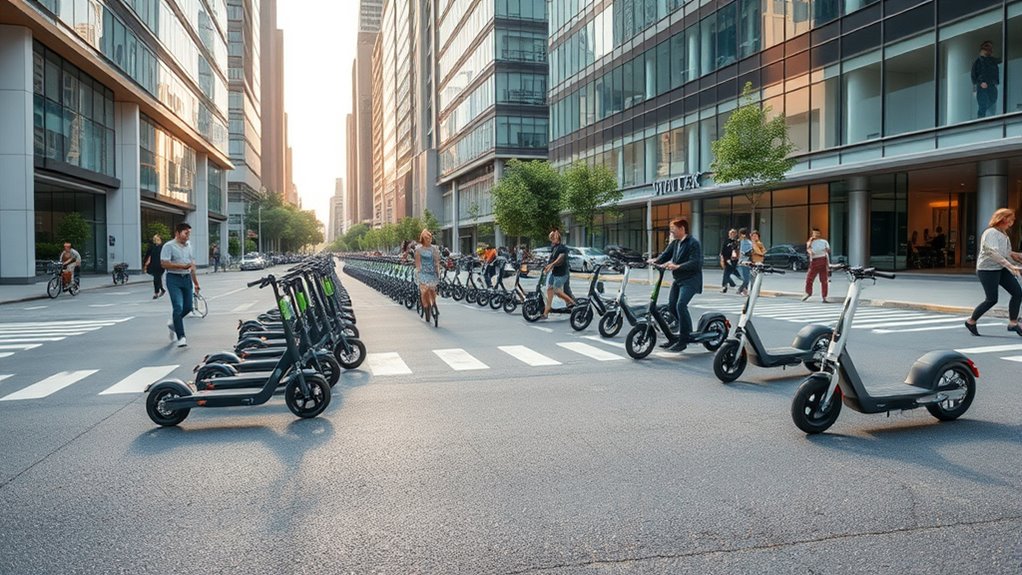
Have you ever wondered how the rise of micromobility options like e-scooters and e-bikes is reshaping urban infrastructure? These small, electric vehicles have become a common sight in many cities, offering a convenient way to navigate dense areas. But their proliferation isn’t just changing how people move—it’s also impacting the electrical grid. As more users adopt these vehicles, the demand for charging infrastructure increases. You might not realize it, but the way these vehicles are charged directly influences energy consumption patterns across the city. When you plug in your e-scooter or bike at charging stations or at home, that electricity draw adds up, especially during peak hours. This surge can strain local grids, especially if many users charge simultaneously, causing fluctuations in supply and demand.
Charging e-scooters and e-bikes during peak hours strains city grids and impacts energy patterns.
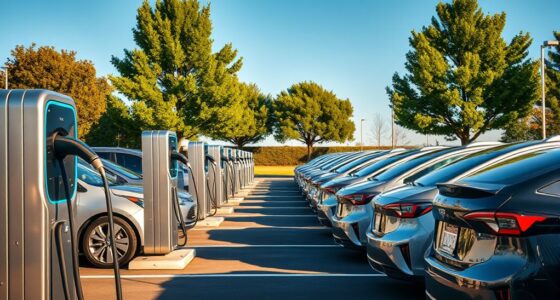
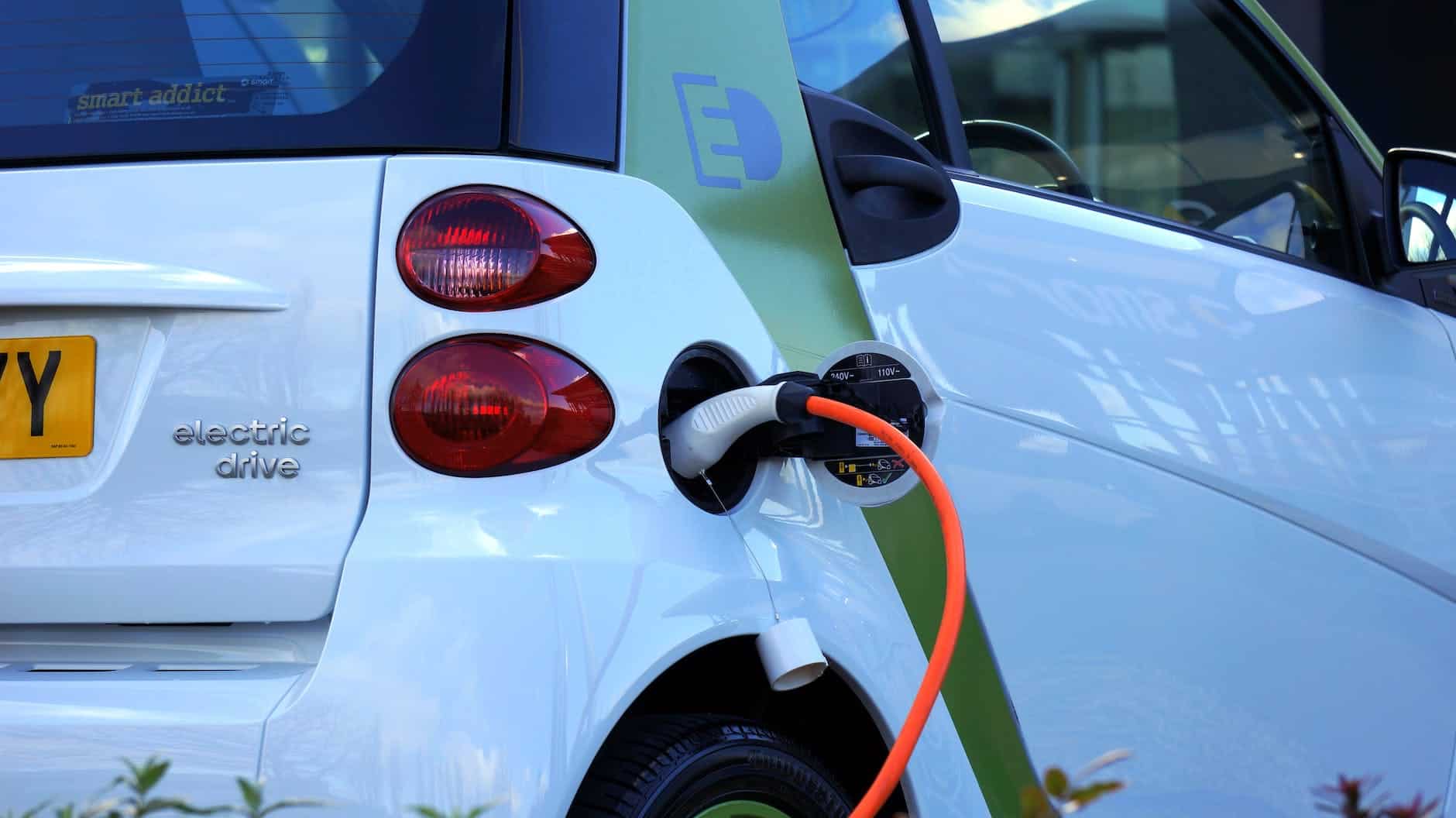
The development of dedicated charging infrastructure is key to managing this new load. Cities are investing in public charging stations, often installing fast chargers in strategic locations, to accommodate growing numbers of micromobility users. These stations need to be carefully integrated into existing electrical systems to avoid overburdening the grid. If not planned properly, increased energy consumption from widespread charging could lead to higher operational costs and potential reliability issues. For example, during evening hours when many people return home and plug in their vehicles, the grid experiences a spike in energy demand. This can lead to increased reliance on peaking power plants, which are often less efficient and more polluting.
To address these challenges, some cities are exploring smarter charging solutions. These systems can optimize when and how vehicles are charged, shifting energy use to off-peak hours and reducing grid stress. You might also see incentives encouraging users to charge during times of low demand, helping balance the load. Additionally, integrating renewable energy sources into the grid can lessen the environmental impact of increased energy consumption. Solar-powered charging stations, for instance, provide clean energy directly to micromobility devices, reducing reliance on fossil fuels. Furthermore, the electric grid must evolve to support the increased load from widespread micromobility charging, requiring investments in grid modernization and energy storage.
Ultimately, the growth of micromobility is a double-edged sword for urban energy systems. While it promotes sustainable transportation, it also demands a more resilient, adaptable electrical grid. As a user, you can contribute by being mindful of charging times and supporting infrastructure upgrades. For cities and utilities, planning for the increased energy needs and developing efficient, scalable charging infrastructure is essential. This way, the grid can support the evolving landscape of urban mobility without compromising reliability or sustainability.
Frequently Asked Questions
How Do Micromobility Devices Influence Urban Energy Consumption?
Micromobility devices boost your urban energy efficiency by providing a low-energy transportation option. When you choose e-scooters or bikes, you reduce transportation emissions and lessen the load on power grids. This shift helps cut down overall energy consumption in cities, making your commute more eco-friendly. By embracing micromobility, you contribute to cleaner air and a more sustainable urban environment, promoting efficient use of energy resources.
What Safety Measures Are Recommended for Integrating Micromobility Into Grids?
You should implement safety measures like installing protective barriers along busy routes to shield riders from traffic. Clearly visible signage and markings help guide users and alert drivers, reducing accidents. Consider designated lanes for micromobility devices to create a safer environment. Regularly maintain these features to guarantee effectiveness. Educate users about safety protocols, emphasizing the importance of adhering to signage and markings for everyone’s protection.
How Can Grid Operators Monitor Micromobility Charging Patterns Effectively?
Imagine balancing a busy city street and a quiet charging station—it’s a challenge you can master with real-time data from smart sensors. You must install these sensors at key charging spots, enabling you to monitor micromobility charging patterns continuously. This way, you can quickly identify peak usage times, optimize grid loads, and guarantee efficient energy distribution, keeping everything running smoothly without surprises.
What Are the Long-Term Environmental Impacts of Widespread Micromobility Use?
Widespread micromobility use can considerably reduce your environmental footprint by decreasing reliance on fossil-fuel vehicles. Over time, it promotes sustainable infrastructure, encouraging cities to develop bike lanes and charging stations that support eco-friendly transportation. As you adopt micromobility options, you help lower emissions and congestion, fostering healthier urban environments. However, consider the production and disposal impacts of batteries and vehicles to guarantee the long-term sustainability of this shift.
How Do Weather Conditions Affect the Grid Impacts of Micromobility?
Weather variability substantially impacts the grid effects of micromobility, especially during seasonal charging. You’ll notice increased energy demand in colder months as batteries need more power to operate efficiently, straining the grid. Conversely, mild weather reduces charging needs. Extreme weather can also damage infrastructure, leading to disruptions. Planning for seasonal charging and weather-related demand fluctuations helps balance the grid and guarantees reliable micromobility services year-round.
Conclusion
Understanding the grid impacts of micromobility is like steering a delicate dance—each move ripples through the system. By embracing innovative solutions and adaptive planning, you can turn potential chaos into harmony. As you integrate these tiny vehicles into your urban rhythm, remember that your choices shape the city’s future, guiding it toward a sustainable, resilient path. Together, you hold the power to transform a tangled web into a well-orchestrated symphony of mobility.