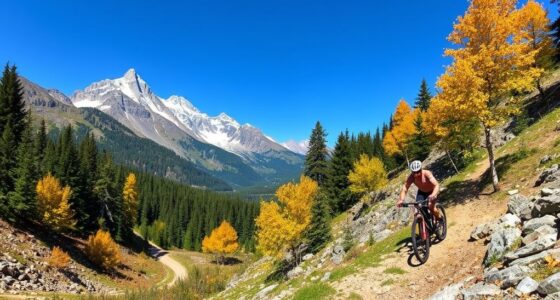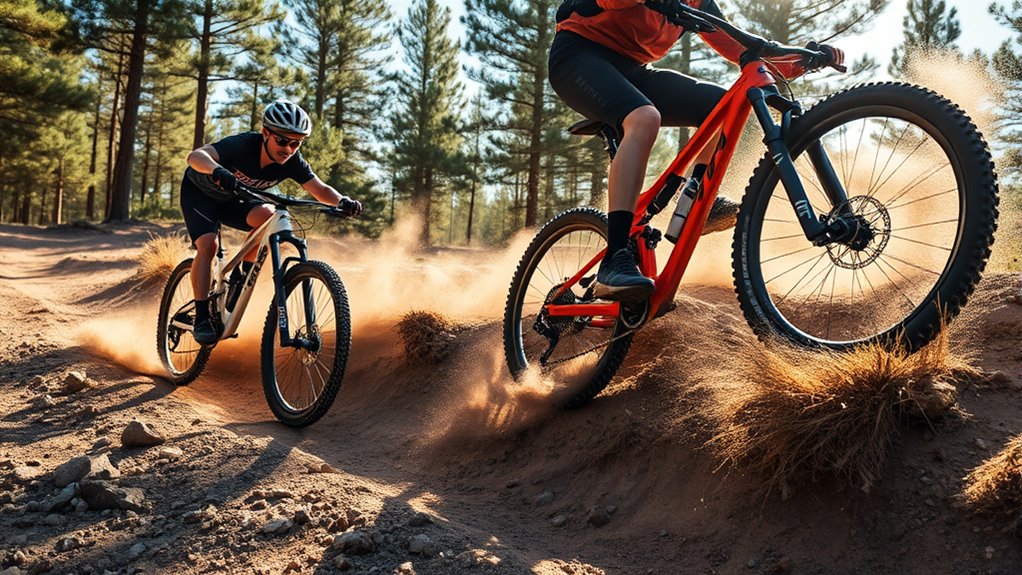

If you prioritize simplicity, lower maintenance, and are riding smoother or less rugged trails, a hardtail is a great choice, offering better power transfer and lightweight handling. On rougher, rocky terrain where comfort and control are essential, a full-suspension bike absorbs shocks better and reduces fatigue. Your riding style and trail conditions influence which bike suits you best. Want to discover more about how these bikes compare for your adventures? Keep exploring to find out more.

Get sports gear delivered free with Prime
- Fast, free delivery on millions of items
- Prime Video, Amazon Music and more included
- Member-only deals all year
Key Takeaways
- Hardtails are simpler, lighter, and easier to maintain, ideal for smoother trails and casual riding.
- Full-suspension bikes offer better shock absorption and control on rough, technical terrain.
- Hardtails provide efficient power transfer and are more cost-effective with lower maintenance needs.
- Full-suspension bikes reduce rider fatigue and enhance comfort on rocky or uneven trails.
- The choice depends on terrain type, riding style, and preference for simplicity versus advanced performance.
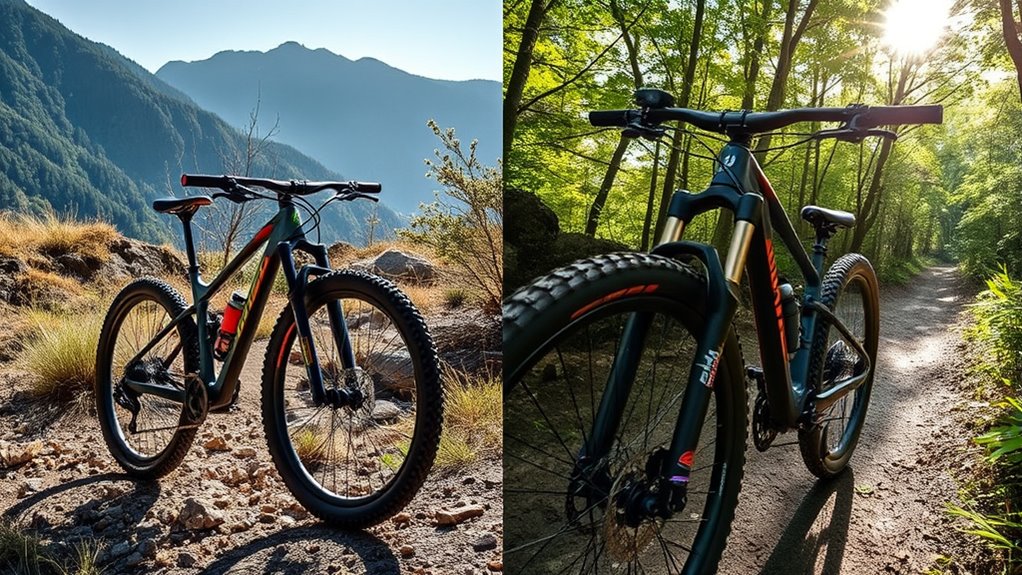
When choosing between a hardtail and a full-suspension mountain bike, understanding how each setup handles different terrain can make all the difference. Your choice impacts not just performance but also the amount of bike maintenance required and how well the bike adapts to varying trail conditions. Hardtails, with only front suspension, are simpler machines. They tend to be lighter and less complex, making bike maintenance easier and less costly over time. Because they have fewer moving parts, there’s less that can go wrong, and cleaning or repairing them generally takes less effort. This simplicity appeals to riders who prefer a straightforward, low-maintenance bike that can handle smoother trails with agility.
Hardtails are simpler, lighter, and easier to maintain for smoother trail riding.
Terrain adaptability is where full-suspension bikes really shine. Their rear suspension absorbs shocks more effectively, allowing you to tackle rougher, more technical trails without losing control. With a full-suspension setup, you can ride over rocks, roots, and uneven terrain with greater comfort and confidence. This increased adaptability makes full-suspension bikes ideal for challenging mountain terrain, where bumps and impacts are frequent. However, this added complexity comes with trade-offs. Full-suspension bikes generally require more frequent bike maintenance, especially in the suspension components. Regular checks and servicing of shocks and linkages are necessary to keep everything functioning smoothly, which can be more time-consuming and costly.
If you mainly ride on well-maintained, smoother trails, a hardtail might be your best bet. It’s easier to maintain, often lighter, and provides excellent power transfer for climbing and pedaling efficiency. On the other hand, if your rides involve technical descents, rocky paths, or uneven terrain, a full-suspension bike offers superior terrain adaptability. It dampens impacts and reduces rider fatigue, enabling you to ride longer and more comfortably in rough conditions.
Ultimately, your choice depends on your riding style and the terrain you prefer. If you value simplicity, lower maintenance, and versatility on less rugged trails, a hardtail makes sense. But if tackling tough, technical terrain is your goal, investing in a full-suspension bike will pay off in performance and comfort. Whichever you choose, understanding how each setup handles terrain and how it affects bike maintenance needs ensures you pick the right ride for your adventures.
Products Worth Considering

Coleman Skydome Tent with Full-Fly Weather Vestibule (6-Person)

GoPro Fluid Pro AI 3-Axis Gimbal Stabilizer

YETI Rambler Gallon Jug 2.0, Vacuum Insulated, Leakproof, Stainless Steel with MagCap, Black
As an affiliate, we earn on qualifying purchases.
Frequently Asked Questions
Which Bike Type Is Better for Beginners?
A hardtail bike is better for beginners because it’s lighter and easier to handle, making it less intimidating on trails. Its simpler design offers more trail versatility, allowing you to learn basic skills confidently. You won’t struggle with complex suspension systems, so you can focus on developing your riding. As you progress, you might explore full-suspension bikes, but for starting out, a hardtail keeps things straightforward and manageable.
How Does Maintenance Differ Between Hardtail and Full-Suspension Bikes?
Maintenance on a full-suspension bike is like tending to a living, breathing beast, far more complex than a hardtail. You’ll wrestle with bike weight, as full-suspension models tend to be heavier, and suspension complexity demands regular checks, fluid changes, and adjustments. Hardtails, by contrast, require much less upkeep, making them ideal for riders who want to keep maintenance simple and focus more on the ride than repairs.
Can a Hardtail Handle Rough Downhill Trails?
Yes, a hardtail can handle rough downhill trails, but your trail comfort might decrease compared to full-suspension bikes. Hardtails are more durable in suspension because they have fewer moving parts, making them easier to maintain. However, for extreme downhill terrain, you might feel more bumps and shocks. If you prioritize durability and simplicity, a hardtail works well, but for smoother rides over rough terrain, full suspension offers better comfort.
What Is the Cost Difference Between the Two Types?
Think of the cost difference like comparing a basic bicycle to a luxury bike. Hardtails tend to be more affordable, making them ideal if you’re on a tight budget. Full-suspension bikes, with their advanced technology, usually cost considerably more, often double or more. When considering price comparison, you should weigh your budget considerations against how much comfort and performance matter to you, as full-suspension bikes deliver a smoother ride at a higher price.
Are Full-Suspension Bikes Suitable for XC Racing?
Yes, full-suspension bikes can be suitable for XC racing, especially if trail comfort and suspension durability are priorities. They absorb shocks better on technical terrains, giving you a smoother ride and improved control. However, they tend to be heavier and more complex, which can affect speed. If you prefer comfort and durability on rough trails, a full-suspension bike could be a great choice for XC racing.
Conclusion
Choosing between a hardtail and a full-suspension bike depends on your riding style and terrain. Hardtails are lightweight and efficient on smoother trails, while full-suspension bikes excel in rough, technical terrain. Did you know that roughly 70% of mountain bikers prefer full-suspension bikes for challenging trails? Whichever you pick, understanding these differences helps you enjoy every ride more. Ultimately, gear up for your adventure and ride confidently, knowing your bike suits your needs perfectly.