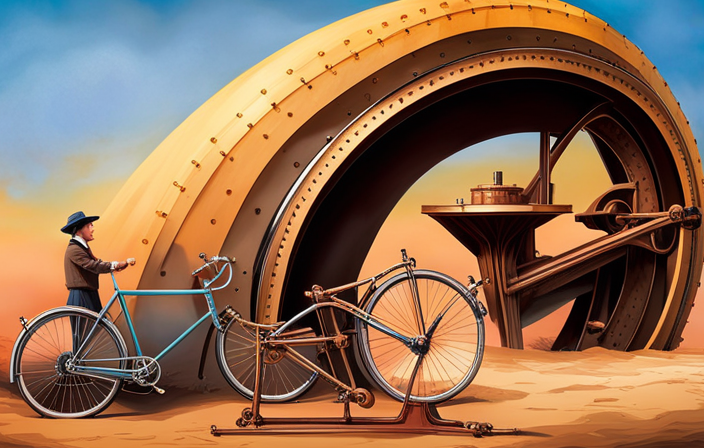
The history of the bicycle begins in the early 19th century with simple designs like the hobby horse, which sparked interest in balancing machines. By the 1830s, pedal-powered versions emerged, followed by the 1860s’ boneshaker with metal frames. The 1870s saw the dangerous penny-farthing, leading to the safer, modern safety bicycle with equal-sized wheels and chain drive. If you continue exploring, you’ll uncover how these innovations transformed transportation and everyday life.
Key Takeaways
- The bicycle’s history began with early inventions like the hobby horse in the 1810s, which inspired future designs.
- Pedal-powered machines emerged in the 1830s, advancing human-powered mobility.
- The 1860s saw the “boneshaker,” a metal-framed bicycle with steel tires, popularizing cycling among the masses.
- The 1870s introduced the Penny-Farthing with large front wheels, increasing speed but raising safety concerns.
- The modern safety bicycle, developed in the late 19th century, features equal-sized wheels and chain drives, leading to today’s bicycles.
Have you ever wondered how the bicycle, a simple yet revolutionary mode of transportation, came to be? The story begins with early experiments in cycle innovations that laid the foundation for what would become a global phenomenon. In the 19th century, inventors sought to improve upon existing designs, creating machines that could move faster and more efficiently. These early efforts marked a pivotal point in transportation evolution, transforming human mobility in ways previously unimaginable. The first major breakthrough was the invention of the hobby horse or “dandy horse” in the 1810s—an iron frame with wooden wheels you propelled by pushing off the ground with your feet. While rudimentary, it sparked interest in balancing machines and set the stage for future innovations. By the 1830s, pedal-powered versions emerged, with British and French inventors experimenting with mechanisms that allowed riders to propel themselves without touching the ground. These early bicycles lacked pedals but introduced the idea of continuous motion, hinting at the potential for more advanced designs.
Throughout the 1860s, cycle innovations accelerated. The introduction of the velocipede, often called the “boneshaker,” featured metal frames and steel tires, making rides smoother but still quite uncomfortable. Still, it gained popularity and helped popularize bicycles among the masses. The real turning point came with the development of the high-wheeler or penny-farthing in the 1870s, which featured a large front wheel and a smaller rear wheel. This design allowed for greater speed but was notoriously dangerous, especially since riders were exposed and prone to falls. Despite its risks, the penny-farthing propelled the bicycle into mainstream consciousness and spurred further improvements.
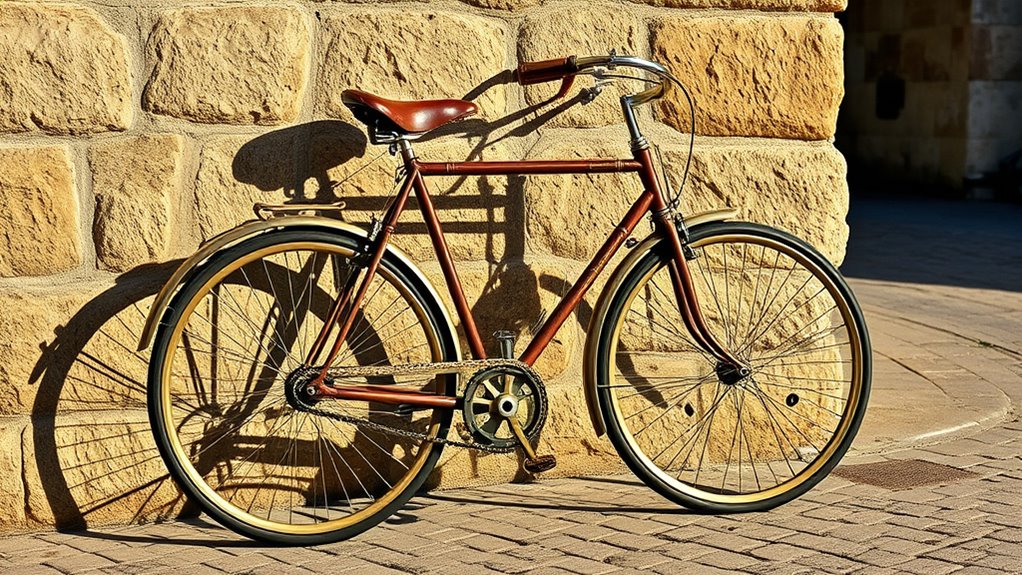
The next significant phase in transportation evolution arrived with the invention of the safety bicycle in the late 19th century. This design, with two wheels of equal size and a chain drive, provided a more stable and comfortable ride. It made cycling accessible to a broader audience, including women and children, and laid the groundwork for modern bicycles. Innovations such as pneumatic tires, gear systems, and lightweight frames continued to refine the design well into the 20th century. Today’s bicycles are the result of centuries of cycle innovations, each built upon the last, transforming personal transportation from a novelty into an everyday essential. Your ride today, whether for commuting, recreation, or sport, represents a long history of ingenuity and multiple stages of transportation evolution—each step bringing us closer to efficient, sustainable mobility.
Frequently Asked Questions
How Did Bicycle Designs Evolve During the 20TH Century?
During the 20th century, bicycle designs evolved considerably with new frame materials like lightweight steel, aluminum, and carbon fiber, making bikes stronger and easier to handle. You’ll notice gear shifting systems improved, allowing smoother changeovers and better efficiency on varied terrains. These innovations made riding more comfortable and practical, encouraging more people to cycle regularly. As a result, bicycles became faster, lighter, and more versatile, transforming transportation and recreation worldwide.
What Were the Major Cultural Impacts of Bicycles Worldwide?
Bicycles transformed societies by shaping cycling culture and fueling social movements worldwide. You find that bikes promote environmental awareness and health, inspiring activism and community building. They empower marginalized groups, challenge gender norms, and foster independence. Cycling culture encourages sustainable transportation, influencing urban planning and lifestyle choices. As a result, bicycles become symbols of freedom, resilience, and social change, impacting how people connect and advocate for a better world.
How Did Bicycles Influence Urban Transportation Development?
Bicycles revolutionized urban transportation by promoting urban planning that prioritized bike lanes and pedestrian-friendly spaces. You’ll notice how cities adapted to reduce traffic congestion, making commuting easier and quicker. Bicycles encouraged the development of compact, accessible neighborhoods, reducing reliance on cars. This shift helped create more sustainable and livable urban environments, inspiring ongoing efforts to integrate cycling infrastructure into city planning worldwide.
What Are the Environmental Benefits of Modern Bicycles?
Using a modern bicycle helps you embrace sustainable commuting and markedly reduce your carbon footprint. Bicycles produce zero emissions, making them an eco-friendly alternative to cars. They also require fewer resources to manufacture and maintain, which lessens environmental impact. By choosing cycling, you contribute to cleaner air, lower greenhouse gases, and a healthier planet. It’s an easy, effective way to enjoy transportation that benefits both you and the environment.
How Are Bicycles Integrated Into Current Technological Innovations?
You can see bicycles integrated into current technological innovations through smart bike systems and wearable cycling tech. These advancements allow you to track your performance, monitor health metrics, and navigate more efficiently. With smart bike integration, you get features like GPS, automatic lighting, and security alerts. Wearable cycling tech, such as smart helmets and fitness trackers, enhances safety and helps you stay connected, making your ride smarter and more enjoyable.
Conclusion
As you pedal forward, remember the bicycle isn’t just a machine—it’s a symbol of freedom, progress, and human ingenuity. With every turn of the wheel, you carry the spirit of those who dared to dream and innovate. Your journey on two wheels connects you to a legacy of resilience and adventure. Embrace the ride, for in each revolution, you keep the hope and progress of countless dreamers alive.