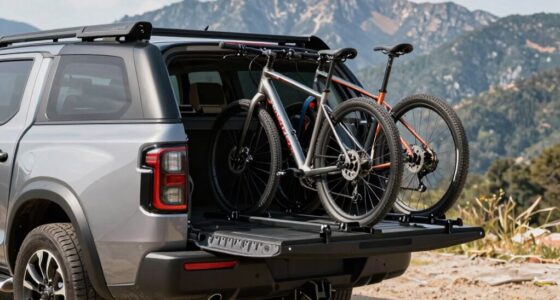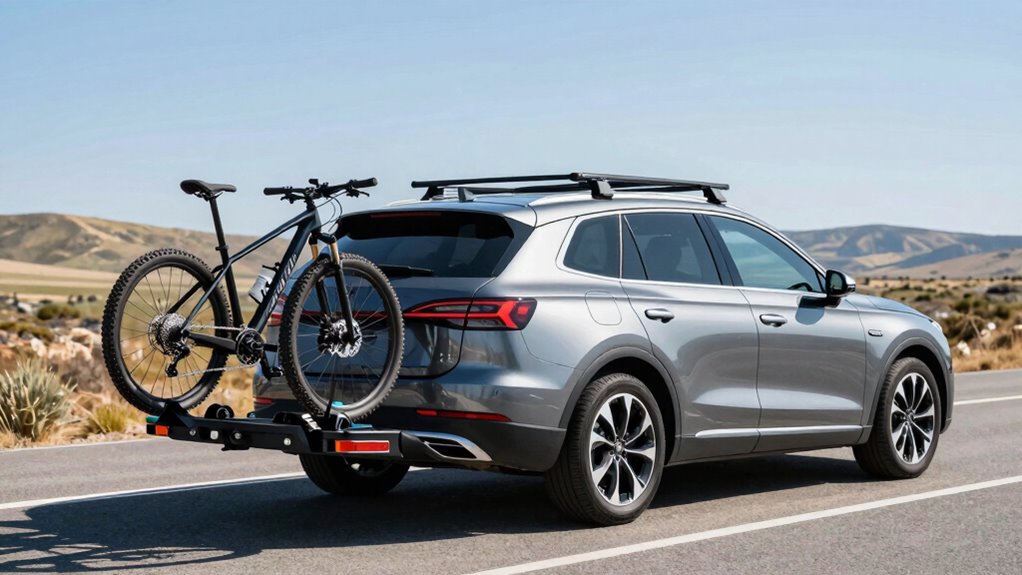

When comparing hitch racks and roof racks for highway travel, hitch racks come out on top due to their better aerodynamics, stability, and security. They reduce wind noise and drag, helping you save on fuel, and keep your gear more secure at high speeds. Roof racks might offer quick access when parked but tend to hinder your ride’s efficiency and handling on long trips. Stay with us to discover which rack suits your highway adventures best.
Key Takeaways
- Hitch racks generally offer better aerodynamics, reducing wind resistance and improving fuel efficiency during highway travel.
- Roof racks increase drag and wind noise, negatively impacting highway performance and fuel economy.
- Hitch racks provide more stability and less sway at high speeds, enhancing vehicle handling on long highway trips.
- Installing and securing hitch racks is usually easier and offers stronger theft protection compared to roof racks.
- Overall, hitch racks are more suitable for highway use due to superior aerodynamics, stability, and convenience.
Which Rack Is Better for Highway Travel? Hitch vs. Roof Explained
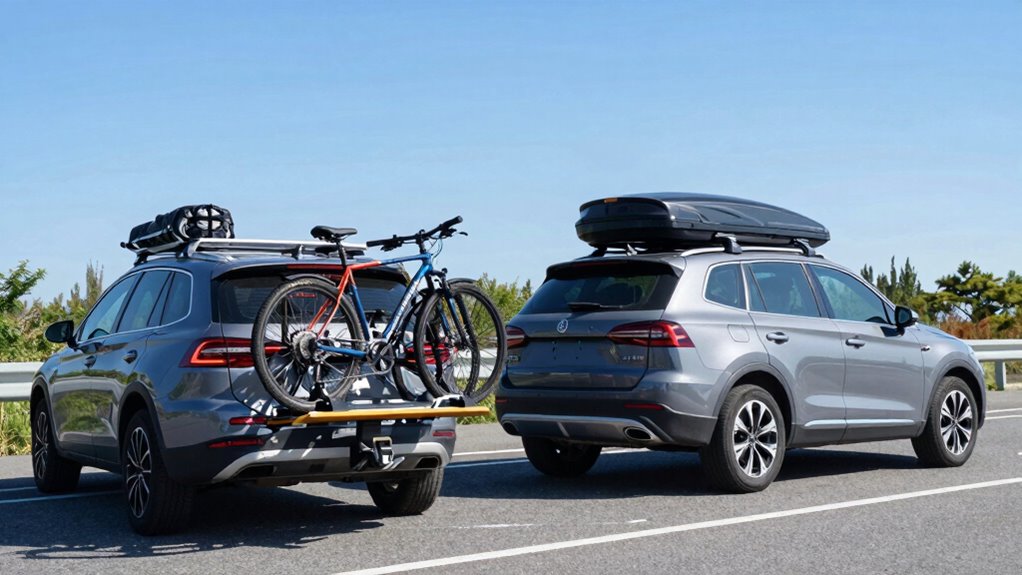
When it comes to highway travel, choosing the right rack can considerably impact your experience. A roof rack can create additional drag, affecting vehicle aerodynamics and fuel efficiency, especially at high speeds. Its placement on top of your vehicle might slightly compromise stability, but it often offers easier access and flexibility for larger items. Conversely, a hitch rack typically distributes weight lower on your vehicle, helping maintain better balance and reducing wind resistance. Proper rack weight distribution is vital for safety and handling, especially during long trips. If minimizing aerodynamic drag is your priority, a hitch rack often proves more efficient. Additionally, understanding the small systems involved in how different racks affect your vehicle can help you make a more informed choice. For example, vehicle aerodynamics play a significant role in overall efficiency during highway driving. However, if accessibility and capacity are more important, a roof rack might fit your needs better. Your choice depends on balancing these factors for smooth highway travel. Being aware of system interactions can further optimize your rack setup for better performance and safety on the road. Moreover, considering how wind resistance impacts your overall fuel economy can help you select the most suitable rack for your trips.
How Do Hitch and Roof Racks Carry Your Gear? Understanding the Basics

Hitch and roof racks use different mounting mechanisms, affecting how easily you can attach and remove your gear. You’ll find that accessibility and convenience vary between the two options, influencing your packing process. Understanding these basics helps you choose the right rack for your needs. Additionally, considering the types of mounting hardware can ensure your vehicle’s equipment supports your long-term travel goals.
Mounting Mechanisms Explained
Understanding how hitch and roof racks secure your gear is essential for choosing the right setup. Hitch racks attach directly to your vehicle’s hitch receiver, using a mounting system that locks onto the hitch, providing stability and strength. They often feature adjustable arms or trays to hold bikes, cargo, or skis securely. Roof racks, on the other hand, mount directly onto your vehicle’s roof rails or crossbars, relying on compatibility concerns with your car’s existing setup. They use clamps or foot packs to attach to the roof, giving you a versatile mounting platform. While hitch racks are generally easier to install and remove, roof racks require more precise fitting to ensure safety. Your choice depends on your vehicle’s mounting systems and your specific gear needs. Understanding mounting mechanisms is key to ensuring safe and efficient transport, especially considering sustainable practices that can extend the lifespan of your gear and vehicle. Additionally, proper installation techniques can help prevent damage and improve overall safety during transit. Regular maintenance checks are crucial to identify wear or loosening that could compromise security and safety over time.
Accessibility and Convenience
Choosing between a hitch rack and a roof rack often comes down to how easily and conveniently you can load and access your gear. With a hitch rack, loading bikes is straightforward—you simply slide them onto the rack at waist level, making it easier to manage multiple bikes with higher bike capacity. Plus, hitch racks typically offer better weather resistance, keeping your bikes protected from rain or snow during transit. Roof racks, on the other hand, require you to lift bikes overhead, which can be less convenient but gives you quick access to gear stored on the roof. While roof racks might be more challenging to load, they often provide easier access to other gear stored on the roof, especially when the vehicle is parked. Additionally, compact living spaces often influence the choice of vehicle accessories, making ease of access even more important for city dwellers. Moreover, understanding appliance safety and maintenance can help ensure your gear remains secure and functional during transport. Being aware of vehicle compatibility is also essential to ensure the racks fit properly and operate safely during your trips. Furthermore, considering weight capacity is crucial to prevent overloading and maintain vehicle safety during travel. Properly assessing loading and unloading procedures can also contribute to safer and more efficient trips.
Are Hitch or Roof Racks More Stable at Highway Speeds?

When driving at highway speeds, stability becomes a critical factor in choosing between hitch and roof racks. Generally, hitch racks tend to offer more stability due to their lower center of gravity and secure mounting. Roof racks, while versatile, can introduce more wind resistance, impacting stability. Your decision may also hinge on aesthetic differences—some prefer the sleek look of roof racks, while others prioritize the robust feel of hitch systems. Additionally, brand preferences play a role, as reputable brands often provide better stability features and testing standards. Consider these points:
- Hitch racks typically provide less sway and wobble at high speeds.
- Roof racks may experience more wind noise and drag.
- Stability varies by brand, with top-rated options offering enhanced security.
- Proper installation and safety standards are essential for ensuring stability and security during highway travel.
- Regular maintenance and inspection of your rack system can prevent potential issues and ensure ongoing stability.
- Ensuring correct measurements and materials of the rack components also contributes to overall stability during transit.
How Do Racks Affect Your Gas Mileage? Fuel Efficiency Compared
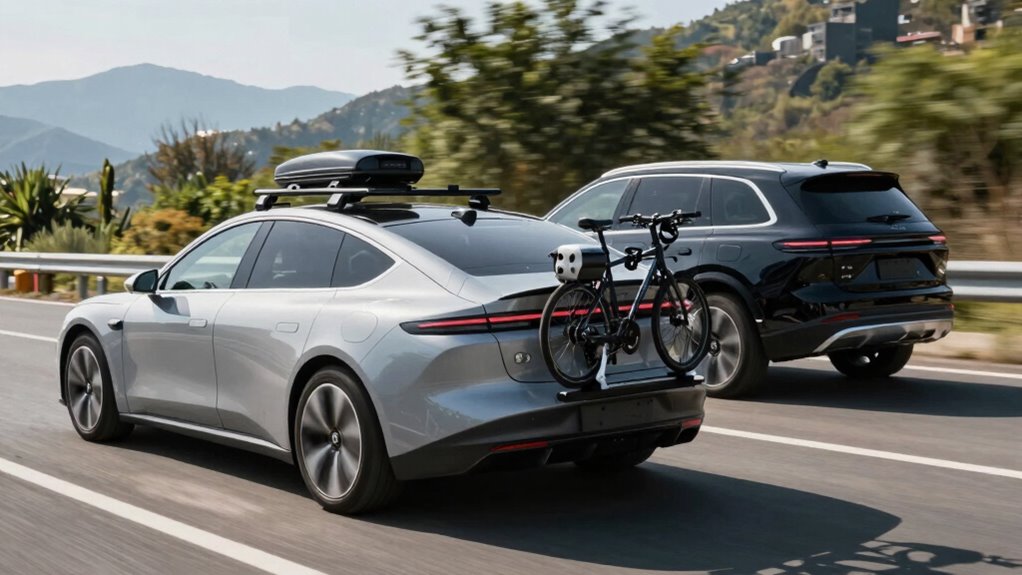
Hitch and roof racks can considerably influence your vehicle’s fuel efficiency by altering its aerodynamics and adding weight. When you install a rack, it increases aerodynamic drag, which forces your engine to work harder, especially at highway speeds. This extra effort leads to higher fuel consumption, reducing your miles per gallon. Roof racks tend to create more aerodynamic resistance than hitch racks because they sit higher and catch more wind. The added weight of the racks themselves also impacts efficiency, especially if you’re carrying gear. To minimize fuel loss, remove racks when they’re not in use or choose sleek, aerodynamic designs. Proper rack placement can influence the overall impact on fuel economy, so careful consideration can further optimize your vehicle’s performance. Being mindful of how racks affect your vehicle’s aerodynamics can help you plan longer trips better and save money on fuel. Additionally, vehicle weight distribution plays a crucial role in maintaining optimal fuel efficiency during travel, and understanding the material composition of your racks can also affect their aerodynamic profile and weight. Optimizing rack design is essential for reducing drag and improving overall fuel economy.
Which Rack Keeps Your Gear Safer During Long Drives? Security Tips

To keep your gear safe during long drives, make sure your rack’s locking mechanisms are strong and reliable. Always use proper tie-down techniques to secure your items tightly, preventing any shifting or loss. Regular security checks help catch any issues early and give you peace of mind on the road. Incorporating exfoliation techniques with glycolic acid can also improve your skin’s resilience and overall appearance during travel. Additionally, choosing racks with robust locking features can provide added security against theft or accidental disconnection.
Locking Mechanisms Effectiveness
While both hitch racks and roof racks can securely carry your gear, their lock mechanism plays a essential role in theft prevention during long drives. A robust lock ensures your gear stays put and deters opportunistic thieves. Consider these features for better security:
- High-quality lock cylinders resistant to picking or drilling
- keyed-alike locks for ease of use across multiple racks
- Tamper-proof designs that prevent unauthorized access
A reliable lock mechanism gives you peace of mind, especially when parking in unfamiliar areas. It’s imperative to evaluate how sturdy and resistant to tampering each rack’s lock is before making your choice. Remember, a strong lock not only secures your gear but also acts as a visible deterrent against theft.
Proper Tie-Down Techniques
Securing your gear with the right tie-down techniques is crucial for long drives, guaranteeing everything stays in place and minimizing the risk of damage or loss. Use high-quality straps and double-check their tension before hitting the road. For seasonal storage, remove all accessories to prevent unnecessary movement and protect your gear’s aesthetic impact. When tying down items, distribute pressure evenly to avoid deforming your gear or rack. Tighten straps securely but avoid over-tightening, which can cause damage. Consider using corner protectors to prevent strap wear or gear scratches. Properly secured gear reduces movement, keeps your vehicle looking neat, and preserves its value. Effective tie-down techniques are a simple yet essential step to ensure safety, security, and a clean aesthetic during long trips.
Regular Security Checks
Regular security checks are essential to guarantee your gear stays safe during long drives. Weather considerations like rain or strong winds can loosen straps or compromise your rack’s stability. It’s vital to periodically inspect your setup to prevent gear from shifting or falling. Additionally, ensuring rack compatibility helps avoid mismatched parts that could fail during transit. During these checks, focus on:
- Tightening straps and fasteners to maintain secure connections
- Examining weather-related wear or damage, especially after storms
- Confirming that your rack remains properly attached and compatible with your vehicle
Is Installing and Loading Hitch or Roof Racks Easy? Practical Tips

Installing and loading hitch or roof racks might seem intimidating at first, but with the right tools and a little know-how, it becomes straightforward. Start by checking your rack’s capacity to ensure it can handle your gear safely. Use the proper installation tools, like a wrench or screwdriver, to secure the rack firmly to your vehicle. Follow the manufacturer’s instructions carefully, paying attention to mounting points and torque specifications. When loading, distribute weight evenly to maintain balance and stability. For roof racks, consider using loading ramps or lifts to make placing heavy items easier. Regularly double-check that all locks and fasteners are tight before hitting the road. With practice, installing and loading racks will become quick and hassle-free, saving you time and effort on every trip.
What Do They Cost and How Long Do They Last? Long-Term Value
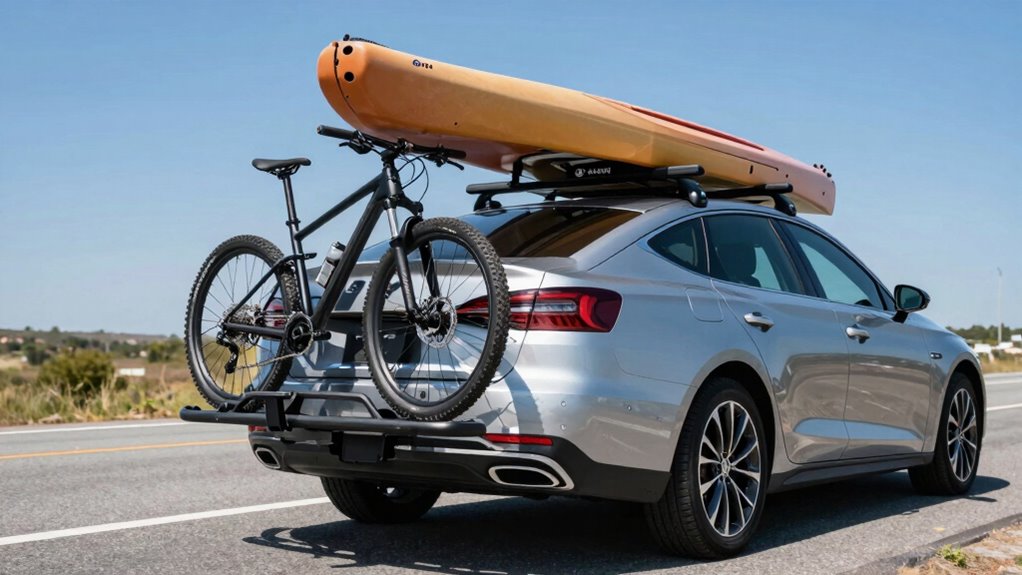
Have you wondered how much you’ll spend over time on your hitch or roof rack? A thorough cost analysis reveals that initial prices vary, but long-term value depends on durability. Hitch racks generally cost less upfront and tend to be more durable, offering better longevity with proper maintenance. Roof racks might have higher initial costs, but their versatility can justify the expense. Consider these factors:
- Initial investment: Hitch racks are usually cheaper than roof racks.
- Durability assessment: Hitch racks often last longer due to less exposure to elements.
- Maintenance costs: Roof racks may require more frequent repairs or replacements.
Ultimately, a solid durability assessment helps you decide which rack offers better long-term value, saving money and hassle over time.
Our Top Pick: Which Rack Wins for Highway Adventures?
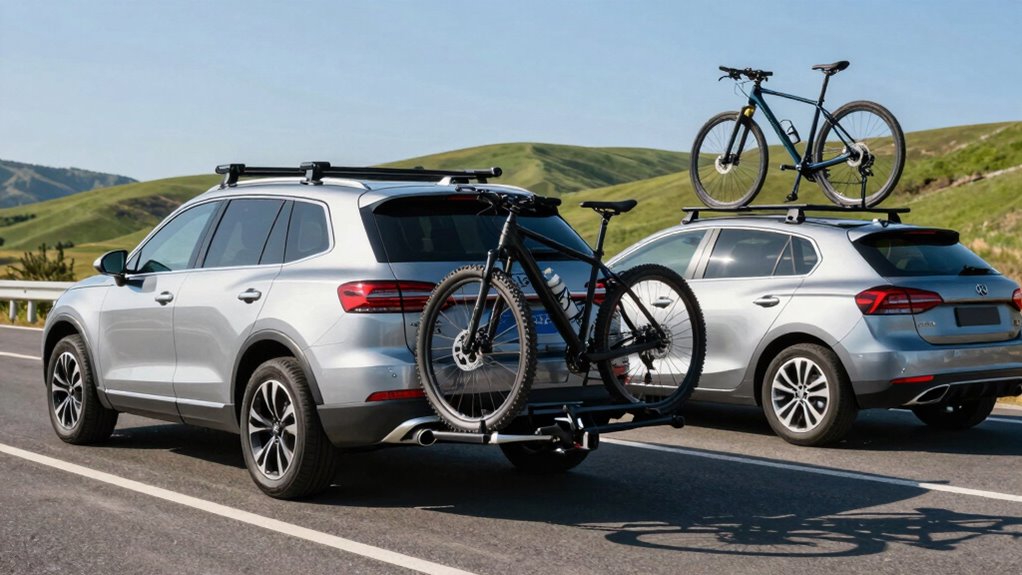
When hitting the highway for long trips, choosing the right rack can make all the difference in your travel experience. For highway adventures, a hitch rack often takes the lead due to its superior weight capacity, allowing you to carry heavier loads securely. It also tends to have a sleek aesthetic appeal, blending seamlessly with your vehicle’s design without adding bulk. Roof racks, while versatile, can compromise your vehicle’s aerodynamics and are more prone to wind noise at high speeds. If you prioritize stability and a clean look, the hitch rack is the top pick. It offers better handling on the road and supports your gear comfortably, making your highway journey smoother and more enjoyable.
Frequently Asked Questions
Can Hitch or Roof Racks Accommodate All Vehicle Types?
You’ll find that hitch racks generally offer better cargo capacity and installation flexibility across most vehicle types, especially for SUVs and trucks with standard hitch receivers. Roof racks can fit a wider variety of vehicles but may have limited compatibility on some models without factory bars. Consider your vehicle’s design and your cargo needs to choose the best option, ensuring it accommodates your vehicle type effectively.
Are There Weight Limits I Should Be Aware Of?
Yes, you should definitely be aware of weight limits. Both hitch and roof racks have specific load capacities and weight restrictions, which vary by model and vehicle. Exceeding these limits can compromise safety and damage your vehicle. Always check the manufacturer’s load capacity and adhere to the specified weight restrictions to guarantee secure transportation. Properly distributing weight is essential for safe and effective use of your rack system.
How Do Racks Impact Vehicle Aerodynamics?
Racks ramp up aerodynamic drag, reducing your vehicle’s fuel efficiency and creating more wind noise. Roof racks, especially when loaded, disrupt smooth airflow, making your ride less slick. Hitch racks, sitting lower and closer to the vehicle, tend to cause less aerodynamic interference. To keep your car efficient and quiet, opt for racks that minimize drag, like hitch options, and remember to remove them when not in use.
What Maintenance Is Required for Each Rack Type?
You need to regularly check the rack security and tighten any loose bolts to guarantee safety. For the installation process, follow the manufacturer’s instructions carefully, especially for roof racks, which may require more precise fitting. Keep an eye on the rack’s condition, including inspecting for rust or damage, and clean it periodically. Proper maintenance keeps your racks secure, prolongs their lifespan, and prevents accidents while you’re on the road.
Do Racks Affect Vehicle Warranty or Insurance?
Warranty worries and insurance implications can worry you when adding racks. Generally, if you install racks correctly and follow manufacturer guidelines, they won’t void your warranty or affect your insurance. However, improper installation or damage caused by racks might raise warranty concerns or insurance issues. To stay safe, always check your vehicle’s warranty policy and inform your insurance provider before adding racks. Proper preparation prevents potential problems.
Conclusion
Ultimately, choosing between a hitch and roof rack is like selecting the perfect sailing vessel—each has its own strengths and quirks. On the highway, the winner glides smoothly, offering stability and efficiency like a well-tuned engine. Trust your journey, weigh your gear’s needs, and set sail with confidence. After all, the right rack transforms your vehicle into a trusty vessel, carrying your adventures safely across endless horizons.