Hydraulic disc brakes deliver stronger, more consistent stopping power and work well in wet or muddy conditions, giving you better control on steep descents. Mechanical brakes are simpler, cheaper, and easier to maintain with basic tools, but may need more frequent adjustments and can be affected by dirt and weather. If you want to understand which system suits your riding style and conditions best, keep exploring the key differences.
Key Takeaways
- Hydraulic disc brakes deliver stronger, more consistent stopping power, especially in wet or muddy conditions.
- Mechanical disc brakes are simpler, cheaper, and easier to maintain at home.
- Hydraulic systems offer better modulation and control, ideal for steep descents and technical riding.
- Mechanical brakes may require more frequent adjustments and are more affected by dirt and corrosion.
- Initial cost favors mechanical brakes, but hydraulic systems provide superior performance and durability in challenging environments.
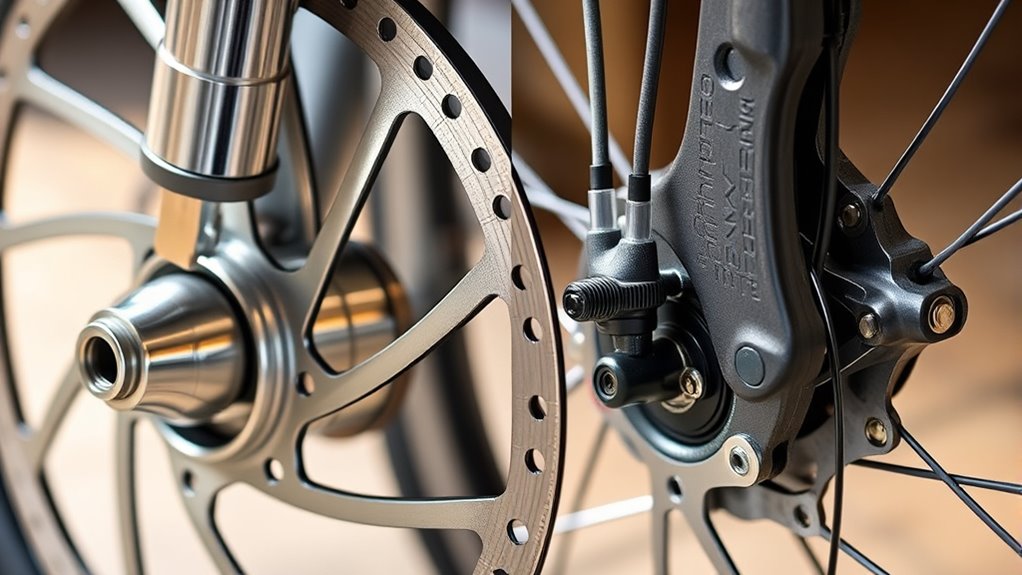
When choosing between hydraulic and mechanical disc brakes, understanding their differences can considerably impact your riding experience. One of the most significant factors to consider is braking power. Hydraulic disc brakes generally provide stronger, more consistent stopping force, especially in wet or muddy conditions. This is because hydraulic systems use fluid to transmit force directly from the lever to the caliper, resulting in more precise modulation and greater braking efficiency. If you’re riding on steep descents or in challenging weather, hydraulic brakes can give you that extra confidence and control. On the other hand, mechanical disc brakes rely on a cable to activate the brake caliper. While they can still deliver reliable braking performance, they often require more effort to achieve the same stopping power as hydraulic systems. The cable’s tension can also fluctuate over time, which might lead to less predictable braking performance, especially if the cable gets dirty or stretched.
Another important aspect to weigh is maintenance costs. Hydraulic disc brakes tend to be more expensive upfront, both in terms of the initial purchase and maintenance. They require occasional fluid bleedings to remove air bubbles and ensure consistent performance, which often means visiting a bike shop or learning how to do it yourself. Over time, the seals and fluid may need replacing, adding to the ongoing costs. Mechanical brakes, by comparison, are simpler and cheaper to maintain. They use a cable that can be easily adjusted or replaced at home with basic tools, making them more budget-friendly in the long run. However, they might need more frequent adjustments to keep the brake pads properly aligned and tensioned, especially if you ride in muddy or wet conditions where dirt can cause the cable to corrode or stick.

Schwinn Sporterra RX Gravel Bike, 700c Mens and Womens Bike, 14-Speed Drop Bar Gravel Bicycle, Mechanical Disc Brakes, Rigid Fork, Aerodynamic Riding Position, Quick Release Seat Post, Adult Bicycle
GRAVEL BICYCLE: Enjoy next level riding with the Sporterra RX by Schwinn. With 700c wheels, this mens and...
As an affiliate, we earn on qualifying purchases.
Frequently Asked Questions
Which Disc Type Requires Less Maintenance?
You’ll find that hydraulic disc brakes require less maintenance than mechanical ones. They have less brake pad wear because of better modulation, and you won’t need to calibrate them as often. Hydraulic systems are sealed, so they’re less prone to dirt and debris affecting performance. With proper care, you’ll enjoy consistent braking and fewer adjustments, making hydraulic discs a low-maintenance choice for serious riders.
Are Hydraulic Discs More Durable Than Mechanical Ones?
Think of hydraulic discs as the sturdy fortress, offering more durability against the elements. They tend to last longer because their brake pad materials are chosen for resilience, and proper disc rotor sizing minimizes stress. While mechanical discs are simpler, they’re more prone to wear and tear. So, if you’re after durability, hydraulic discs stand strong, resisting damage and maintaining performance even in tough conditions.
Can I Switch Between Hydraulic and Mechanical Brakes Easily?
Switching between hydraulic and mechanical brakes isn’t straightforward because of differences in brake fluid systems and caliper design. Hydraulic brakes use brake fluid, requiring compatible calipers and levers, while mechanical brakes rely on cables. You’ll need to replace or modify parts like the calipers, levers, and possibly the wheel hubs. It’s best to consult your bike’s specifications or a professional mechanic to guarantee compatibility and safety.
Which Disc System Is Better for Mountain Biking?
Think of mountain biking as steering a rugged mountain trail. Hydraulic discs are like a seasoned guide, offering smoother, more consistent control, especially in tricky descents. Mechanical discs are more like a reliable map, easier to maintain and adjust. For ideal performance, guarantee brake pad compatibility and match disc rotor size to your riding style. Ultimately, hydraulic systems often provide better modulation, making them the superior choice for challenging mountain terrain.
Do Hydraulic Discs Perform Better in Wet Conditions?
Yes, hydraulic discs perform better in wet conditions because they provide superior braking power and system responsiveness. You’ll notice more consistent stopping performance even when the trails are muddy or rainy. Hydraulic systems use fluid pressure, which helps maintain strong, reliable braking without requiring as much effort. This means you can brake confidently in all weather, enhancing safety and control during your ride.
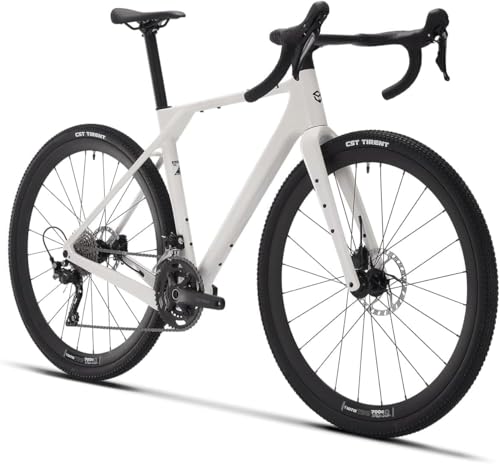
SAVADECK T800 Carbon Gravel Bike, with Shimano GRX610 12-Speed, Hydraulic Disc Brakes, 700x40c Tires for Road & Off-Road Adventure, Men's/Women's Bicycle(Elegant White, 51cm)
【With SHIMANO GRX Drivetrain Setup】Equipped with SHIMANO GRX610 shifters and RX822 rear derailleur, matched with a 12-speed M6100...
As an affiliate, we earn on qualifying purchases.
Conclusion
Ultimately, hydraulic and mechanical disc brakes each have their strengths and weaknesses. While hydraulics offer smooth, powerful stopping with less effort, mechanical brakes provide simplicity and affordability. But remember, choosing between them isn’t just about specs—it’s about how you want to feel on your ride. Sometimes, the most advanced technology isn’t needed; other times, you’ll crave precision and control. In the end, your choice shapes not just your bike’s performance, but your riding experience itself.

SAVADECK Carbon Gravel Bike - T800 Carbon Frame & Fork | Shimano U6000 11-Speed Groupset | Hydraulic Disc Brakes | 700CX40mm All-Terrain Tires | Men & Women Road/Off-Road Bicycle (Gray, 53cm)
【Ultralight T800 Carbon Performance】: Featuring a premium T800 R21 carbon fiber frame and fork weighing just 10.4kg (22.92...
As an affiliate, we earn on qualifying purchases.

TOBWOLF 1 Pair MTB Disc Brake Set, Hydraulic Disc Brake Kit with 160mm Rotors, Left Front 81cm & Right Rear 147cm, Aluminum Oil Pressure Calipers Levers for Mountain Bike E-Bike Fat Bike Road Bike
【Important NOTE】-- This set works on the principle of Left Front and Right Rear, which means the left...
As an affiliate, we earn on qualifying purchases.