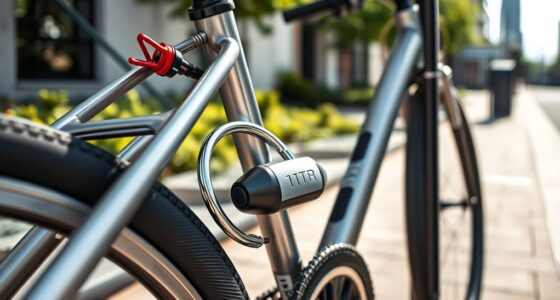
Index front and rear derailleurs enable precise, reliable gear shifts by working with specific shifters and matching your bike’s drivetrain components. They use indexed gear movement, meaning each click aligns perfectly with a gear, making shifting quick and smooth. To get the best performance, you need to guarantee your derailleurs are compatible with your shifters and drivetrain, including gear range and brand. Keep exploring to discover more details on choosing and maintaining your derailleurs effectively.

Get sports gear delivered free with Prime
- Fast, free delivery on millions of items
- Prime Video, Amazon Music and more included
- Member-only deals all year
Key Takeaways
- Indexed derailleurs align shifts with shifter clicks for precise front and rear gear changes.
- Compatibility between derailleur brand, model, and shifter is essential for proper indexing.
- Proper adjustment of limit screws and barrel adjusters ensures accurate front and rear shifting.
- Drivetrain specifications, including gear range, influence derailleur choice and performance.
- Regular maintenance and hanger alignment prevent mis-shifts and improve indexing accuracy.
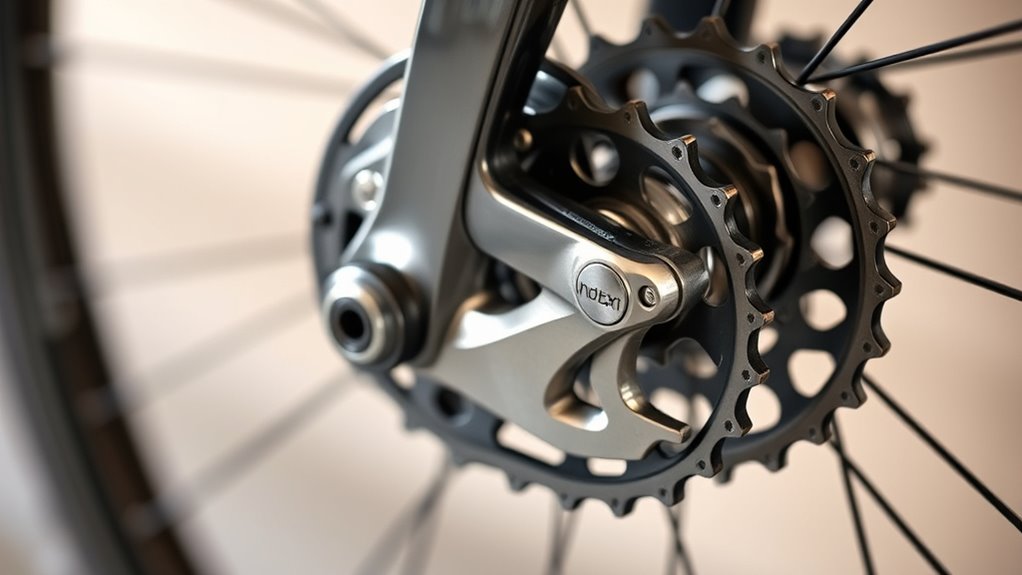
Understanding how your bike shifts gears smoothly and reliably starts with the right components, and index front and rear derailleurs are key to achieving that. These derailleurs are designed to work seamlessly with specific shifters, making gear shifting more precise and effortless. When you choose an index derailleur, you’re selecting a system that uses indexed gear shifting, where each click of the shifter corresponds to a specific gear. This setup allows you to change gears quickly without the guesswork or excess chain movement common with traditional friction systems. To get the most out of this system, you need to guarantee derailleur compatibility. Not all derailleurs fit all shifters, so matching your derailleur to your shifter brand and model is essential. For example, Shimano’s road and mountain bike derailleurs are designed to work with their respective shifters, and mixing brands or models can lead to poor shifting performance or even damage.
When selecting an index front or rear derailleur, you should consider your bike’s drivetrain specifications, such as the number of gears on your cassette or chainrings. The derailleur’s capacity and compatibility with your gear range are critical for smooth shifting. If the derailleur isn’t compatible with your gear setup, you might experience skipping, delayed shifts, or chain drop. Additionally, the derailleur hanger’s condition and alignment play a significant role in gear shifting. A bent hanger can cause misalignment and hinder proper derailleur operation, even if you have the correct components.
Installation and adjustment are also indispensable. Properly setting the derailleur’s limit screws and indexing guarantees each gear shift is accurate. When you turn the shifter, the derailleur should move precisely to the intended gear without overshooting or hesitation. Fine-tuning the barrel adjuster helps you achieve perfect gear alignment, especially when you change tires, cassette sizes, or chainrings. Regular maintenance, including cleaning and checking derailleur compatibility with your shifters, keeps your gear shifting smooth and dependable.
Moreover, understanding the gear range of your drivetrain helps you select the right derailleur to match your riding style and terrain, ensuring optimal performance.
As an affiliate, we earn on qualifying purchases.
Frequently Asked Questions
How Do I Properly Maintain My Derailleur?
To properly maintain your derailleur, regularly clean and lubricate your chain to guarantee smooth shifting. Check the derailleur alignment and adjust it if you notice poor gear changes or skipping. Keep the derailleur’s moving parts free of dirt and debris, and tighten any loose screws or bolts. By maintaining proper chain lubrication and alignment, you’ll enhance shifting performance and extend the lifespan of your derailleur.
Can I Upgrade My Derailleur Without Changing Other Components?
Can you upgrade your derailleur without changing other components? Absolutely, but think of it like fitting a new piece into a puzzle—compatibility is key. You need to take into account derailleur compatibility with your shifters and cassette. When upgrading, keep in mind upgrade considerations such as gear range and mounting type. If these align, you can often replace your derailleur alone, but mismatched parts might cause shifting issues.
What Tools Are Needed for Derailleur Installation?
For derailleur installation, you’ll need a few essential tools: a 5mm Allen wrench for mounting the derailleur, a Phillips or flat-head screwdriver for adjusting limit screws, and a chain tool if you need to resize or reconnect your chain. A bike stand can make the process easier, and a cable cutter is useful if you’re replacing or trimming the derailleur cable. With these tools, you can confidently install or adjust your derailleur.
How Do I Troubleshoot Shifting Problems?
To troubleshoot shifting problems, first check the cable tension; it should be snug but not tight. Adjust it if needed by turning the barrel adjuster. Next, ensure your derailleur is properly aligned; misalignment can cause poor shifting. Look for any bends or misplacements, and realign if necessary. Also, inspect the derailleur hanger and clean the derailleur and cassette for smooth operation. Proper cable tension and alignment are key for seamless shifting.
Are Electronic Derailleurs Compatible With All Bikes?
Electronic derailleurs aren’t compatible with all bikes. You need to check battery compatibility, ensuring your bike’s electrical system matches the derailleur’s power requirements. Wiring integration is also essential; your bike must have the proper connectors and space for the electronic system. If your bike isn’t designed for electronic shifting, you might need adapters or upgrades. Always consult the manufacturer’s specifications to confirm compatibility before installing an electronic derailleur.
Conclusion
So, now that you’re practically a derailleur expert, go ahead—ditch those old, clunky gear changers and embrace the sleek, precise world of index derailleurs. Because nothing screams “adventure” quite like perfectly shifting gears with the click of a button, right? Just remember, if your bike starts acting like a drama queen, it’s probably just jealous of your shiny new setup. Ride on, gear wizard—your bike’s about to get a serious upgrade!
Columbus Day / Indigenous Peoples' Day Picks
long weekend sales
As an affiliate, we earn on qualifying purchases.