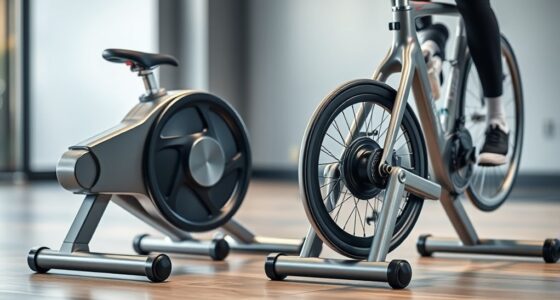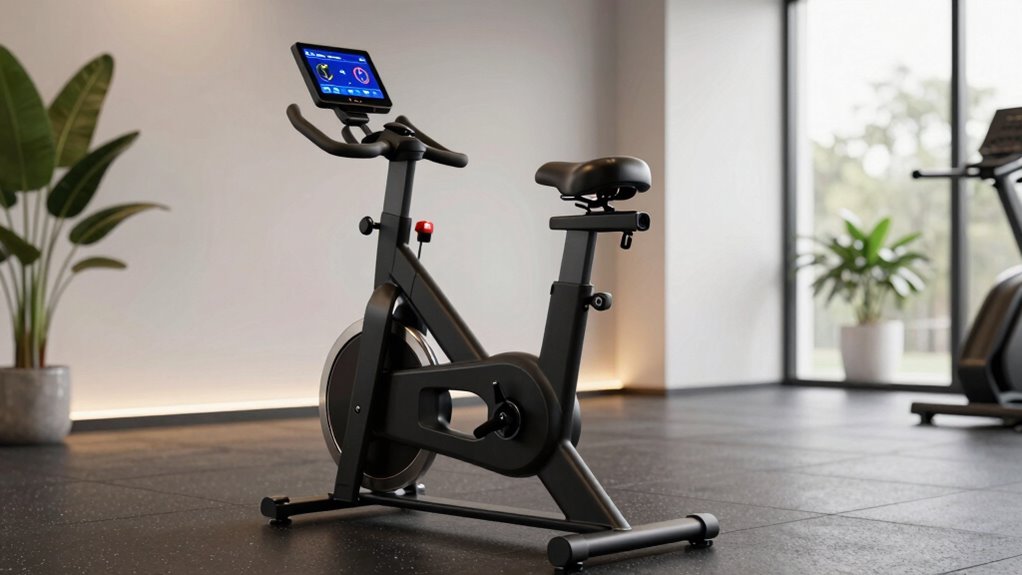

Choosing between an indoor smart bike and a trainer depends on your goals, space, and budget. If you want an all-in-one, immersive experience with built-in screens and seamless resistance, a smart bike could be ideal. But if you prefer versatility and stick to a budget, a trainer lets you connect your existing bike and customize workouts. To find out which suits your needs best, explore the details below.
Key Takeaways
- Choose a smart bike for immersive virtual rides, integrated resistance, and all-in-one digital features.
- Opt for a trainer if you prefer versatility with existing bikes and budget-friendly options.
- Smart bikes suit users with limited space seeking quick setup and minimal maintenance.
- Trainers are ideal for those wanting customizable workouts, terrain simulation, and flexibility across bikes.
- Consider your fitness goals, space, and budget when selecting between the self-contained smart bike and the adaptable trainer.
What Are the Main Differences Between Indoor Smart Bikes and Trainers?
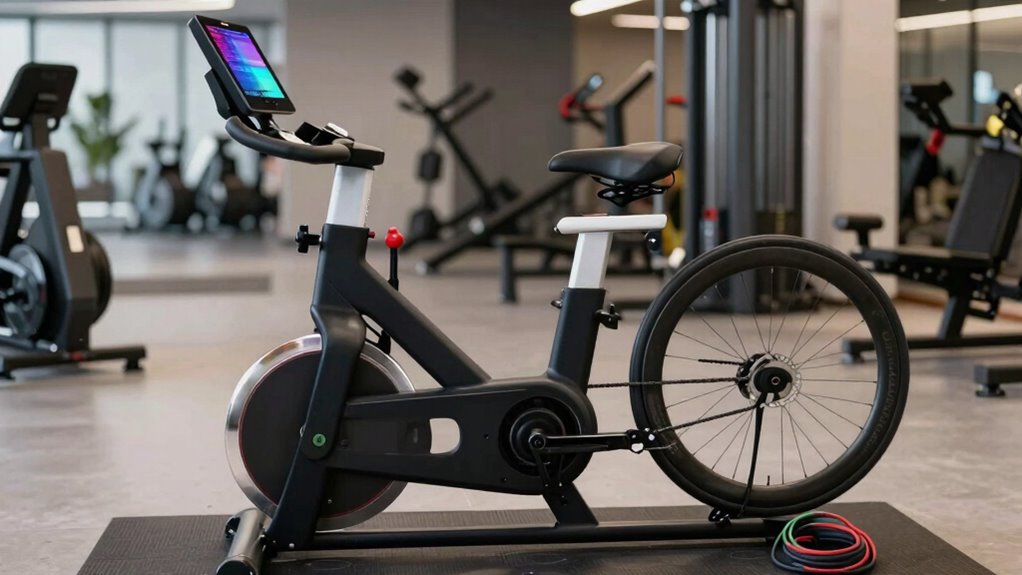
Indoor smart bikes and trainers serve different purposes, even though both are popular for indoor cycling. Smart bikes come with integrated resistance mechanisms, often electronic, allowing you to adjust intensity seamlessly. They also feature advanced connectivity options, enabling direct pairing with apps and devices for a smooth, integrated workout experience. This setup offers a more self-contained, digitally integrated experience**, making it ideal for users seeking convenience and minimal setup. Additionally, smart bikes typically include built-in screens or interfaces, further enhancing the connected fitness experience. They often incorporate energy-efficient technology, which aligns with sustainable practices and reduces power consumption during workouts. Trainers, on the other hand, are designed to attach your existing bike and usually rely on external resistance mechanisms, such as flywheels or magnetic systems, which you control manually or through connected devices. Connectivity options vary but are typically less thorough than on smart bikes. This setup offers flexibility but may require more setup and adjustments. Overall, the choice between them can influence your overall training versatility** and how easily you can incorporate different workout routines.
Which Fitness Goals Are Best Served by a Smart Bike or a Trainer?
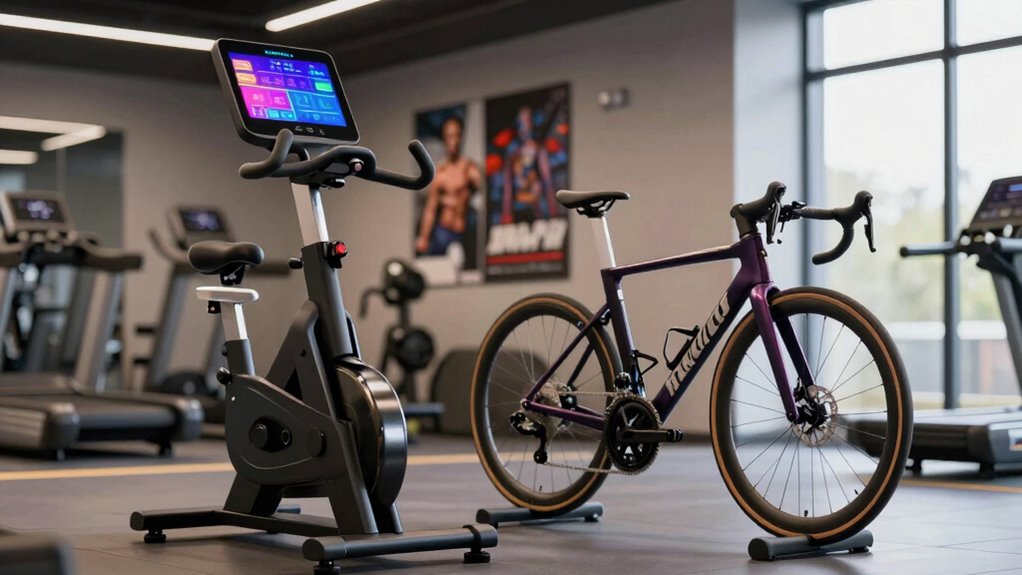
When choosing between a smart bike and a trainer, your specific fitness goals play an essential role in making the right choice. If you’re aiming for structured workouts, fitness tracking, and real-time performance data, a smart bike offers excellent features to help you monitor progress and stay motivated. It’s ideal for improving endurance, cardiovascular health, or following guided classes. On the other hand, if you want workout variety, including different cycling styles or cross-training options, a trainer provides flexibility. Trainers can simulate different terrains or incorporate interval training, helping you target diverse fitness objectives. Your goals—whether building strength, increasing stamina, or enjoying versatile workouts—will determine which device aligns best with your needs. Additionally, understanding home charging options for devices and equipment can ensure your setup remains safe and efficient, especially if you integrate smart technology into your fitness routine. Moreover, exploring device compatibility can help you select equipment that seamlessly integrates with your existing fitness apps and systems. Considering connectivity features can also enhance your training experience by enabling real-time data sharing and social engagement.
What Factors Should You Consider When Choosing Between a Smart Bike and a Trainer?

Choosing between a smart bike and a trainer involves evaluating several key factors to find the best fit for your fitness routine. First, consider the ergonomic design; a comfortable, adjustable setup guarantees you can ride longer without discomfort. Next, look at connectivity options—do you want a device that seamlessly syncs with fitness apps, offers real-time metrics, or integrates with your existing equipment? Some smart bikes come with built-in screens and advanced connectivity, providing immersive experiences. Trainers may require additional accessories for connectivity, but often offer compatibility with popular apps. Think about how you prefer to engage with your workouts—do you want all-in-one convenience or more flexibility? Weigh these factors to make an informed decision that aligns with your comfort, tech preferences, and training needs. Additionally, understanding the water chemistry involved in maintenance can be crucial for indoor setups, ensuring your equipment stays in optimal condition. Proper maintenance considerations, such as cleaning and proper lubrication, can extend the lifespan of your gear and improve performance. Being aware of the wear and tear on components can help you plan for repairs or replacements over time. Moreover, considering the long-term durability of your equipment can save you money and hassle in the future. Incorporating quality materials during selection can further enhance the longevity of your investment.
How Do Budget, Space, and Convenience Influence Your Choice?
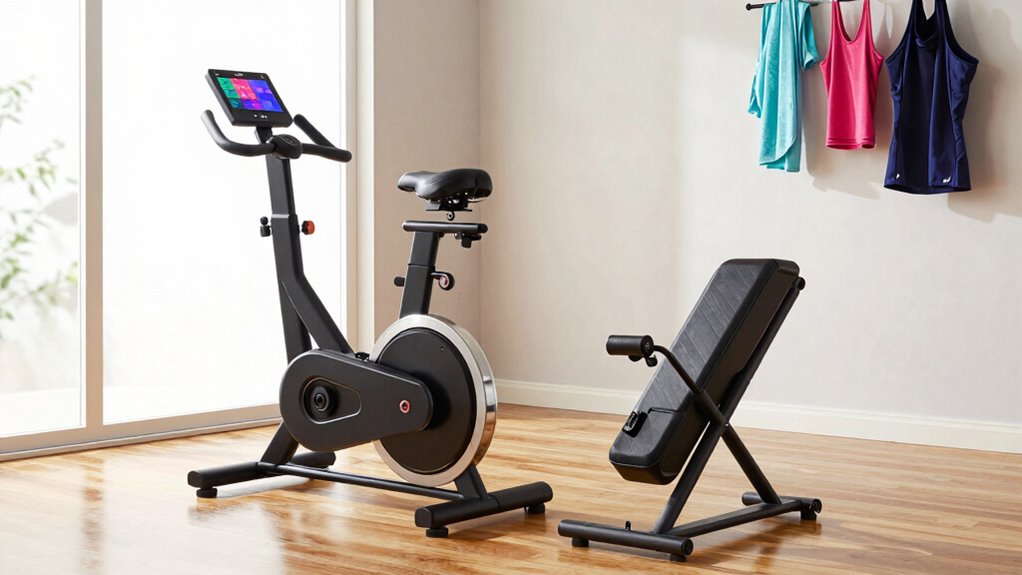
Your budget, available space, and daily convenience play essential roles in deciding between a smart bike and a trainer. Cost considerations can sway your decision—smart bikes often have a higher upfront price but require less setup, while trainers are more budget-friendly but need extra space. Space efficiency matters if your room is limited; smart bikes are compact and all-in-one, whereas trainers need room for mounting and movement. Convenience is also key: if you want quick setup and minimal fuss, a smart bike offers an all-in-one solution. Additionally, piercing care and hygiene is crucial if you spend extended periods on your bike indoors, ensuring cleanliness and comfort. Maintaining proper indoor air quality can also enhance your workout experience and health. Being aware of digital safety and etiquette can help you maintain a healthy and secure indoor training environment. Furthermore, considering ergonomic design can improve comfort and reduce the risk of injury during long sessions. Consider these factors carefully: essential factors can help you make a well-informed choice.
Should You Pick a Smart Bike or a Trainer? Which Is Right for Your Needs?
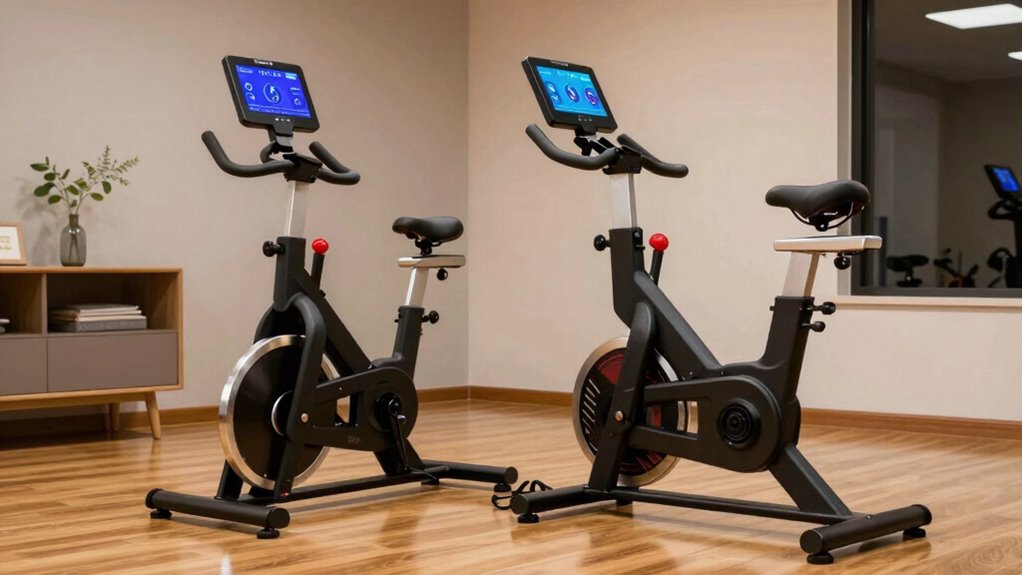
Deciding between a smart bike and a trainer depends on your specific fitness goals, space, budget, and daily routine. If you want immersive virtual riding and a seamless setup, a smart bike is ideal. It offers resistance customization and integrated screens for an engaging experience. Trainers, on the other hand, are more flexible and often more affordable, perfect if you already own a bike or prefer multi-use equipment. Consider these factors:
Choosing between a smart bike and a trainer depends on your space, budget, and virtual riding preferences.
- Space constraints
- Budget limitations
- Desire for virtual riding features
- Need for resistance customization
- Preference for all-in-one or adaptable setup
Smart bikes simplify virtual riding with built-in screens and fixed positioning, while trainers offer versatility and compatibility with different bikes. Choose based on which features align best with your fitness routine and environment. Additionally, home organization can play a role in creating a dedicated, clutter-free space for your indoor cycling setup, especially when considering the size and layout of your designated workout area. When selecting your equipment, it’s also important to review vacuum features to ensure your workout space remains clean and dust-free.
Frequently Asked Questions
Can a Smart Bike Replace Outdoor Cycling Entirely?
A smart bike can’t fully replace outdoor cycling because indoor cycling lacks outdoor equivalence in scenery, terrain, and fresh air. While smart bikes offer excellent training and convenience, they miss the variety and environmental engagement you get outside. If you prioritize consistent workouts and indoor convenience, a smart bike works well. But for outdoor experience, adventure, and real-world skills, nothing beats outdoor cycling.
How Compatible Are Smart Bikes With Various Training Apps?
Smart bikes generally offer excellent app compatibility and device integration, making it easy for you to connect with popular training apps like Zwift, TrainerRoad, and Rouvy. However, compatibility can vary depending on the brand and model, so you should check specific device features. Most smart bikes support Bluetooth or ANT+ connections, ensuring seamless synchronization with your preferred training platforms and providing a smooth, immersive workout experience.
What Maintenance Is Required for Smart Bikes Versus Trainers?
Think of maintaining your smart bike or trainer like tending a garden—you need to stay on top of it. For smart bikes, you’ll do bike cleaning regularly and install software updates to keep everything running smoothly. Trainers require less upkeep but still benefit from occasional cleaning and checking for wear. Both need routine inspections to ensure safety and peak performance, so don’t neglect to give them the TLC they deserve.
Are Smart Bikes Suitable for Advanced or Professional Cyclists?
Smart bikes are suitable for advanced athletes and professional training because they offer precise data, customizable workouts, and realistic riding experiences. You can push your limits, simulate outdoor terrain, and track progress effectively. If you’re serious about improving performance or competing at a high level, a smart bike provides the advanced features and durability needed for consistent, intensive training sessions. It’s an investment that supports your professional or competitive goals.
How Long Does It Take to See Fitness Improvements With Each?
Think of your fitness journey as planting a seed; with consistent training, you’ll see sprouts in about 3-4 weeks. Indoor smart bikes often show quicker results due to real-time feedback, but trainers require patience and proper recovery time for steady growth. Staying consistent with your workouts accelerates progress, and allowing ample recovery time guarantees you avoid burnout, leading to steady, lasting improvements in your cycling fitness.
Conclusion
Ultimately, choosing between a smart bike and a trainer is like tuning into your own rhythm. If you crave the steady beat of a dedicated ride, a smart bike keeps your cadence flowing smoothly. But if versatility and space are your jam, a trainer adapts to your dance. Listen to your goals, weigh your space, and let your fitness journey unfold like a well-choreographed symphony—guided by what makes your heart race and your spirit soar.