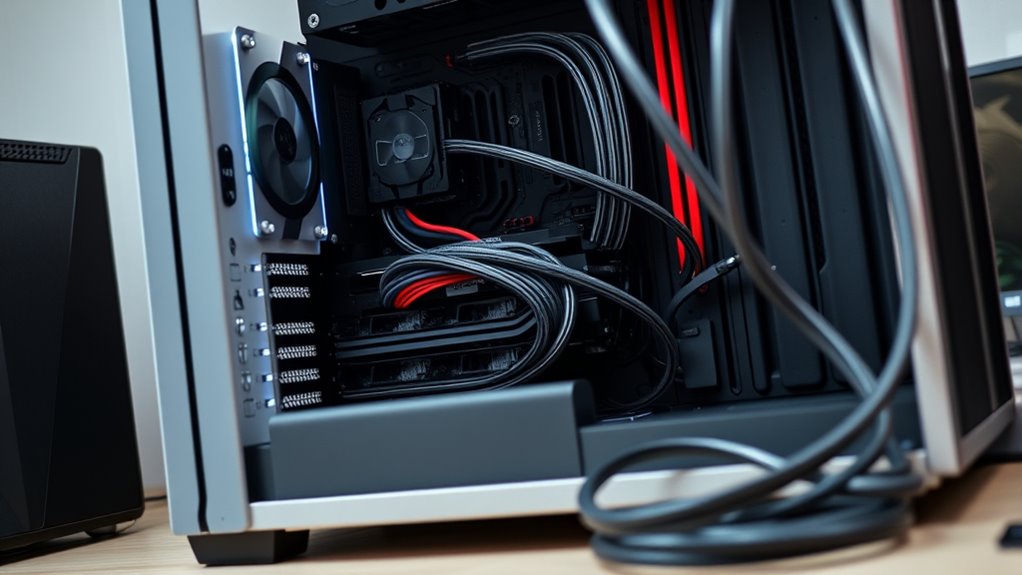

Internal cable routing gives your bike a sleek, modern look by hiding cables inside the frame, but it can be harder to maintain and repair. External routing is simpler to adjust and fix quickly, offering a classic style but exposing cables to dirt and damage. Your choice depends on your aesthetic preferences, maintenance willingness, and riding conditions. Keep exploring to learn more about how each option impacts performance and ease of upkeep.

Get sports gear delivered free — and shop member deals
- Fast, free delivery on millions of items
- Access to Prime Big Deal Days deals on October 6–7
- Prime Video, Amazon Music and more included
Key Takeaways
- Internal routing offers a sleek, modern appearance by hiding cables inside the frame, while external routing exposes cables for a traditional look.
- External routing allows easier access for maintenance, repairs, and troubleshooting compared to internal cable setups.
- Internal cables are better protected from dirt, grime, and weather, potentially increasing durability.
- External routing simplifies installation and adjustments, making it suitable for frequent tune-ups or harsh environments.
- The choice depends on aesthetic preference, maintenance willingness, and riding conditions, with internal routing favored for aerodynamics.

Have you ever wondered whether internal or external cable routing is better for your bike? Both options have their own appeal, but understanding their differences can help you decide which suits your riding style and maintenance preferences. One of the most noticeable distinctions lies in their aesthetic differences. Internal cable routing offers a sleek, clean look. The cables are hidden inside the frame, giving your bike a streamlined, modern appearance that appeals to those who value minimalism. If you prefer a tidy, uncluttered design, internal routing enhances your bike’s visual appeal, especially on high-end models or custom builds. Conversely, external cable routing exposes the cables along the frame, which can give your bike a more rugged or traditional look. This setup is often favored for its straightforward appearance and can contribute to a more classic or utilitarian aesthetic, making it easier to match with other bike components or accessories.
However, aesthetic appeal isn’t the only factor to weigh. Maintenance challenges markedly differ between the two routing methods. Internal cable routing, while visually appealing, can pose more difficulties when it comes to maintenance and repairs. Because the cables run inside the frame, accessing them requires removing parts of the frame or the handlebar, which can be time-consuming and sometimes tricky without the right tools or experience. Over time, internal cables may also be harder to inspect for wear or damage, making it more challenging to diagnose issues early. On the other hand, external cables are much easier to access, allowing you to quickly replace or adjust them without disassembling your bike. This ease of maintenance can save you time and effort, especially if you frequently perform tune-ups or if you ride in conditions that cause cables to wear out more quickly. External routing also simplifies troubleshooting, as you can often identify problems visually and address them without removing parts of the frame.
While internal routing tends to be more complex to maintain, it often provides better protection for the cables from dirt, grime, and the elements, which might extend their lifespan. External cables, however, are more exposed and may require more frequent cleaning and adjustments. Additionally, internal cable routing can contribute to aerodynamic efficiency, which is beneficial for competitive cycling and high-speed riding. Ultimately, your choice will depend on your priorities: if you value a sleek look and don’t mind dedicated maintenance, internal routing might be the way to go. If you prefer quick, simple repairs and a more traditional style, external routing could be more suitable. Both options have their strengths and drawbacks, so consider your riding environment, aesthetic preferences, and maintenance willingness before making your decision.
As an affiliate, we earn on qualifying purchases.
Frequently Asked Questions
Which Cable Routing Method Offers Better Airflow Performance?
Internal cable routing offers better airflow performance because it keeps cables hidden, reducing clutter that can block airflow. Plus, it enhances cable aesthetics, giving your build a cleaner look. The downside is that internal routing may limit cable flexibility, making installation more challenging. External routing, while easier to manage, can cause airflow disruptions. So, if airflow is your priority, internal routing is the way to go.
How Does Cable Routing Impact Overall System Cooling?
You might think cable routing doesn’t matter, but it actually plays a big role in system cooling. Poor cable management can block airflow, trapping heat and raising temperatures. On the other hand, neat cable routing boosts airflow efficiency, helping cool components better. So, while it seems simple, your choice of cable management directly impacts how effectively your system dissipates heat, making your PC run cooler and quieter.
Are There Specific Cases Better Suited for Internal Routing?
You’ll find that cases designed for internal routing excel if you want a sleek look and better cable concealment. These cases typically have hidden compartments and grommets, enhancing aesthetic appeal by hiding clutter. They’re ideal if you prioritize a clean build and improved airflow. However, they might be less convenient for quick upgrades. For a tidy, professional appearance, internal routing cases are your best choice.
What Tools Are Recommended for Internal Cable Management?
Did you know that using proper tools can reduce cable clutter by up to 40%? To manage cables effectively, you should invest in cable tie solutions and cable management panels. These tools help organize and secure wires neatly, making maintenance easier. Use cable ties to bundle cables, and install management panels for a clean, professional look. Your setup will be more efficient, safer, and visually appealing with these essential tools.
How Does Cable Routing Influence Upgradeability and Maintenance?
Cable routing considerably impacts upgradeability and maintenance by affecting cable flexibility and routing complexity. When cables are routed internally, you benefit from cleaner looks and easier airflow, but it can be tougher to access components for upgrades or repairs. External routing offers greater cable flexibility, making maintenance straightforward, though it may increase routing complexity and clutter. Your choice influences how easily you can upgrade or troubleshoot your system.
Conclusion
Choosing between internal and external cable routing depends on your priorities. Internal routing offers a cleaner look and better protection, reducing cable wear by up to 30%. External routing, however, makes maintenance easier and quicker. If you value aesthetics and durability, internal might be your best bet, but if convenience matters most, external is a smart choice. Ultimately, understanding these trade-offs helps you make the best decision for your setup and riding style.
Fall Picks
fall essentials
As an affiliate, we earn on qualifying purchases.