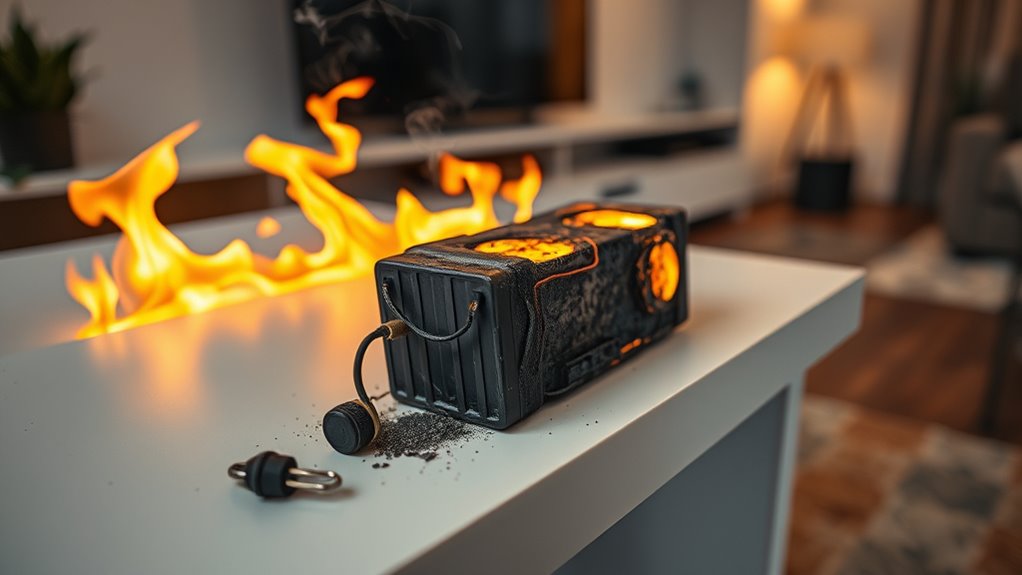

To guarantee fire safety at home with lithium-ion batteries, handle devices carefully, avoid overcharging, and watch for signs like swelling or overheating. Store batteries in fire-resistant containers and keep them away from flammable materials. If a battery catches fire, don’t use water—instead, use a Class D fire extinguisher designed for metal fires. Proper disposal and safety tips can prevent fires altogether; keep exploring to learn how to stay safer with these common batteries.
Key Takeaways
- Store lithium-ion batteries in fire-resistant containers in cool, dry areas away from flammable materials.
- Avoid leaving charging devices unattended and disconnect damaged or overheating batteries immediately.
- Keep a Class D fire extinguisher or specialized chemical suppressants nearby for lithium-ion fire emergencies.
- Properly recycle or dispose of damaged batteries through designated programs to prevent fire risks.
- Stay informed about signs of battery failure, such as swelling or overheating, and handle any issues promptly.
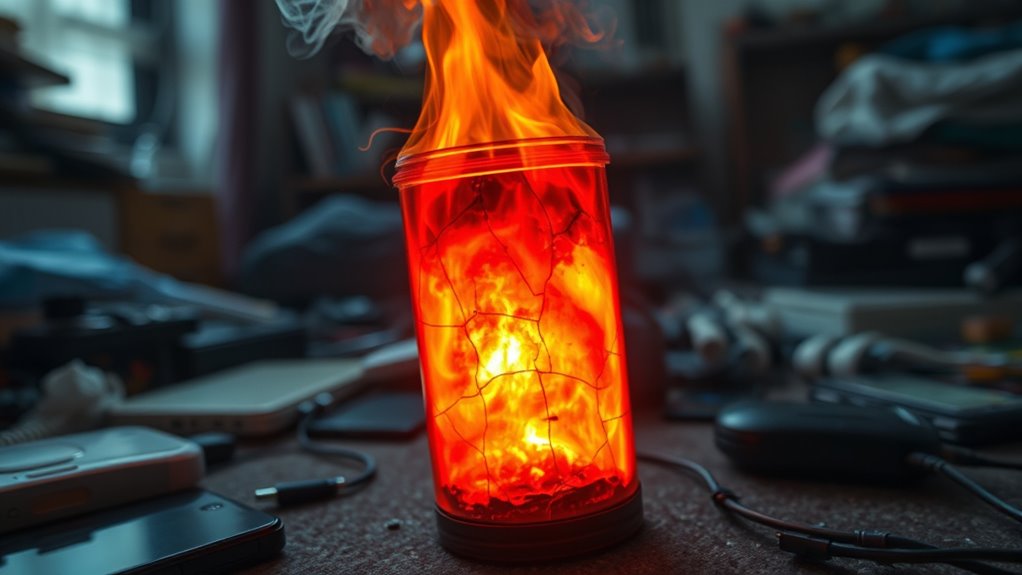
Lithium-ion batteries are everywhere, powering our smartphones, laptops, and even electric vehicles. Because of their widespread use, understanding how to handle potential fire hazards is essential. When a lithium-ion battery overheats or gets damaged, it can catch fire, releasing toxic fumes and causing significant damage. Thankfully, proper fire safety measures can help you respond effectively and prevent disasters. One important aspect is knowing about fire suppression methods suitable for lithium-ion battery fires. Unlike typical fires, these require specific approaches, as water isn’t always the best option. In some cases, applying water can worsen the fire or cause the battery to explode. Instead, fire suppression methods such as using Class D fire extinguishers designed for metal fires or specialized chemical agents are more effective. These suppressants work by smothering the flames and preventing the fire from reigniting.
Lithium-ion fires require specialized suppression methods like Class D extinguishers, not water, to prevent explosions and further damage.
In addition to knowing how to extinguish a lithium-ion battery fire, you should also consider proactive measures like proper battery recycling. When batteries reach the end of their life or become damaged, safely recycling them reduces the risk of fires caused by faulty or degraded cells. Many communities have designated recycling programs that handle lithium-ion batteries safely, preventing potential hazards in landfills or improper disposal. By staying aware of local recycling options, you contribute to safer environments and reduce the chance of accidental fires originating from discarded batteries. Moreover, storing batteries in a manner that minimizes risk—such as in fire-resistant containers—can further enhance safety.
It’s also wise to keep batteries stored in cool, dry places away from flammable materials. Avoid leaving devices charging unattended for long periods, especially overnight. If a battery begins to swell, overheat, or emit a strange smell, you should immediately disconnect it and move it to a safe location. Having a fire extinguisher nearby, specifically one suited for electrical or metal fires, can make a difference if an incident occurs. Remember, never try to put out a lithium-ion battery fire with water unless you’re certain it’s safe to do so; instead, rely on the appropriate fire suppression methods.
Knowing these fire safety tips isn’t just about protecting your property; it’s about safeguarding yourself and your loved ones. Investing in proper fire suppression tools, practicing safe storage, and ensuring batteries are recycled correctly are steps you can take today to minimize risks. Lithium-ion battery fires can be frightening, but with the right knowledge and preparedness, you can respond swiftly and effectively. Stay informed, stay safe, and always treat damaged or overheated batteries with caution. Your awareness and actions are essential to preventing small incidents from turning into dangerous emergencies.
Frequently Asked Questions
Can Lithium-Ion Batteries Be Safely Disposed of in Regular Trash?
You shouldn’t toss lithium-ion batteries in regular trash. Instead, you should participate in battery recycling programs to prevent fire hazards. Proper disposal helps with fire prevention because damaged or improperly discarded batteries can ignite, causing fires. Always check local regulations for recycling options and guarantee you handle batteries carefully. By recycling, you protect yourself and the environment from potential risks associated with lithium-ion battery fires.
What Are the Signs That a Lithium-Ion Battery Is About to Fail?
You’ll notice signs of impending battery failure through battery degradation, like reduced runtime or swelling. Overcharging risks also increase if your device heats up excessively or the battery feels unusually hot. Watch for rapid discharges, strange odors, or leaks. If you see any of these signs, stop using the battery immediately, avoid charging it, and dispose of it properly to prevent potential hazards.
How Long Do Lithium-Ion Batteries Typically Last in Household Devices?
Your lithium-ion batteries in household devices typically last 2 to 3 years, depending on usage and maintenance. Battery lifespan varies, but you should expect to replace them every 2 to 4 years to guarantee safety and peak performance. Regularly monitor for signs of wear or decreased capacity, and don’t delay replacements to prevent potential fire hazards. Proper care extends the life of your batteries and keeps your home safer.
Are There Specific Storage Tips for Lithium-Ion Batteries at Home?
You should store lithium-ion batteries in a cool, dry environment, away from direct sunlight and heat sources. Keep them in a partially charged state—around 30-50%—to prevent capacity loss. Always follow proper battery recycling procedures when disposing of old or damaged batteries. Avoid storing batteries in metal containers or environments with high humidity, as this can increase safety risks. Proper storage helps prolong battery life and reduces fire hazards.
What Should I Do if a Lithium-Ion Battery Overheats but Doesn’t Catch Fire?
When your battery overheats but doesn’t catch fire, don’t ignore it—think of it as a warning sign, not just a minor inconvenience. First, unplug the device and move it to a cool, ventilated area. Use a fire-resistant container if possible. Keep a fire extinguisher nearby, and monitor the battery closely. Remember, quick action is key in fire prevention, turning a potential disaster into just a moment of concern.
Conclusion
Think of your home as a garden, where lithium-ion batteries are like delicate seedlings. With careful watering and attention, they grow safely; neglect and mishandling can cause them to burst into flames like wildfires. By staying vigilant and following safety tips, you’re tending your garden wisely, ensuring it remains lush and safe. Remember, a little caution turns potential chaos into a peaceful sanctuary—your home’s own safe haven from fire hazards.