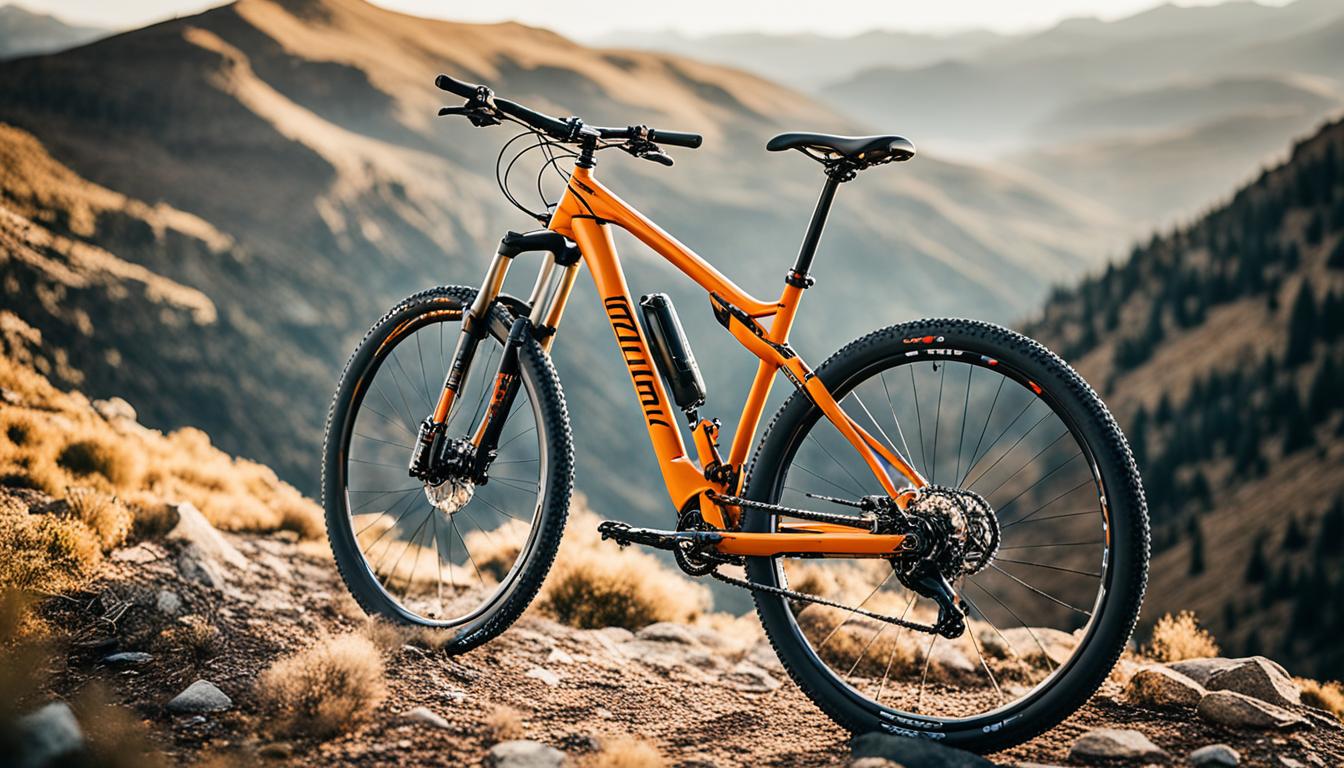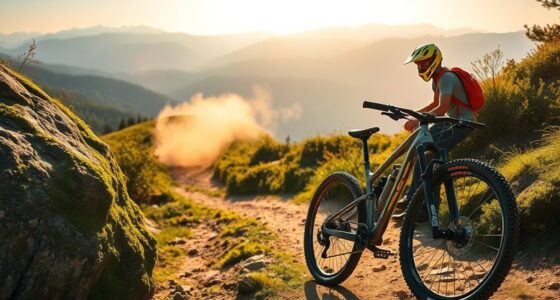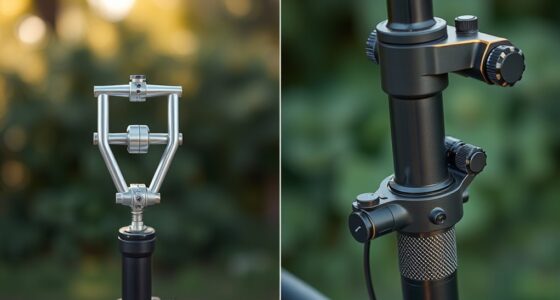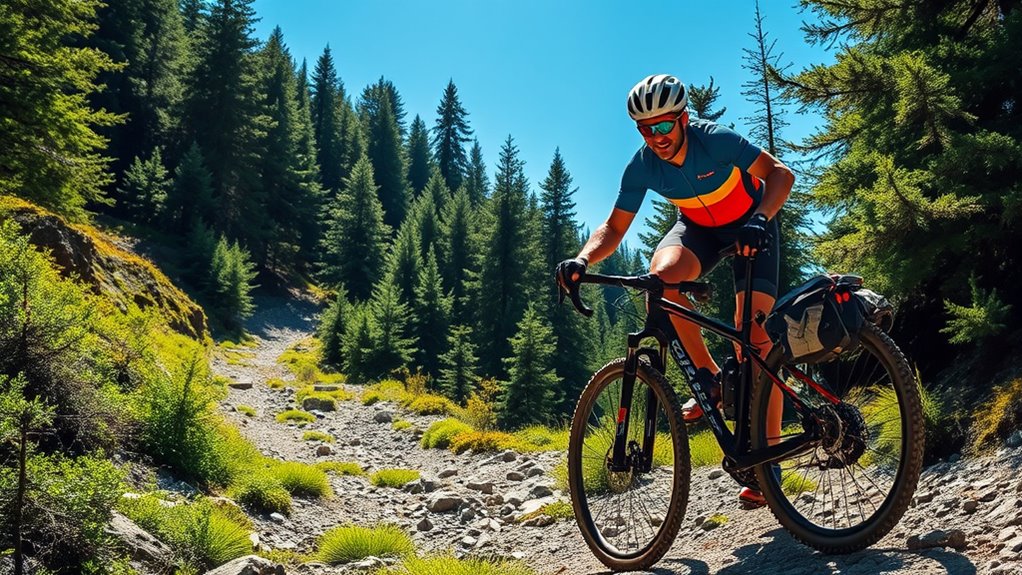

To prepare for long MTB climbs, focus on building your endurance through consistent aerobic workouts and interval training that mimics climb conditions. Strengthen your leg muscles with targeted exercises and optimize your nutrition—eat carbs before rides and fuel with easy-to-digest energy during climbs. Proper equipment setup can also conserve energy. Keep improving your fitness, and you’ll find yourself tackling longer, tougher climbs with less fatigue—if you keep exploring, you’ll discover more tips to elevate your performance.
Key Takeaways
- Build climbing endurance through regular interval training that simulates long mountain climbs.
- Strengthen leg muscles with targeted exercises to improve power and stability on steep grades.
- Prioritize carbohydrate-rich meals before rides and consume easily digestible carbs during climbs for sustained energy.
- Gradually increase ride duration and intensity to enhance cardiovascular capacity and muscular stamina.
- Use proper equipment and recovery nutrition to reduce fatigue and support long-term climbing performance.
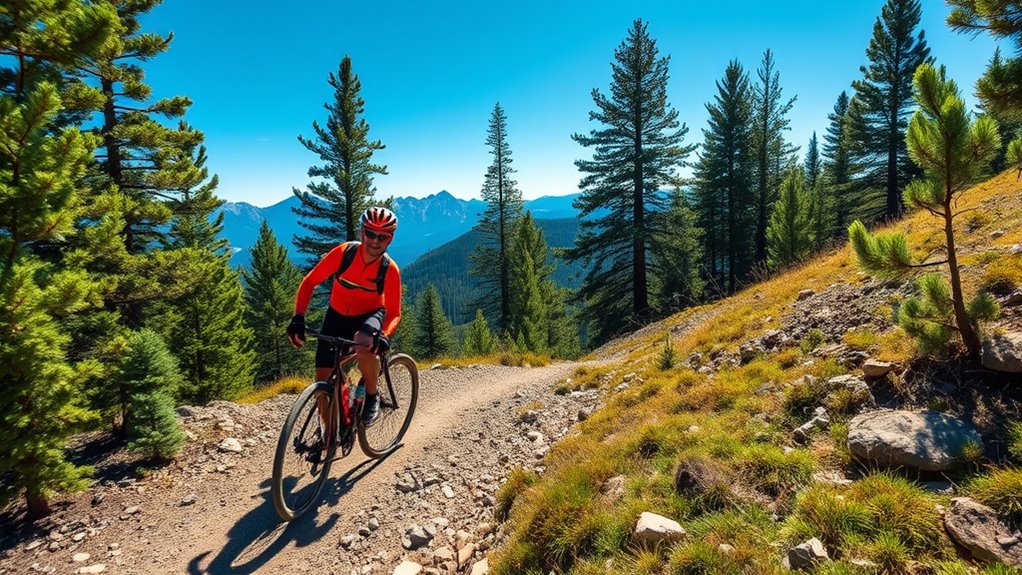
Preparing your body for long mountain bike climbs is essential for maintaining energy and avoiding fatigue. When tackling steep, sustained ascents, your climbing endurance becomes the foundation of your performance. Building this endurance requires consistent training that challenges your cardiovascular system and strengthens your leg muscles. Incorporate interval sessions, where you alternate between high-intensity efforts and recovery periods, to boost your stamina and simulate the demands of long climbs. Over time, these sessions help your body become more efficient at using oxygen and storing glycogen, which are critical for sustained effort.
Consistent interval training boosts endurance for long mountain bike climbs.
Alongside physical training, your nutrition strategies play a pivotal role in preparing your body for demanding climbs. Proper nutrition fuels your muscles and maintains your energy levels throughout the ride. Before heading out, focus on a balanced meal rich in complex carbohydrates like oats, whole grains, or sweet potatoes. These foods provide a steady release of energy, helping you sustain your effort over extended periods. During long rides, it’s vital to consume easily digestible carbs, such as energy gels, bars, or bananas, to replenish glycogen stores and prevent bonking. Hydration also plays a crucial role; drinking water consistently and supplementing with electrolytes helps maintain muscle function and prevents cramping.
As you build your climbing endurance, don’t overlook the importance of timing your nutrition. Eating a carbohydrate-rich meal 2-3 hours before your ride gives your body ample time to digest and store energy. During the climb, aim for small, frequent bites rather than large amounts at once, allowing your digestive system to keep up without causing discomfort. This approach ensures your muscles remain fueled and reduces the risk of sudden exhaustion. Additionally, selecting equipment with optimized weight distribution can improve your climbing efficiency by reducing fatigue and conserving energy throughout the ascent. After a long climb, prioritize recovery with a mix of carbs and protein to help repair muscles and replenish glycogen stores. A smoothie with fruit and yogurt or a sandwich with lean meat are effective options.
Consistency is key to enhancing your climbing endurance and refining your nutrition strategies. Regularly challenge yourself with longer, more intense climbs, and pay close attention to how different foods and hydration methods affect your energy levels. Over time, you’ll discover what works best for your body, allowing you to climb more efficiently and enjoy the ride. Remember, preparation isn’t just about riding harder; it’s about smart training and fueling your body properly so you can conquer those mountain ascents with confidence and stamina.
Frequently Asked Questions
What Should I Eat Before a Long MTB Climb?
Before a long MTB climb, focus on smart nutrition planning and meal timing. Eat a carbohydrate-rich meal 2-3 hours beforehand to fuel your ride, like oatmeal with fruit or a sandwich. Keep it light and easy to digest closer to the climb, such as a banana or energy bar 30-60 minutes before. Hydrate well, and avoid heavy, greasy foods that can cause discomfort or fatigue during your ascent.
How Can I Prevent Saddle Sores During Extended Rides?
To prevent saddle sores during long rides, focus on proper chamois selection and maintaining good skin hygiene. Choose a chamois that offers comfort, support, and moisture-wicking properties. Always wash and dry your skin thoroughly before riding, and consider applying a barrier cream to reduce friction. Take regular breaks to stretch and check for irritation, and guarantee your saddle fit is correct to minimize pressure and chafing.
What Gear Should I Carry for Emergencies on Long Climbs?
Think of your gear as a lifeboat in stormy seas. You should carry a spare tire, multi-tool, and patch kit to handle flats swiftly. Include a compact first aid kit for emergencies, like cuts or scrapes, and a chain lube for maintenance. Bring enough water and energy snacks to stay fueled. This preparedness keeps you afloat, ensuring long climbs remain manageable and safe.
How Do I Manage Hydration During Intense MTB Climbs?
During intense MTB climbs, you should manage hydration by drinking small amounts frequently to maintain electrolyte balance and prevent dehydration. Focus on hydration timing—sip water or electrolyte drinks every 15-20 minutes, especially if you’re sweating heavily. Carry a hydration pack or bottles with electrolytes, and listen to your body’s cues. This approach keeps you energized, prevents cramping, and guarantees you stay hydrated throughout the climb.
What Mental Strategies Help Maintain Motivation on Tough Climbs?
Ever wondered how to stay motivated during tough climbs? You can boost your mental strength with visualization techniques, picturing yourself reaching the top, feeling strong and accomplished. Set small, achievable goals along the way to keep your focus sharp. Remind yourself why you’re on this ride, and celebrate each milestone. These strategies help you push through fatigue and maintain motivation, turning challenging climbs into rewarding achievements.
Conclusion
As you push through those long climbs, you’ll notice how your fitness unexpectedly aligns with your resolve, making each pedal stroke feel just a bit easier. Sometimes, it’s in those quiet moments, when the trail seems to stretch endlessly, that your training and perseverance quietly converge. Remember, every ascent teaches you more about your limits—and how, in a strange twist, your strength grows just as the mountain demands it. Keep climbing; the summit’s worth every effort.