
Your MTB tire tread affects how well you grip different terrains. Knobby patterns with large, spaced lugs are great for loose dirt, mud, and rocky trails, shedding debris as you ride. Smoother or semi-slick treads work better on paved or hard-packed surfaces, reducing rolling resistance. Choosing the right tread pattern depends on where and how you ride, balancing grip, control, and speed. Keep exploring to discover how to optimize your tires for any trail.
Key Takeaways
- MTB tire treads are designed to optimize grip and traction for different terrains and riding styles.
- Knobby treads with large, spaced lugs excel in loose dirt, mud, and rocky conditions.
- Tread pattern affects the contact patch, influencing the tire’s grip and handling capabilities.
- Smoother or semi-slick treads reduce rolling resistance, ideal for pavement and hard-packed trails.
- Matching tread pattern to terrain enhances safety, control, and overall riding performance.

Have you ever wondered how your mountain bike’s tire tread affects your ride? The answer lies in the way tire grip interacts with different tread patterns, ultimately influencing your traction, control, and confidence on the trail. Tire grip is vital because it determines how well your tires stick to surfaces, whether you’re ascending a steep trail, carving through corners, or braking on loose gravel. The tread pattern plays a key role here, shaping how your tires make contact with the ground. Different patterns are designed for specific terrain types, and understanding these can help you choose the right tires for your riding style.
Understanding tire tread patterns helps improve traction and control on your mountain bike rides.
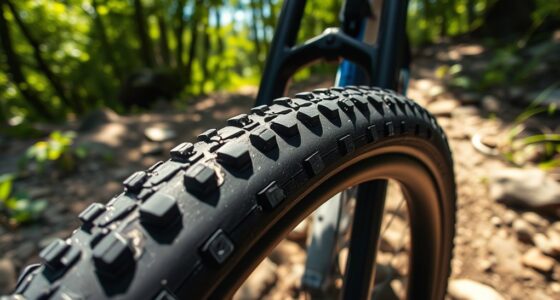
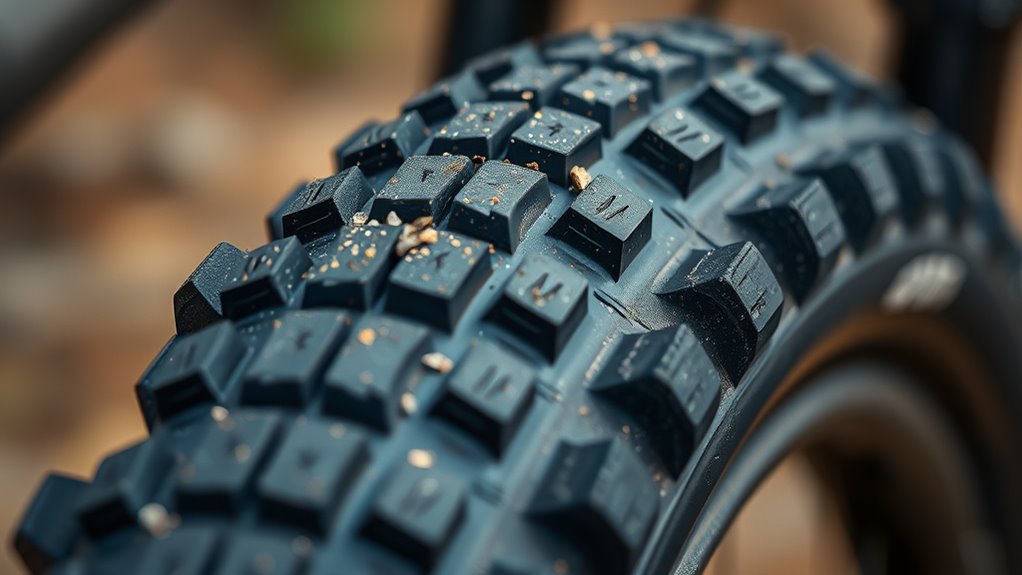
Tread patterns come in various designs, each with its advantages and ideal uses. For example, knobby tires feature large, widely spaced lugs that excel in loose dirt, mud, and rocky terrain. The spacing helps shed debris, preventing your tires from becoming clogged and maintaining maximum grip. Conversely, tires with smaller, tightly packed knobs are better suited for hard-packed trails or cross-country riding, providing a smoother ride and increased rolling efficiency. These patterns help distribute your weight evenly and maximize tire grip by increasing the contact patch—the area where the tire touches the ground. The more contact your tire has with the terrain, the better your grip, and the more control you’ll have over your bike.
Another important aspect of tread patterns is their influence on handling and comfort. Aggressive, chunky treads give you more bite and control on technical sections, but they can also increase rolling resistance, making pedaling feel harder on smooth surfaces. On the other hand, smoother or semi-slick treads reduce rolling resistance, helping you go faster on pavement or compact trails, though they might sacrifice some grip on loose or uneven terrain. The key is balancing these factors based on where you ride most often. If you mostly ride on challenging, rough trails, opting for tires with more aggressive tread patterns will boost your confidence and safety. If your rides are more casual or involve paved sections, smoother treads will serve you better.
Ultimately, the type of tread pattern you choose directly impacts your riding experience. It’s about matching your terrain and riding style to the right tire design to maximize tire grip and enhance performance. Understanding how tread patterns work helps you make informed decisions, so your tires give you the best possible traction and control in every situation. Whether you’re tackling rocky descents or cruising smooth singletracks, the right tread pattern ensures your ride is safe, efficient, and enjoyable.
Frequently Asked Questions
How Often Should I Replace My MTB Tire Tread?
You should replace your MTB tire tread when you notice significant tread wear, typically when the tread depth is less than 2mm or the knobs are worn down. Regularly check for uneven wear or cuts, as these signals indicate it’s time for replacement. Generally, plan to replace your tires every 1,500 to 3,000 miles, but always prioritize the replacement timing based on tread wear to maintain ideal grip and safety during rides.
Can Different Tread Patterns Improve Traction in Specific Terrains?
Yes, different tread patterns can improve traction on specific terrains. Knobby tires are ideal for loose, muddy, or uneven surfaces, providing better grip, while slick tires excel on smooth, hard-packed trails for speed. Open treads shed mud more effectively, whereas closed patterns offer more contact for better control. Choose a tread pattern based on your terrain to optimize traction, whether you need knobby versus slick or open versus closed designs.
What’s the Impact of Tire Tread on Rolling Resistance?
Sure, your tire’s tread might seem like just a pattern, but it actually impacts rolling resistance more than you’d think. A slick, low-profile tread compound and shallow tread depth reduce friction, helping you go faster with less effort. Ironically, the more aggressive the tread looks, the more it can slow you down, as deeper treads and softer compounds increase rolling resistance, making your ride feel like wading through mud.
Are There Eco-Friendly Options for MTB Tire Treads?
Yes, you can choose eco-friendly MTB tire treads by looking for options made from recycled rubber and biodegradable compounds. These tires reduce environmental impact without sacrificing performance. When shopping, check labels for sustainable materials, and support brands committed to eco-conscious manufacturing. By opting for recycled and biodegradable options, you help lower waste and pollution, making your rides greener while enjoying reliable traction and durability on your mountain biking adventures.
How Does Tread Design Affect Puncture Resistance?
You’ll find that tread design greatly impacts puncture resistance. By focusing on tread pattern optimization, you can enhance your tire’s ability to deflect sharp objects and reduce punctures. Additionally, choosing tires with puncture resistant compounds adds an extra layer of protection. Combining well-designed tread patterns with durable, puncture-resistant materials helps keep your ride smooth and minimizes the chance of flats, especially on rough or debris-filled trails.
Conclusion
Understanding MTB tire tread helps you choose the right grip for every trail. Imagine you’re tackling muddy conditions; a tire with aggressive, deep lugs will grip better and keep you stable. For smoother, dry trails, a less aggressive tread provides speed and efficiency. By selecting the appropriate tread based on terrain, you’ll ride confidently and enjoy every adventure. Remember, the right tire makes all the difference—so choose wisely and ride smarter.