When you ride at low intensity, your muscles primarily activate slow-twitch fibers, which are efficient at oxygen use and support endurance. As you increase effort, fast-twitch fibers are recruited to generate more force quickly, but they fatigue faster. Your body shifts between these fiber types depending on how hard you push. Understanding how your muscles respond can help you optimize your training and improve performance—keep going to discover more about these muscle dynamics.
Key Takeaways
- Low-intensity rides primarily activate slow-twitch fibers optimized for endurance.
- Increasing ride intensity recruits fast-twitch fibers responsible for power and speed.
- Higher effort shifts energy reliance from aerobic to anaerobic systems, leading to quicker fatigue.
- Muscle fiber response varies based on effort level, influencing training and performance strategies.
- Balancing ride intensity develops both endurance and explosive strength through targeted fiber activation.
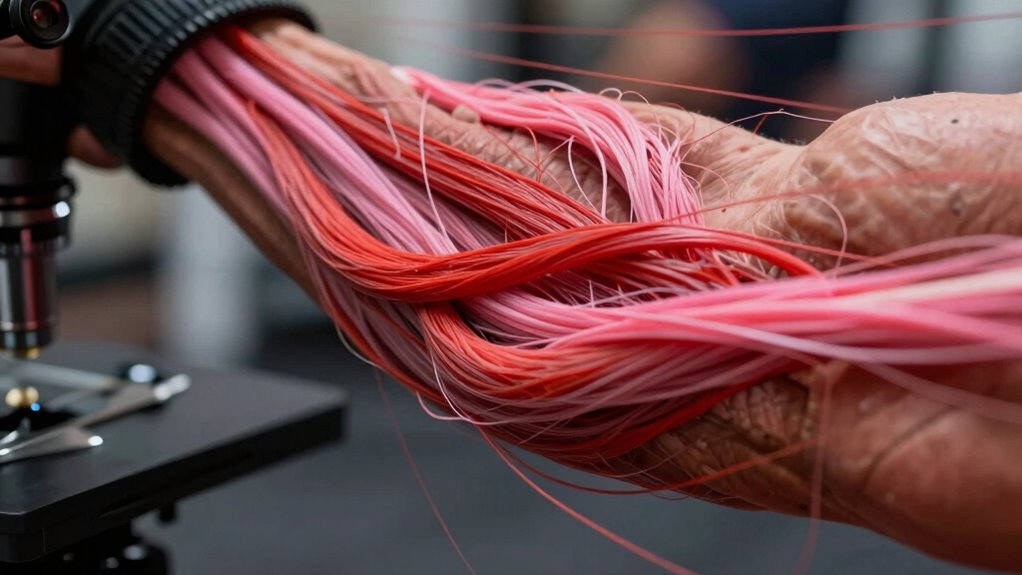
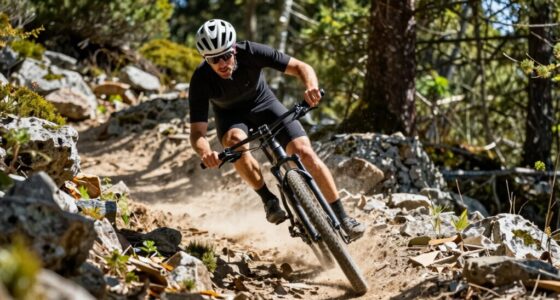
Understanding how muscle fibers respond to different ride intensities can help you optimize your training and improve performance. When you pedal at various intensities, your muscles recruit different types of fibers depending on the effort level. During low-intensity rides, your body primarily activates slow-twitch fibers, which are highly efficient at using oxygen and are built for endurance. These fibers are excellent for sustained efforts because they generate less force but can work for long periods without fatiguing. As you increase your ride intensity, your body begins recruiting fast-twitch fibers, which produce more force but tire quickly. These fibers are essential for sprinting or climbing, where maximum power is needed over a short duration. The transition from slow-twitch to fast-twitch fiber recruitment is a natural response to the demands placed on your muscles, and understanding this shift is key to tailoring your training.
The activation of different fiber types is closely linked to your energy systems. During low-intensity rides, your body relies mainly on aerobic metabolism, which uses oxygen to efficiently generate energy from fat and carbohydrate stores. This system supports the slow-twitch fibers, allowing you to ride longer without fatigue. As the intensity ramps up, your body shifts toward anaerobic energy systems, which do not require oxygen and provide rapid bursts of energy. These systems are crucial for fast-twitch fibers to generate the power needed during high-intensity efforts, like sprints or steep climbs. However, anaerobic energy production is less sustainable and results in the accumulation of metabolic byproducts, which contribute to muscle fatigue. Training methods play a vital role in enhancing your muscles’ ability to efficiently switch between these energy systems and optimize fiber recruitment based on ride demands. Incorporating proper recovery strategies can further aid in muscle adaptation and prevent burnout. Additionally, understanding the energy systems involved can help you structure your workouts to improve both endurance and power. This balanced approach not only boosts your overall power and stamina but also reduces the risk of overtraining or injury. By understanding how your muscle fibers respond to different intensities, you can design a training plan that maximizes your strengths, improves weaknesses, and ultimately makes you a more effective rider.

SoftGym Vibration Plate Exercise Machine for Lymphatic Drainage & Fitness
- Lymphatic Drainage & Recovery: Deeply stimulates lymphatic system with magnetic massage stones
- Full-Body Weight Loss Workout: 120 vibration levels for fat burning and muscle toning
- Multiple Speeds & Tracking: Adjust speeds and monitor progress via LED display and remote
As an affiliate, we earn on qualifying purchases.
As an affiliate, we earn on qualifying purchases.
Frequently Asked Questions
How Quickly Do Muscle Fibers Adapt to New Ride Intensities?
You can expect muscle fibers to adapt to new ride intensities within a few weeks, but it varies based on your fitness level and workout consistency. Fast-twitch fibers respond quickly to increased intensity, while slow-twitch fibers adapt more gradually. Typically, noticeable changes in muscle fiber types and strength occur around 4-6 weeks, emphasizing the importance of persistent effort and progressive overload for maximum adaptation.
Can Different Ride Intensities Help Prevent Muscle Fatigue?
In a manner reminiscent of a Renaissance scholar, yes, varying ride intensities can help prevent muscle fatigue. By alternating between high and low intensities, you promote muscle recovery and avoid overuse of specific fibers. This strategy encourages balanced development and endurance. Consistent ride variation, combined with proper rest, keeps your muscles fresh, reduces fatigue, and enhances overall performance, making your workouts more effective and sustainable over time.
What Role Do Nutrition and Hydration Play in Muscle Fiber Response?
Nutrition and hydration are essential for ideal muscle fiber response during rides. You should focus on nutrient timing, consuming carbs and protein before and after your workout to fuel muscles and aid recovery. Hydration strategies help maintain electrolyte balance, preventing cramps and fatigue. Staying properly hydrated ensures your muscle fibers function efficiently, especially during high-intensity rides. Prioritize these strategies to enhance endurance, reduce soreness, and promote quicker recovery post-ride.
Are There Specific Exercises to Enhance Muscle Fiber Performance During Rides?
You can enhance muscle fiber performance during rides by incorporating specific exercises like interval training and strength workouts, which boost your muscle endurance and power. Cross training benefits your muscles by challenging them in different ways, preventing plateaus. Additionally, recovery strategies such as proper rest, stretching, and foam rolling help your muscles repair and adapt, ensuring you’re ready for the next ride and maximizing your muscle fiber efficiency.
How Does Age Affect Muscle Fiber Response to Ride Intensity?
As you age, your muscle fibers become like fading colors—slow-twitch fibers linger longer, but fast-twitch fibers fade faster. Age-related changes reduce your muscle fibers’ responsiveness to ride intensity, making high-energy bursts less powerful. You might notice your muscles tire quicker or recover slower. But with consistent training, you can still strengthen your muscle fiber types, keeping your rides vibrant and your muscles resilient across the years.
Conclusion
So, next time you hop on your bike, remember: whether you’re cruising leisurely or sprinting like a caffeinated cheetah, your muscles are busy playing their own game of “Who’s the Toughest?” Don’t worry if your fibers get confused—they’re just trying to keep up with your ever-changing ride. Keep pushing those limits, or at least pretend you’re doing something impressive. After all, in the grand world of muscle fibers, you’re basically a superhero in disguise—sort of.