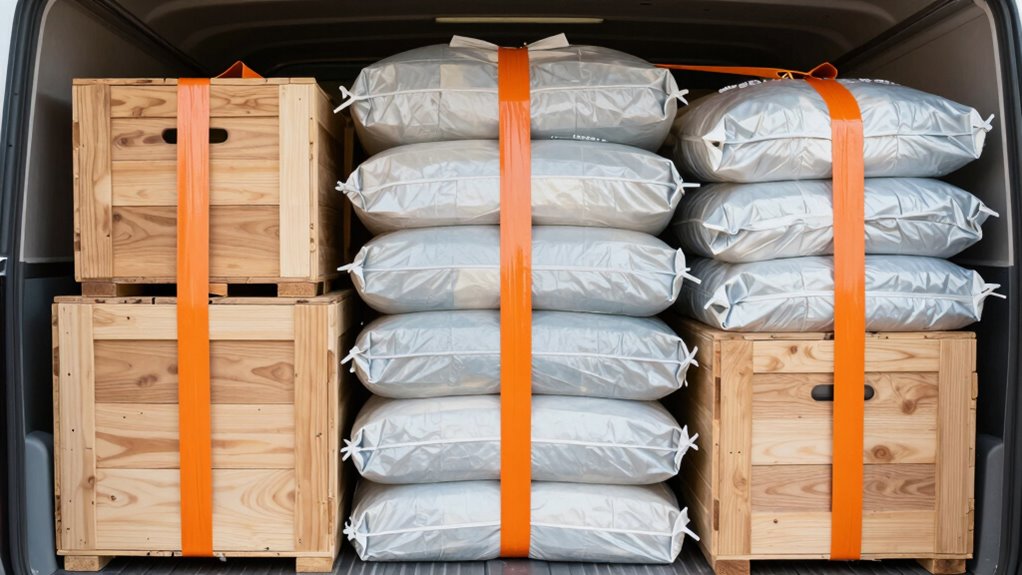

To prevent trailer sway, load heavier items low and toward the front, behind the axles, to keep the center of gravity low and forward for better stability. Distribute weight evenly side to side and secure loose items tightly with tie-downs. Use the correct hitch and aim for 10-15% of the trailer’s weight on the tongue. Maintain your vehicle and adjust your driving, especially on uneven roads, to stay safe. Keep exploring to learn more tips for a stable tow.

Get sports gear delivered free with Prime
- Fast, free delivery on millions of items
- Prime Video, Amazon Music and more included
- Member-only deals all year
Key Takeaways
- Place heavier items low and toward the front, behind the axles, to lower the center of gravity and improve stability.
- Distribute weight evenly side to side to prevent uneven pulling and sway.
- Keep 10-15% of the trailer’s weight on the tongue for proper balance.
- Secure all items tightly with straps to prevent shifting during transit.
- Avoid stacking heavy or bulky items too high to maintain a low, stable load.

When it comes to towing a trailer, one of the most common issues you’ll encounter is swaying, which can make driving unsafe and uncomfortable. To prevent this, you need to focus on proper trailer weight distribution, ensuring the load is balanced and centered. Proper weight distribution helps keep the trailer stable, reducing the risk of sway during transit. Start by placing heavier items low and toward the front of the trailer, just behind the axles. This positioning keeps the center of gravity low and forward, which improves stability. Avoid stacking heavy items too high or too far back, as that shifts weight to the rear and increases sway.
Proper weight distribution, with heavier items low and forward, enhances trailer stability and reduces sway during towing.
In addition to load placement, understanding and applying towing safety tips is crucial. Always check your trailer’s weight capacity and compare it with your vehicle’s towing limits before loading. Overloading the trailer can lead to swaying and even damage your vehicle or trailer. When loading, distribute the weight evenly from side to side to prevent uneven pull, which can cause the trailer to sway or jackknife. Use tie-downs and straps to secure loose items tightly, so nothing shifts during transit. Shifting loads are a common cause of instability, so make sure everything stays put.
Your hitch setup also plays a significant role in trailer stability. Use the right type of hitch, and ensure it’s properly rated for your trailer’s weight. An adjustable hitch or weight distribution hitch can help fine-tune the trailer’s balance, especially if your load isn’t perfectly balanced. When you’re packing, try to keep around 10-15% of the total trailer weight on the tongue. Too little tongue weight can cause sway, while too much can overload your vehicle’s rear suspension. Check your trailer’s tongue weight periodically to ensure it remains within the recommended range. Additionally, understanding the importance of biodiversity and sustainable practices can help promote safer and more eco-friendly towing habits, particularly when traveling through natural habitats or protected areas. Being aware of road conditions and how they affect stability is also vital for a smooth tow, especially in adverse weather or on uneven terrain. A well-maintained vehicle with properly inflated tires and reliable brakes further contributes to overall towing safety and stability.
Finally, always drive with caution and awareness. Maintain a safe speed, especially on curves or windy roads, and allow extra stopping distance. Regularly check your mirrors and be attentive to any signs of sway or instability. If you notice the trailer starting to sway, gently ease off the accelerator and steer straight until the sway diminishes. Avoid sudden movements or braking, which can exacerbate the problem. Staying informed about proper weight distribution and towing safety practices can significantly improve stability, reduce sway, and make your towing experience safer and more comfortable.
trailer weight distribution hitch
As an affiliate, we earn on qualifying purchases.
As an affiliate, we earn on qualifying purchases.
Frequently Asked Questions
How Does Trailer Weight Distribution Affect Sway Control?
Your trailer’s weight distribution directly impacts sway control. Properly balanced weight helps keep the trailer stable behind your vehicle, reducing the chances of sway. If the weight is uneven or too far back, sway increases, making driving unsafe. To improve sway control, guarantee load weight is centered and evenly distributed across the trailer, with more weight over the axles. This balance helps minimize sway and provides a smoother, safer ride.
What Are the Best Tools for Securing Loads in a Trailer?
Ever wondered what tools keep your cargo secure during transport? Cargo straps are vital—they wrap tightly around your load, preventing shifting. Load bars also play a key role by stabilizing and securing larger items or stacks. Together, these tools guarantee your trailer’s contents remain steady, reducing sway and enhancing safety on the road. Use them properly, and you’ll enjoy a smoother, safer journey every time.
Can Uneven Terrain Increase Trailer Sway?
Yes, uneven terrain can increase trailer sway because it causes instability and uneven weight distribution. When driving over rough ground, you should check your tire pressure regularly, as under-inflated tires can worsen sway. Also, make certain your brake performance is ideal, since it helps control trailer movement on uneven surfaces. Properly maintained tires and brakes, along with cautious driving, help minimize sway even on challenging terrains.
How Often Should I Check Trailer Load Security During a Trip?
You should check your trailer load security regularly during your trip, ideally every 1 to 2 hours or after driving on rough terrain. This is essential for trailer maintenance and ensuring safety. Stay alert and be aware of any signs of sway or shifting. By doing so, you’ll prevent accidents, maintain control, and keep your load secure. Consistent checks help you respond quickly and avoid bigger issues down the road.
Are There Specific Trailer Accessories That Reduce Sway?
You’ll find that specific trailer accessories, like sway control devices and a sturdy trailer hitch, really help reduce sway. Sway control bars or hitch-mounted anti-sway systems work by aligning your trailer’s movements, making your drive smoother. It’s a bit like finding the right balance in a dance—you don’t want to overcorrect, but a good sway control accessory keeps everything steady. Trust me, investing in these makes a noticeable difference on long trips.
Conclusion
By carefully packing your trailer, you’ll create a stable, balanced journey that feels as smooth as a calm river. Imagine the trailer as a steady ship, gliding effortlessly through the road’s twists and turns, unaffected by gusts or sudden shifts. When your load is evenly distributed and secured tightly, you’ll experience the peaceful ride you’re after, with no sway to disturb your voyage. Now, hit the road with confidence, knowing your trailer will stay steady every mile.
Halloween Picks
halloween
As an affiliate, we earn on qualifying purchases.