When you corner on a bicycle, physics involves gyroscopic forces from the spinning wheels, which help stabilize your bike, and the need to lean into the turn to balance centrifugal and gravitational forces. Tire grip and lean angle work together to prevent slipping or tipping over. Faster speeds increase gyroscopic effects and require sharper leaning, while body positioning fine-tunes control. If you want to master these interactions, you’ll find more insights below.
Get ready for Prime Big Deal Days — try Prime free
Exclusive member deals on October 6–7, plus fast free delivery. Cancel anytime.
As an affiliate, we earn on qualifying purchases.
Key Takeaways
- Gyroscopic forces from spinning wheels resist changes in orientation, stabilizing the bicycle during turns.
- Leaning the bike inward balances centrifugal and gravitational forces for controlled cornering.
- Tire grip and lateral friction prevent slipping and support the required lean angle.
- Increased speed enhances gyroscopic stability and necessitates a greater lean angle for turns.
- Proper body and bike positioning optimize force balance, ensuring safe and efficient cornering.

Bicycle cornering might seem simple, but it relies on a fascinating interplay of physics principles that keep you balanced and turning smoothly. When you lean into a turn, two key forces come into play: the gyroscopic effect and your lean angle. The gyroscopic effect refers to the spinning wheels’ resistance to changes in their orientation. As you pedal and pick up speed, your wheels spin faster, creating a gyroscopic force that helps stabilize the bike. This force resists sudden tilting or wobbling, giving you a sense of stability as you lean into a corner. The faster your wheels spin, the stronger this effect becomes, making high-speed cornering feel more controlled.
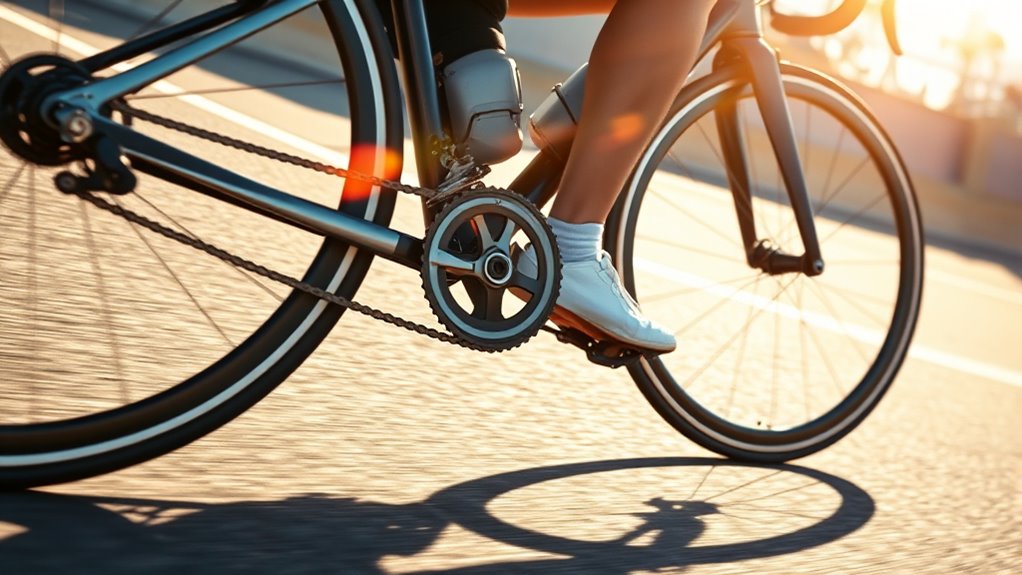
The gyroscopic effect of spinning wheels helps stabilize your bike during cornering at higher speeds.
However, the gyroscopic effect alone isn’t enough to explain why you stay balanced during a turn. That’s where your lean angle comes into play. When you approach a corner, you naturally lean your bike and body inward. This lean creates a balance between the centrifugal force pushing you outward and the gravitational force pulling you downward. To maintain a stable turn, your lean angle must be just right—it’s a delicate balance. If you lean too little, you risk slipping outward; lean too much, and you might lose traction or even tip over. The essential lean angle depends on your speed and the sharpness of the turn. As you go faster, you need to lean more to counteract the increased centrifugal force. Conversely, at lower speeds, less lean is necessary.
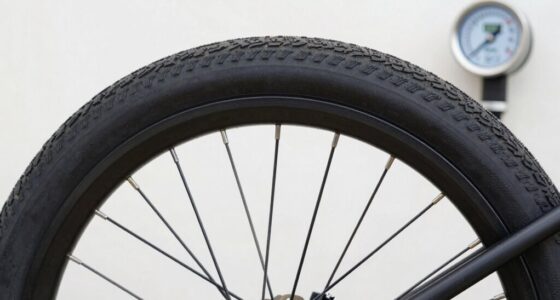
Your body and bike work together to manage this balance. You steer into the turn, and your lean angle adjusts accordingly. As you lean, the contact patches of your tires with the road shift, providing the grip needed to maintain the turn. The tires generate lateral friction that helps resist the outward force and keeps you on the curved path. The interplay between your lean angle and tire grip is vital; if your lean exceeds what your tires can handle, you might slide out. On the other hand, a proper lean angle combined with the gyroscopic effect of spinning wheels creates a stable, controlled turn. Additionally, understanding the role of wheel speed can help optimize your cornering technique for safety and efficiency.
Ultimately, successful cornering depends on understanding and managing these physics principles. Speed influences the gyroscopic effect and the necessary lean angle, while your body position and steering inputs fine-tune the balance. As you gain experience, you instinctively find the right lean angle and leverage the gyroscopic stability to navigate turns smoothly. It’s a precise dance of forces, where physics guides your movements, helping you corner confidently and safely.
bicycle wheel gyroscopic stabilizer
As an affiliate, we earn on qualifying purchases.
As an affiliate, we earn on qualifying purchases.
Frequently Asked Questions
How Does Tire Pressure Affect Bicycle Cornering?
Lower tire pressure increases tire grip and traction control, helping you corner more confidently. It allows the tire to deform slightly, providing a larger contact patch with the road, which improves grip. However, if pressure’s too low, you risk pinch flats and instability. Higher pressure reduces rolling resistance but lessens traction, making it harder to maintain control during sharp turns. Find a balance that suits your riding style and conditions.
What Role Does Rider Weight Distribution Play?
You hold the reins when it comes to weight distribution, and it really makes a difference. By shifting your weight toward the inside of the turn, you lower your bike’s center of gravity, giving you better balance and control. This weight shift helps the bike grip the road more effectively, making cornering smoother. Think of it as riding on a tightrope—you need to stay balanced for a safe and swift turn.
How Do Different Bicycle Frame Geometries Influence Cornering?
Different bicycle frame geometries considerably influence your handling characteristics during cornering. A slacker head angle and longer wheelbase improve stability, making sharp turns smoother. Conversely, a steeper head angle and shorter wheelbase enhance agility, allowing quicker responses. Your choice of frame geometry impacts how confidently you can navigate corners, with relaxed geometries offering more control and aggressive setups providing nimbleness, so select based on your riding style and terrain.
Can Bicycle Material Impact Cornering Stability?
Yes, bicycle material impacts cornering stability. A stiffer frame improves control during turns, reducing flex that can cause wobbling. Materials like carbon fiber offer high frame stiffness, enhancing responsiveness, while steel or aluminum may slightly flex, affecting stability. Additionally, durable wheels maintain consistent grip and responsiveness, vital during cornering. Together, the right material choice ensures your bike remains stable and predictable, giving you confidence and safety on tight turns.
How Does Weather Affect Cornering Performance?
Weather considerably impacts your cornering performance. Rain impact makes the surface slippery, reducing your grip and increasing the risk of slipping. Wind effects can push you off course or make steering more challenging. You might need to slow down, brake earlier, and stay more alert to adapt to these conditions. Proper tire choice and cautious handling help you maintain control and stay safe during adverse weather.
Conclusion
As you carve through turns, remember that bicycle cornering is like a delicate dance with physics guiding your every move. The interplay of forces keeps you balanced on the knife’s edge, turning curves into a symphony of control and grace. Embrace the physics beneath your wheels, and every bend becomes a brushstroke on your journey. When you master this invisible language, your ride transforms into a fluid, poetic experience—where science and freedom collide in perfect harmony.
NFL season / tailgating Picks
team gear
As an affiliate, we earn on qualifying purchases.