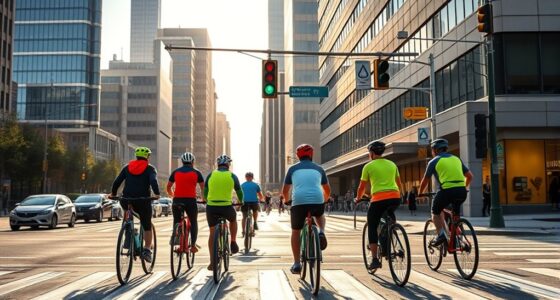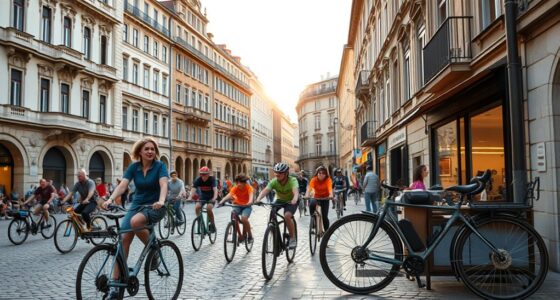
Protected intersections change cycling safety by designing layouts that clearly separate cyclists from vehicles and pedestrians, reducing conflicts and improving visibility. Features like curb extensions and raised bike lanes help drivers see cyclists better, making them more cautious. These designs also prioritize vulnerable road users, encouraging safer behavior. By integrating green infrastructure and strategic planning, protected intersections create a safer, more sustainable environment for all. Interested in how these features work together? Keep exploring to discover more.

Get sports gear delivered free with Prime
- Fast, free delivery on millions of items
- Prime Video, Amazon Music and more included
- Member-only deals all year
Key Takeaways
- They enhance cyclist visibility through design features like raised bike lanes and curb extensions.
- They reduce conflicts between drivers and cyclists by directing traffic differently at intersections.
- Improved sightlines and clear sightlines increase awareness of cyclists, lowering accident risk.
- Strategic landscaping and green infrastructure promote safer, more sustainable urban environments.
- Overall, protected intersections create a safer environment by prioritizing cyclist safety without disrupting traffic flow.

Have you ever wondered how city planners can make cycling safer without sacrificing traffic flow? One of the most effective ways is through the design of protected intersections. These intersections are built to prioritize cyclist safety while maintaining smooth vehicle movement. When you approach a protected intersection, you notice that the layout directs drivers and cyclists differently, reducing conflicts and improving overall safety. But what really makes these intersections stand out are factors like pedestrian visibility and signal timing, which work together to create a safer environment for everyone.
Pedestrian visibility is vital because it ensures that drivers can easily see pedestrians and cyclists, reducing the risk of accidents. In protected intersections, design elements such as curb extensions, raised bike lanes, and clear sightlines help improve visibility. These features ensure that both pedestrians and cyclists are more noticeable to drivers, especially when vehicles are turning or stopping. When pedestrian visibility is high, drivers are more aware of their surroundings, which encourages more cautious driving behavior and creates a safer crossing environment. Additionally, incorporating biodiversity considerations into intersection design can enhance environmental quality and promote sustainable urban living. Recognizing the importance of urban ecosystem health, planners can integrate green infrastructure that benefits both safety and ecological diversity. Including green infrastructure can also support urban resilience by helping cities better withstand environmental challenges while improving safety outcomes. Furthermore, designing intersections with ecological impacts in mind can support biodiversity and foster healthier urban ecosystems.
Products Worth Considering

Garmin Index Sleep Monitor

Therabody SmartGoggles 2nd Gen Heated Eye and Temple Massager

GoPro HERO Compact Waterproof 4K Action Camera
As an affiliate, we earn on qualifying purchases.
Frequently Asked Questions
How Do Protected Intersections Impact Pedestrian Safety?
Protected intersections boost pedestrian safety by improving pedestrian visibility and better crosswalk positioning. You’ll find that clearer sightlines allow pedestrians to be seen more easily by drivers, reducing accidents. Well-placed crosswalks guide pedestrians safely across streets and signal prioritization. These design features calm traffic, making drivers more aware of pedestrians and encouraging safer crossing behaviors, ultimately creating a safer environment for everyone using the intersection.
Are Protected Intersections Cost-Effective for Cities?
Think of protected intersections as the Swiss Army knives of urban planning—they might seem pricey upfront but save costs long-term. Yes, they’re cost-effective for cities, thanks to improved safety and reduced accidents. A thorough cost analysis shows these investments lower healthcare and emergency costs while encouraging cycling. While initial setup can be significant, the long-term benefits in safety, mobility, and urban livability make protected intersections a smart, economical choice for modern cities.
What Are Common Design Challenges With Protected Intersections?
You may face design challenges with protected intersections, especially around signal timing and signage clarity. Ensuring signals are well synchronized helps cyclists and drivers navigate safely, but it can be complex to coordinate. Clear signage is essential to guide cyclists and motorists effectively, yet designing intuitive, visible signs often proves tricky. Balancing these elements while maintaining safety and flow requires careful planning and ongoing adjustments.
How Do Protected Intersections Influence Traffic Flow?
Did you know that well-designed protected intersections can reduce bike crashes by up to 40%? They influence traffic flow by improving intersection visibility, making it easier for all users to anticipate movements. Traffic signal coordination guarantees smoother, safer crossing for cyclists and vehicles, preventing congestion. By clearly defining space and prioritizing bike safety, protected intersections streamline traffic, reduce delays, and create a more efficient flow for everyone on the road.
Can Protected Intersections Be Adapted for All Cycling Speeds?
Yes, protected intersections can be adapted for all cycling speeds through design flexibility and speed adaptation. By adjusting the corner radii, adding buffer zones, and incorporating flexible signage, you can guarantee safety for fast and slow cyclists alike. These modifications help slow down faster cyclists and give confident riders more space, making protected intersections safer and more accommodating for everyone, regardless of their cycling speed or skill level.
Conclusion
Imagine stepping into a safe harbor after steering through a stormy sea—that’s what protected intersections do for cyclists. They carve out calm in the chaos, shielding you from speeding cars and reckless drivers. By transforming busy crossings into secure gateways, these designs turn dangerous crossings into safe passages. So, embrace protected intersections; they’re the gentle guardians guiding you safely home, turning your ride into a smooth journey through a protected, peaceful oasis on your path.