

Regenerative braking is a smart technology that helps your vehicle recover energy when you slow down. Instead of wasting kinetic energy as heat, it uses the electric motor as a generator to convert that energy into electricity, which is stored in the battery. This process not only increases your vehicle’s efficiency but also extends your driving range. If you want to understand how this system works seamlessly with traditional brakes, there’s more to discover ahead.
Key Takeaways
- Regenerative braking recovers energy during deceleration by converting kinetic energy into electrical energy for battery storage.
- It uses electric motors as generators to capture energy that would otherwise be lost as heat.
- The system seamlessly combines with traditional brakes for safe, smooth stopping performance.
- Benefits include increased energy efficiency, reduced brake wear, and extended driving range.
- Advances continue to improve the effectiveness and integration of regenerative braking in electric vehicles.
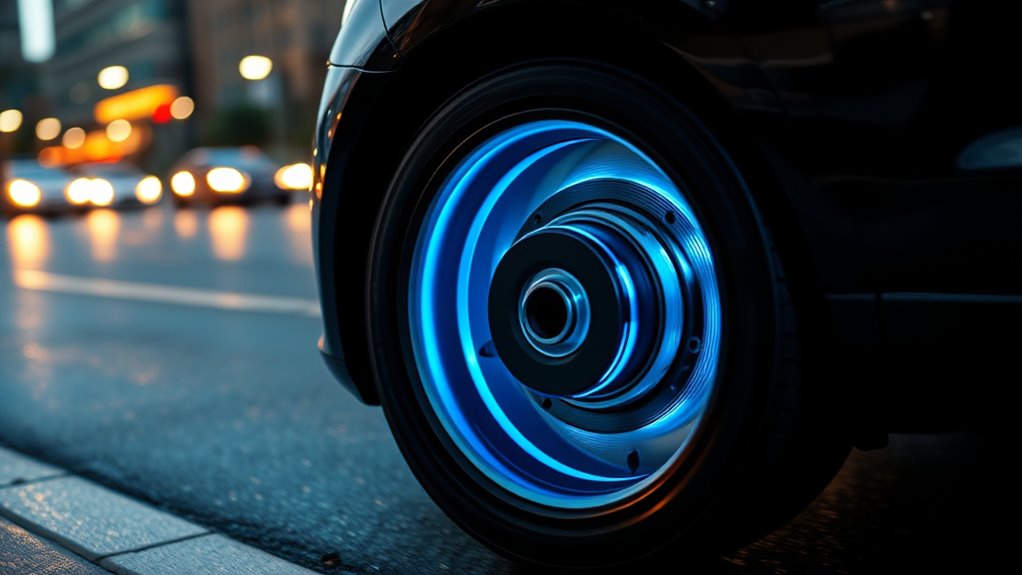
Have you ever wondered how electric vehicles recover energy during braking? It’s a fascinating process that involves the vehicle’s brake systems working in tandem with advanced technology to maximize efficiency. When you press the brake pedal, instead of relying solely on traditional friction brakes to slow down the car and dissipate energy as heat, regenerative braking systems kick in to recover some of that energy. This method, known as energy recovery, captures the kinetic energy generated as your vehicle slows down and converts it into electrical energy. The energy is then stored in the battery for future use, helping extend your driving range and improve overall energy efficiency.
The core of regenerative braking lies in its sophisticated brake systems. Unlike conventional brakes, which use friction pads pressing against brake rotors, regenerative brakes employ electric motors that act as generators. When you begin to brake, sensors detect your intent to slow down and activate the system. The electric motor reverses its role, converting kinetic energy into electrical energy rather than using it to turn the wheels. This process reduces the reliance on mechanical braking components, which means less wear and tear on brake pads and rotors, ultimately lowering maintenance costs. The brake systems coordinate seamlessly, switching between regenerative and traditional braking as needed, depending on factors like speed, battery charge state, and braking intensity.
Energy recovery during braking isn’t just about efficiency; it also enhances safety and driving experience. Since the vehicle can recover energy during deceleration, you’ll notice that your electric vehicle can often slow down smoothly without requiring heavy pedal pressure. This smooth deceleration is thanks to the precise control of regenerative braking, which can operate in conjunction with traditional brakes to provide a balanced stopping power. Additionally, the system’s ability to recover energy means your vehicle can recharge its batteries during everyday driving, reducing the need for frequent charging and making electric vehicles more practical for daily use. Mazda Tuning technology advancements continue to improve the efficiency of regenerative braking systems, making them more effective and integrated into vehicle design.
Regenerative braking offers smooth, efficient deceleration while recharging the battery during everyday driving.
In essence, regenerative braking transforms a simple act—braking—into an opportunity for energy conservation. The brake systems that enable this process are carefully integrated with the vehicle’s power management system to optimize energy recovery without compromising safety or performance. As technology advances, these systems become more efficient, allowing electric vehicles to harness more energy during each stop. So, next time you tap the brake pedal in an electric car, remember that it’s not just slowing down your vehicle; it’s also capturing energy that helps power your journey, making your ride more sustainable and cost-effective.
Frequently Asked Questions
How Does Regenerative Braking Affect Overall Vehicle Maintenance?
Regenerative braking boosts your vehicle’s system efficiency by recovering energy during braking, which reduces wear on traditional brake components. This process means less frequent brake repairs and replacements, saving you money over time. You’ll also benefit from smoother braking and improved overall maintenance since the system helps manage energy more effectively. Keep an eye on the system’s condition, but generally, regenerative braking extends the lifespan of your vehicle’s brake parts.
Can Regenerative Braking Be Used in All Types of Vehicles?
You can’t use regenerative braking in all vehicle types because it relies on energy recovery systems integrated with electric or hybrid powertrains. This system captures kinetic energy during deceleration and converts it into electrical energy, which is stored for later use. Traditional gasoline vehicles lack the necessary system integration, so regenerative braking isn’t feasible there. It works best in electric and hybrid vehicles designed specifically to harness and store that recovered energy efficiently.
What Are the Limitations of Regenerative Braking Systems?
You should know that regenerative braking systems have some limitations on energy recovery and system efficiency. They work best in stop-and-go traffic but are less effective at high speeds or during sudden stops. Additionally, they add complexity and cost to the vehicle’s design, and their efficiency depends on factors like battery capacity and temperature. So, while they improve energy recovery, they don’t fully replace traditional braking systems in all situations.
How Does Regenerative Braking Impact Battery Longevity?
Regenerative braking boosts your battery’s efficiency by recovering energy that would otherwise be lost. This process reduces strain on the battery, helping it last longer. By capturing energy during deceleration, your vehicle conserves power and minimizes wear. As a result, regenerative braking can positively impact battery longevity, ensuring you get more miles between charges and extending the overall lifespan of your electric vehicle’s battery system.
Is Regenerative Braking Effective in All Driving Conditions?
Did you know regenerative braking can recover up to 70% of energy during deceleration? It’s highly effective in city driving with frequent stops, but less so on highways or steep inclines. The system’s efficiency varies with driving conditions, making it less beneficial on consistent high-speed roads. Still, in stop-and-go traffic, regenerative braking maximizes energy recovery, helping you save battery power and improve overall vehicle efficiency.
Conclusion
While regenerative braking might seem like a small feature, it actually plays a big role in saving energy and reducing emissions. You might think it’s just a tech gimmick, but it truly makes your driving more efficient and eco-friendly. Embracing this technology means you’re not just saving fuel—you’re helping protect the planet. So, next time you brake, remember, you’re contributing to a cleaner, greener future, one stop at a time.