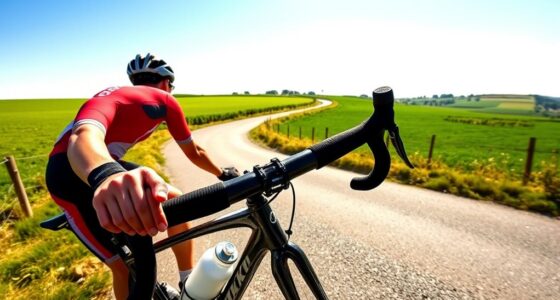
When gearing for mountain routes, choose compact chainrings and wide-range cassettes to handle steep climbs and varied terrain. Shift to lower gears before hitting ascents to maintain a steady cadence and prevent chain strain, and switch to higher gears on descents or flat sections to boost speed. Practice smooth, preemptive shifting to avoid mechanical issues and stay adaptable to changing terrain. Keep learning how to optimize gear choices for safer, more efficient mountain riding.
Key Takeaways
- Use a wide-range cassette and compact chainrings to handle steep inclines effectively.
- Shift to lower gears before approaching steep sections to maintain a steady cadence.
- Anticipate terrain changes and shift smoothly to prevent chain strain or damage.
- Adjust gears based on rider fatigue and bike response for optimal control.
- Practice gradual shifting during climbs and descents for safer, more efficient riding.
Are you prepared to tackle mountain routes effectively? Before hitting those challenging ascents and technical descents, it’s essential to focus on your bike maintenance and gear selection techniques. Proper bike maintenance ensures your bike performs reliably, preventing breakdowns when you need it most. Regularly check your drivetrain, brakes, and tires—clean the chain, lubricate moving parts, and ensure brakes are responsive. A well-maintained bike is smoother, safer, and more responsive, giving you confidence to push your limits on tough terrain. Neglecting maintenance can lead to mechanical failures that ruin your ride or even cause accidents, so make it a routine before every ride.
Regular bike maintenance and proper gear selection boost confidence on mountain routes.
Once your bike’s in top shape, gear selection techniques become your best friend. Mountain routes demand a strategic approach to gearing; you want to find the perfect balance between effort and efficiency. When approaching an ascent, shift into a lower gear before hitting the steep section. This preemptive shifting prevents chain strain and keeps your cadence steady, helping you conserve energy. Many riders make the mistake of waiting until they’re already struggling to shift, which can cause chain slips or damage. Practice shifting smoothly and anticipate upcoming terrain changes so you’re always prepared.
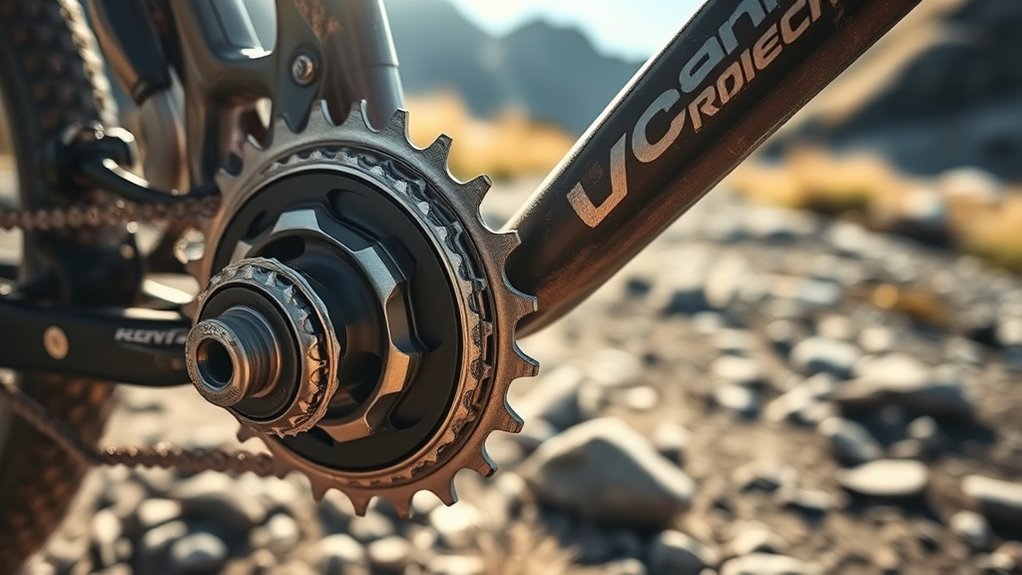
Your gear choices should also align with the terrain’s difficulty. For steep, sustained climbs, a compact chainring paired with a wide-range cassette allows you to maintain a comfortable cadence without overexerting yourself. Conversely, during descents or flat sections, shift into higher gears to maximize speed and efficiency. It’s essential to understand your bike’s gear ratios and how they influence your pedaling. The goal is to keep your pedaling smooth and consistent, avoiding abrupt shifts that can destabilize your balance or cause mechanical issues.
Additionally, mastering gear selection techniques means listening to your body and your bike’s response. If you feel your cadence slowing or your legs burning, shift to a lower gear. If you’re spinning too fast and losing control, move to a higher gear. Fine-tuning your gear choices during a ride takes practice, but it pays off by reducing fatigue and increasing your overall control. Remember, mountain routes often involve sudden changes in terrain, so staying adaptable with your gearing is key.
In the end, combining diligent bike maintenance with thoughtful gear selection techniques will empower you to handle mountain routes confidently. It’s about preparing your bike and your riding strategy so you can focus on enjoying the journey and conquering those challenging climbs. Proper preparation makes all the difference between a grueling struggle and a satisfying adventure.
Frequently Asked Questions
How Do I Choose the Right Gear for Different Mountain Routes?
To choose the right gear for mountain routes, consider the mountain terrain you’ll encounter and prioritize gear durability. For steep or rocky paths, select sturdy shoes with good grip and a reliable backpack. Pack layers suitable for changing weather, and bring essential safety gear like a map, compass, and first aid kit. Always match your gear to the specific challenges of the route to guarantee safety and comfort on your adventure.
What Safety Measures Should I Take When Gearing Up?
When gearing up for mountain routes, prioritize safety by checking your gear thoroughly and maintaining it regularly. Carry enough mountain hydration to stay hydrated during your climb, especially at high altitudes. Always test your equipment before starting and pack essential safety items like a first aid kit and navigation tools. Be aware of weather conditions, and inform someone about your plans. Staying prepared and vigilant helps you avoid accidents and enjoy a safe adventure.
How Does Weather Affect My Gear Selection?
Weather patterns greatly influence your gear selection because changing conditions demand adaptability. You should choose gear with high durability to withstand rain, snow, or wind, ensuring it doesn’t fail when you need it most. Waterproof and windproof clothing keeps you dry and warm, while layered options let you adjust to temperature shifts. Always check the forecast beforehand, so you can pack the right gear to stay safe and comfortable on your mountain adventure.
Can I Modify My Gear for Extreme Conditions?
Yes, you can modify your gear for extreme conditions. Focus on gear customization to suit harsh environments, like adding insulation or waterproof layers. Guarantee your equipment durability by choosing robust materials and reinforcing vulnerable areas. You might upgrade zippers, seams, or straps to withstand extreme weather. Always test your modifications beforehand to confirm they perform well under stress. Proper customization helps you stay safe and comfortable in challenging mountain conditions.
What Are Common Mistakes to Avoid When Gearing for Mountains?
Don’t put all your eggs in one basket. When gearing for mountains, avoid overpacking gear, which adds unnecessary weight and complicates your hike. Also, ignore terrain specifics at your peril; different mountain routes demand tailored gear. Double-check your equipment, pack only what’s essential, and research the terrain beforehand. By doing so, you’ll stay safe and prepared, making your adventure more enjoyable and less risky.
Conclusion
When gearing up for mountain routes, remember that proper equipment boosts safety and confidence. Did you know that 85% of mountain accidents involve gear failure or misuse? By choosing the right gear and staying prepared, you can substantially reduce risks and enjoy the breathtaking scenery with peace of mind. So, make sure you’re well-equipped, stay alert, and embrace the adventure—mountains are waiting for you to explore them safely!