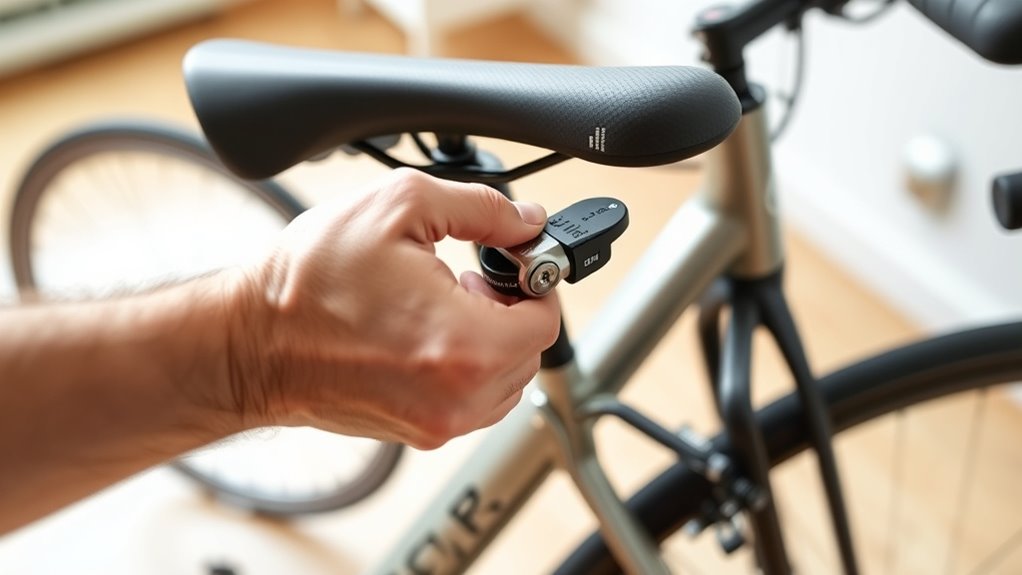

To set your saddle height at home, sit on your bike with a stable support or trainer. Make certain your heel lightly touches the pedal at the lowest point with your knee slightly bent around 25-35 degrees. Adjust the saddle until you find a comfortable, natural position that prevents knee overextension or hip rocking. Take small changes, test ride, and fine-tune for perfect fit. Keep exploring to discover detailed tips for a more precise, ergonomic setup.
Key Takeaways
- Sit on your bike with heels on pedals, pedal backward, and adjust saddle until your heel lightly touches the pedal at bottom dead center.
- Ensure your knees are slightly bent (25-35 degrees) during a normal pedaling position while seated.
- Make small, incremental saddle height adjustments, then test ride to evaluate comfort and efficiency.
- Check cleat or pedal alignment and consider riding style to fine-tune saddle height for optimal fit.
- Reassess saddle height periodically, especially after routine changes, weight fluctuations, or discomfort during rides.
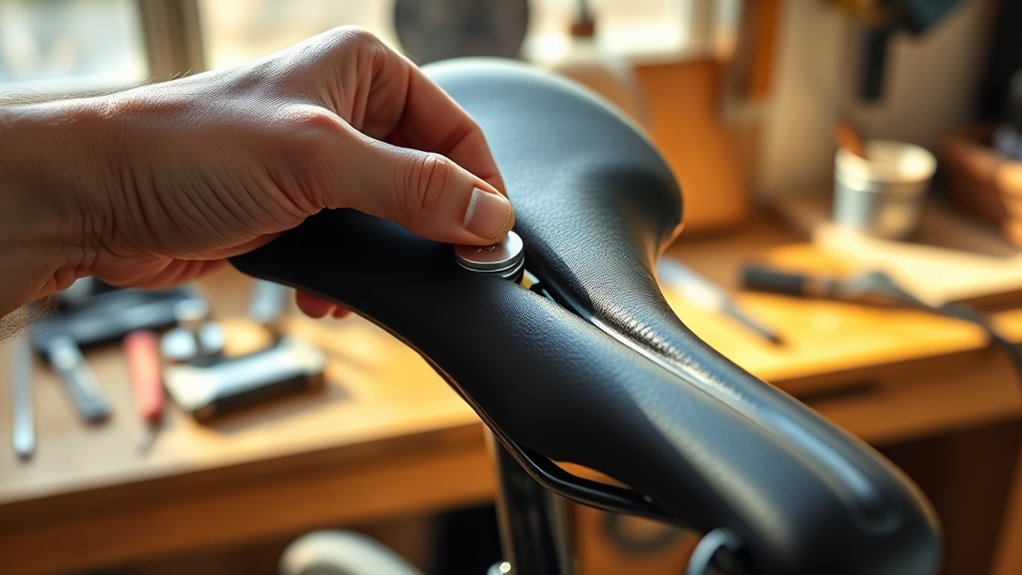
Adjusting your saddle height at home is a simple yet essential step to improve comfort and performance on your bike. When you get your bike fit right, it ensures that your body is in an ideal position, reducing fatigue and minimizing the risk of injury. Making ergonomic adjustments to your saddle height is straightforward and can greatly enhance your riding experience. The key is to find that sweet spot where your legs are comfortably extended at the bottom of each pedal stroke, without overextending or feeling cramped.
Adjust your saddle height for comfort, efficiency, and injury prevention by finding the perfect leg extension at the pedal’s bottom.
Start by sitting on your bike in a stable position, ideally on a trainer or with someone holding the bike steady. Your foot should be at the bottom of the pedal stroke with your heel resting lightly on the pedal. When you pedal forward, your knee should be slightly bent—around 25 to 35 degrees—allowing for efficient power transfer without putting unnecessary strain on your joints. If your knee is fully extended or your hips are rocking side to side, your saddle height needs adjustment. This approach ensures your bike fit promotes efficient pedaling and minimizes discomfort during long rides.
To fine-tune the saddle height, adjust it gradually. Turn the seat post clamp or quick-release lever to raise or lower the saddle in small increments. Once you’ve set the height, take a few test rides. Pay attention to how your body feels. If you notice discomfort in your knees or hips, or if you’re unable to comfortably reach the pedals, it’s time to revisit the adjustment. Remember, ergonomic adjustments should feel natural and support a smooth, efficient pedal stroke. Additionally, understanding the importance of high-quality components can help you maintain proper alignment and ensure your bike fits correctly over time.
Another useful tip is to check your cleats or pedals. Proper positioning helps maintain a correct bike fit and prevents misalignment issues that can cause pain or inefficiency. When setting saddle height, also consider your riding style and flexibility. For competitive cycling or long-distance riding, a slightly higher saddle might be beneficial, but never at the expense of comfort or proper biomechanics.
Regularly re-evaluate your saddle height, especially if you’ve changed your riding routine, gained or lost weight, or experienced discomfort. Making these adjustments at home saves you time and money, and allows you to tailor your bike fit precisely to your needs. By focusing on ergonomic adjustments and paying attention to how your body responds, you’ll enjoy a more comfortable, efficient ride every time.
Frequently Asked Questions
How Often Should I Recheck My Saddle Height?
You should recheck your saddle height every few weeks or after any major rides, as cycling biomechanics can change due to fatigue or adjustments. This helps guarantee saddle comfort and ideal power transfer. Regular checks prevent discomfort and injury, especially if you notice any pain or if your flexibility or riding style changes. Staying consistent with saddle height adjustments keeps you comfortable and riding efficiently over time.
Can Saddle Height Affect Cycling Posture Long-Term?
Imagine your bike becoming an extension of your body; yes, saddle height can influence your long-term cycling posture. When set correctly, it offers ergonomic benefits, enhancing comfort and efficiency. Conversely, an improper saddle height may lead to poor alignment, causing strain and increasing injury risk over time. Regularly checking and adjusting your saddle ensures ideal posture, promoting injury prevention and making every ride safer and more enjoyable.
What Tools Are Best for Measuring Saddle Height Accurately?
To measure saddle height accurately, you should use reliable tools like a digital or optical saddle measurement tool. These tools offer high accuracy and help you set your saddle at the ideal height. Avoid guesswork by ensuring the tool is properly calibrated. Use these measurements as a guide, but also test ride your bike to fine-tune the saddle height for comfort and long-term cycling posture.
Should Saddle Height Be Adjusted After Bike Repairs?
Yes, you should adjust your saddle height after bike repairs. Even minor fixes can shift your bike’s fit, affecting ergonomic positioning and comfort. When your bike undergoes repairs, it’s essential to reevaluate your setup to maintain proper bike fit. Proper saddle height ensures efficient pedaling and reduces strain, so take a moment to recheck and tweak it as needed, ensuring your riding remains smooth and comfortable.
Is There a Different Method for Setting Saddle Height for Kids?
Yes, setting saddle height for kids involves a different approach, focusing on child bike fitting and growth considerations. You should start with the saddle at a height where their leg is almost fully extended when the foot is on the pedal’s bottom position. As they grow, regularly check and adjust the saddle to guarantee proper fit and comfort, supporting safe riding and accommodating their development.
Conclusion
Now that you’ve adjusted your saddle height, you’re ready to hit the road. Think of your bike as a trusted steed, and this simple tweak as the first step toward a smoother, more comfortable ride. Every pedal stroke becomes a dance, effortless and free. Remember, a well-set saddle isn’t just a detail—it’s the foundation of your journey. With this small change, you’re steering your adventure toward greater freedom and joy.