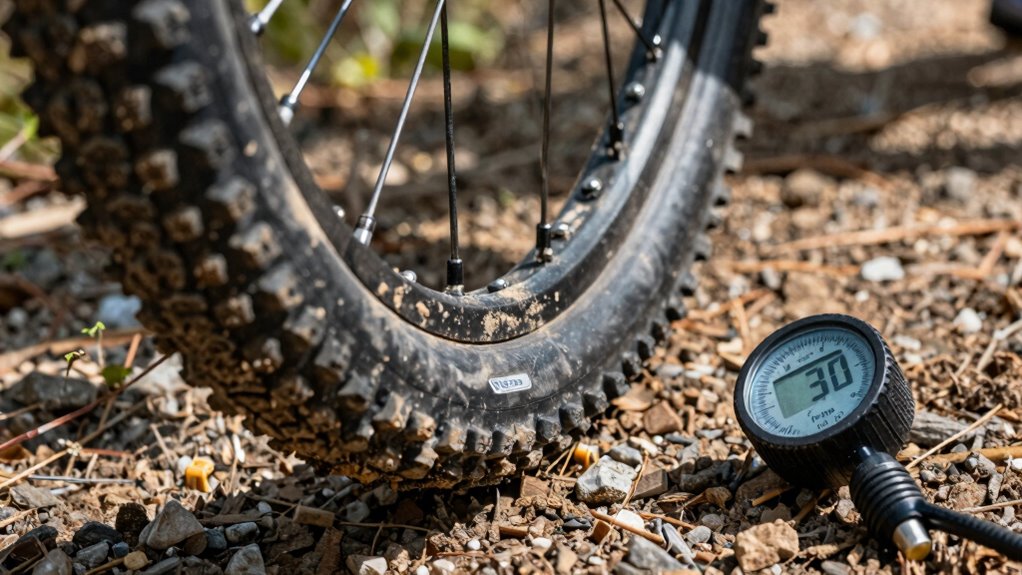

To set your tire pressure for mixed terrain days, start by checking the recommended range on your tires. Adjust pressure based on the terrain—raise it for smooth surfaces like asphalt and lower it for loose gravel or technical sections to increase grip. Carry a pump or CO2 inflator, and use a reliable gauge for precise settings. Monitor how your bike feels and tweak pressure as terrain changes. Keep exploring for tips on fine-tuning your setup for the best ride.

Get sports gear delivered free with Prime
- Fast, free delivery on millions of items
- Prime Video, Amazon Music and more included
- Member-only deals all year
Key Takeaways
- Check your tire’s recommended pressure range before riding on different terrains.
- Adjust pressure by reducing 10-15% for loose or rough sections to increase grip.
- Increase pressure for smooth surfaces like asphalt to improve speed and efficiency.
- Carry a reliable pump or inflator for quick on-the-go pressure adjustments.
- Monitor feedback from your bike and body to fine-tune tire pressure during the ride.

When riding on mixed terrain days, adjusting your tire pressure correctly can make all the difference in your performance and comfort. The key is understanding how tire pressure adjustments influence your ride and knowing how to tailor your settings to different surfaces. Terrain-specific settings help you maximize traction, control, and comfort, whether you’re on gravel, dirt, or tarmac. Before heading out, check the recommended tire pressure range printed on your tires; this gives you a starting point for adjustments based on your weight and bike type.
As you navigate varied terrains, you’ll need to make quick decisions about tire pressure adjustments. For smoother surfaces like asphalt, higher pressures reduce rolling resistance and improve speed. In contrast, when you hit loose gravel or rough trails, lowering your tire pressure increases the contact patch, which enhances grip and absorbs shocks. The goal is to find a balance that prevents pinch flats and feels comfortable without sacrificing control. Typically, reducing pressure by 10-15% from your standard setting works well for rougher sections.
Remember, terrain-specific settings aren’t a one-size-fits-all solution. For technical climbs or rocky terrain, slightly lowering tire pressure can give you better traction and prevent slipping. Conversely, on flat, firm surfaces, maintaining higher pressure minimizes tire deformation and keeps your ride efficient. Keep in mind that tire pressure isn’t static; it should be adapted as your ride progresses and as you encounter different surfaces. Carry a portable pump or CO2 inflator so you can quickly make adjustments on the trail. Paying attention to tire pressure and how it affects your ride can help you fine-tune your settings more effectively. Proper tire maintenance also plays a crucial role in ensuring your tires perform optimally across varied terrains. Additionally, understanding terrain conditions can help you anticipate the appropriate pressures for upcoming sections.
It’s also important to consider your bike’s weight and tire volume when setting pressures. Heavier riders or bikes with larger tires generally require slightly higher pressures to prevent pinch flats, but not so high that you lose comfort or traction. Use a reliable pressure gauge to ensure accuracy, especially if you’re switching between terrain types frequently. Experiment with small adjustments and note how each change impacts your ride—over time, you’ll develop an intuitive sense for terrain-specific settings that work best for you.
Ultimately, mastering tire pressure adjustments for mixed terrain means listening to your bike and your body. Feel free to fine-tune your pressures as you learn what works best, and don’t be afraid to experiment. Properly calibrated tire pressure can transform your ride—making it smoother, safer, and more enjoyable across all types of terrain. Incorporating proper tire maintenance from your knowledge base can help you keep your tires in optimal condition for these adjustments.
Frequently Asked Questions
How Often Should I Check My Tire Pressure During a Ride?
You should check your tire pressure at least once every 30 minutes during a ride, especially on mixed terrains. Regular Tire pressure maintenance helps prevent flats and maintains riding safety tips. Keep an eye on your tires, as changes in temperature or terrain can cause pressure drops. Properly inflated tires improve control and comfort, so stay vigilant and make quick adjustments as needed to guarantee a safe, smooth ride.
What Tools Are Best for Measuring Tire Pressure Accurately?
You should choose a reliable tire gauge to measure pressure accurately. Digital tire gauge options offer quick, precise readings and are easy to read, making them ideal for most riders. Analog gauges are durable and simple, perfect if you prefer a traditional feel. Both types are effective; just make certain the gauge is well-calibrated and fits comfortably in your hand for consistent results during your rides.
Should I Adjust Tire Pressure for Different Weather Conditions?
You should definitely adjust your tire pressure for weather adaptation and terrain variation. Rain, mud, or heat can all impact grip and ride comfort, so dialing in the right pressure helps you stay safe and efficient. Think of it as giving your tires a little extra attention—because who doesn’t want smoother rides and fewer flats, especially when weather throws a curveball? It’s a simple tweak that makes a big difference.
Can Incorrect Tire Pressure Damage My Bike or Tires?
Incorrect tire pressure can definitely damage your bike or tires. Many people believe Tire pressure myths, thinking low pressure always causes flats or high pressure means better speed, but these are common misconceptions. Over-inflated tires can burst or cause uneven wear, while under-inflated tires risk pinch flats and rim damage. Regularly checking and maintaining proper tire pressure guarantees a safer, smoother ride, prevents costly repairs, and extends tire life.
How Do I Know if My Tires Are Underinflated or Overinflated?
You can tell if your tires are underinflated or overinflated by checking for common signs like decreased traction, uneven wear, or a harsh ride. Don’t fall for tire pressure myths that overinflate for better speed or underinflate for comfort. Regular seasonal tire adjustments help maintain proper pressure, especially as temperatures change. Use a reliable gauge to measure pressure, and adjust accordingly to guarantee ideal performance and safety.
Conclusion
Adjusting your tire pressure for mixed terrain is like tuning a musical instrument—you need the right balance to hit the perfect note. By following the tips above, you’ll navigate rocky paths, sandy stretches, and muddy trails with confidence and control. Remember, the right tire pressure transforms your ride from a shaky ride to a smooth symphony across any terrain. So, keep your tires in tune, and let every adventure sing.
Halloween Picks
halloween
As an affiliate, we earn on qualifying purchases.