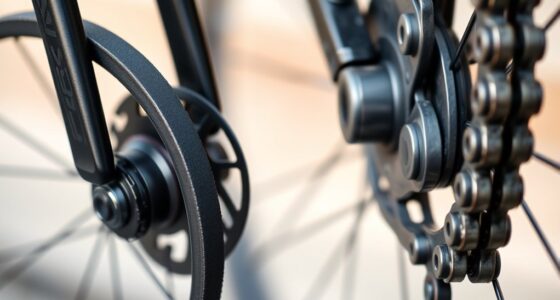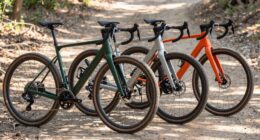
A single‑speed bike connects your pedals directly to the rear wheel with a fixed gear ratio, offering simplicity and efficient maintenance, but it relies on hand brakes for stopping. A coaster brake bike, on the other hand, uses an internal brake activated by pedaling backward, making it easier to operate for casual rides. Both options suit flat terrain, but understanding how they control speed and stopping power can help you choose the best fit—explore further to find out more.
Key Takeaways
- Single-speed bikes use a fixed gear ratio, while coaster brakes are an internal braking system activated by pedaling backward.
- Single-speed bikes typically have hand brakes for stopping, whereas coaster brakes engage automatically when pedaling backward.
- Coaster brakes require less maintenance and have fewer external components compared to hand-brake systems on single-speed bikes.
- Coaster brake bikes are ideal for flat, casual riding, but less effective on steep terrains or for emergency stopping.
- Hand brakes on single-speed bikes offer more precise control and adjustable braking force, suitable for diverse riding conditions.
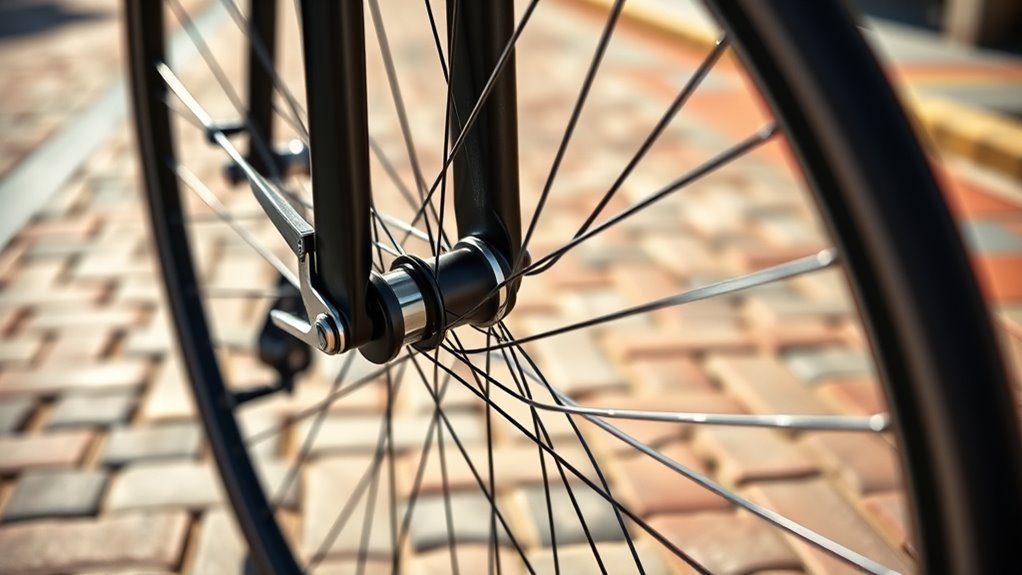
When choosing a bike, understanding the differences between a single-speed and a coaster brake can help you make the right decision for your riding style. Both options are popular for casual riding, but they differ considerably in how they operate, especially regarding gear ratios and braking mechanisms. Single-speed bikes have a fixed gear ratio, meaning your pedals are directly linked to the rear wheel through a single gear. This setup simplifies the drivetrain, making the bike lighter, more efficient, and easier to maintain. The gear ratio determines how fast you can go relative to your pedaling cadence; a higher gear ratio lets you reach higher speeds but requires more effort, while a lower ratio offers easier pedaling at lower speeds. When riding a single-speed bike, you need to choose a gear ratio that balances your typical riding conditions, whether you’re cruising on flat streets or tackling slight inclines.
On the other hand, a coaster brake is a type of braking mechanism built into the hub of certain bikes, particularly common on cruiser and BMX bikes. Instead of hand brakes, you activate the coaster brake by pedaling backward, which engages the brake inside the rear hub to slow down or stop the bike. This mechanism is simple and reliable, requiring no additional levers or cables. Because the brake is integrated into the hub, maintenance tends to be minimal, and you don’t need to worry about worn brake pads or cable adjustments. However, since the coaster brake is solely located at the rear wheel, it may not provide as much stopping power as a traditional hand brake system, especially in emergency situations or on steep descents. Additionally, some riders prefer the adjustability of hand brakes for more precise control.
While both bikes focus on simplicity, they appeal to different riding preferences. A single-speed bike offers a straightforward, minimalistic ride with the benefit of choosing an appropriate gear ratio to suit your terrain. It’s perfect if you prefer a lightweight bike with less maintenance and don’t need multiple gears for varied terrains. Conversely, a coaster brake bike emphasizes ease of use and low maintenance, ideal for casual riders who mainly stick to flat, paved surfaces. Keep in mind that with a coaster brake, you have less control over braking force compared to hand brakes, which can be a consideration for safety. Ultimately, your choice depends on your riding habits, terrain, and whether you prioritize simplicity, low maintenance, or a more customizable riding experience.
Frequently Asked Questions
Which Braking System Is More Cost-Effective Long-Term?
A coaster brake tends to be more cost-effective long-term because it offers decent braking efficiency with minimal maintenance. You’ll find it easier to install due to its simple design, reducing initial costs and complexity. A single-speed setup might be cheaper upfront but could require more frequent adjustments and replacements. Overall, coaster brakes save you money over time by combining reliable performance with low upkeep.
How Do Maintenance Needs Compare Between Single-Speed and Coaster Brakes?
You’ll find that coaster brakes generally require less maintenance than single-speed systems because they have fewer moving parts, but you still need to check brake pad replacement regularly to guarantee stopping power. With single-speed bikes, you mainly focus on gear adjustments and chain upkeep. Overall, coaster brakes demand less frequent adjustments, making them more straightforward for maintenance, while single-speeds need occasional gear tuning to keep everything running smoothly.
Are Coaster Brakes Suitable for Mountain Biking?
Coaster brakes aren’t ideal for mountain biking because they lack the braking power needed on steep, rough terrain. You might find them less responsive, which can compromise your riding comfort and safety. For mountain biking, you need brakes that offer strong, reliable stopping power and control. Using coaster brakes in such conditions could increase your risk of accidents, so consider geared or disc brakes instead for better performance.
Can I Upgrade From a Single-Speed to a Coaster Brake?
You can definitely upgrade from a single-speed to a coaster brake, but you’ll need to check your bike’s brake compatibility first. It’s not a one-size-fits-all situation—your gear ratio and frame design matter. Think of it as fitting a square peg in a round hole. You might need to swap out hubs or wheelsets to accommodate the coaster brake. It’s worth consulting a bike shop to make sure everything lines up smoothly.
Which System Offers Better Performance in Wet Conditions?
You’ll find that coaster brakes generally perform better in wet conditions because they’re sealed and less affected by water, unlike some hydraulic systems. Hydraulic brakes have advantages like better modulation and consistent stopping power, but they can experience brake fade if they overheat or get water inside. So, for wet conditions, a coaster brake offers reliable, straightforward performance, while hydraulic systems might need extra maintenance to prevent fade.
Conclusion
Choosing between a single-speed and a coaster brake depends on your riding style, but did you know that coaster brakes make up nearly 60% of cruiser bikes sold in the U.S.? If you prefer simplicity and low maintenance, the single-speed might be your best pick. However, if you want reliable stopping power, the coaster brake offers peace of mind. Consider your riding habits carefully, and you’ll find the perfect fit for your biking adventures.