
Your choice of a smart trainer depends on your floor’s strength, stability, and noise levels, not just your fitness goals. If you have a soft or uneven surface, you might need shims or a stable platform to prevent wobbling or slipping. Thick mats and vibration dampers can protect your floors and reduce noise, especially in apartments. To make the right choice and guarantee safety and longevity, keep these factors in mind as you explore your options.
Key Takeaways
- Choose trainers with adjustable feet or protective mats to prevent floor damage on wooden, laminate, or tile surfaces.
- Assess your floor’s stability and levelness to ensure trainer safety and prevent wobbling or slipping during workouts.
- Select quieter trainers with vibration dampening features if you have noise-sensitive floors or live in apartments.
- Use appropriate mats or shims on uneven or soft floors to enhance trainer stability and safety.
- Consider floor durability and compatibility to maximize trainer longevity and maintain a safe, effective workout environment.

Choosing the right smart trainer isn’t just about features and price—it also depends on your floor type. Your flooring can influence how well your trainer performs, how much noise it produces, and how long it lasts. If your floor is delicate or prone to damage, you’ll want a trainer with good flooring durability. Heavy, high-powered trainers can exert considerable pressure on floors made of wood, laminate, or tile, leading to cracks or dents over time. To prevent this, consider models with adjustable feet or those that come with protective mats. These mats act as a barrier, absorbing impact and spreading the load more evenly, thereby preserving your flooring’s integrity. Additionally, understanding the floor type can help you choose the most appropriate trainer features for your space. Properly assessing your floor condition can also help identify potential challenges before they arise, ensuring a smoother setup process. Moreover, selecting a trainer with adjustable support can help accommodate uneven surfaces and improve stability on less-than-perfect floors. Considering the floor’s load-bearing capacity can further ensure that your setup remains safe and durable over time. It’s also important to consider how your floor’s surface texture might affect the traction and stability of your trainer during high-intensity workouts. Noise insulation is another critical factor that hinges on your floor type. If you live in an apartment or close to neighbors, a loud trainer can cause serious disruptions. In such cases, a trainer with built-in noise reduction features becomes invaluable. Look for models with built-in quieter motors or effective vibration dampening systems. Placing a thick, high-quality mat underneath your trainer can also substantially cut down noise and vibrations, making your workouts less intrusive and more neighbor-friendly. If your floor already absorbs sound well, you might not need as much noise insulation, but it’s still wise to think about how much noise your trainer produces during intense sessions. Beyond noise and durability, your floor type can also influence the stability of your smart trainer. Uneven or soft flooring can cause wobbling or slipping, which not only impacts your workout but also risks damaging your equipment. If your floor isn’t perfectly level, you might need shims or a more stable platform to ensure safety and accuracy during training. Stable flooring also helps in keeping your trainer steady, so you can push harder without worrying about slipping or imbalance. Ultimately, selecting the right smart trainer means considering how your floor interacts with the equipment. A sturdy, well-insulated floor enhances the longevity of your trainer and makes your workouts more comfortable and quiet. On the other hand, if your flooring is less durable or prone to noise transmission, investing in protective mats, noise insulation features, and adjustable supports can make a notable difference. Remember, a smart trainer isn’t just about tracking your progress; it’s about creating a safe, effective, and considerate workout environment tailored to your floor’s characteristics.
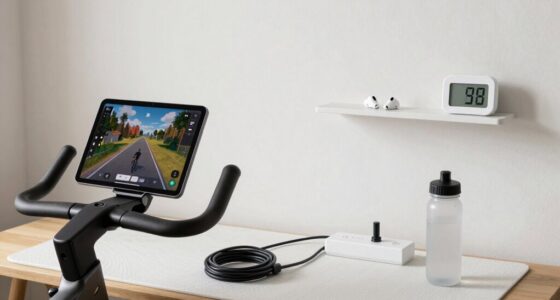
smart trainer with adjustable feet
As an affiliate, we earn on qualifying purchases.
As an affiliate, we earn on qualifying purchases.
Frequently Asked Questions
Can I Use a Smart Trainer on Carpeted Floors?
Yes, you can use a smart trainer on carpeted floors, but consider floor insulation to prevent vibration and noise issues. Placing a mat under the trainer improves stability and protects your flooring. Also, think about trainer portability; some models are easier to move and set up on carpets. Ensuring proper flooring support helps your smart trainer operate smoothly, making your workouts more effective and comfortable.
Do I Need a Mat for My Smart Trainer on Hardwood?
You should use a mat for your smart trainer on hardwood floors to protect your surface and guarantee proper flooring compatibility. A mat provides stability during smart trainer placement, prevents slipping, and cushions impact, reducing noise and wear. Without one, your hardwood could get scratched or damaged over time. Investing in a quality mat makes setup easier, improves safety, and prolongs your flooring’s lifespan, making your indoor cycling experience smoother.
How Much Noise Does a Smart Trainer Make on Different Floors?
On hardwood floors, your smart trainer’s noise levels can be quite noticeable, especially if you don’t use a mat. Think of your trainer like a drum—on a hard surface, vibrations impact the floor and amplify sound, making it louder. On carpet or rubberized floors, vibrations are absorbed, reducing noise. So, your floor type directly influences vibration impact and noise, helping you enjoy quieter workouts.
Is Floor Type Important for Smart Trainer Stability?
Yes, floor type matters for smart trainer stability. You should consider surface compatibility because uneven or soft floors like carpet can cause wobbling or slipping, affecting your workout safety. For maximum stability, place your trainer on a hard, level surface such as hardwood, concrete, or a stable mat. Stability considerations ensure your trainer stays steady during intense sessions, helping you maintain proper form and prevent accidents or equipment damage.
Can Floor Vibrations Affect My Smart Trainer’s Performance?
Yes, floor vibrations can affect your smart trainer’s performance. Vibration dampening mats help reduce noise and movement caused by vibrations, ensuring smoother operation. Surface compatibility is key; a stable, level surface minimizes unwanted vibrations that could impact accuracy and safety. By using the right dampening solutions and ensuring your floor is compatible with your trainer, you’ll maintain peak performance and prolong your equipment’s lifespan.
Conclusion
So, don’t let your floor type hold you back from choosing the right smart trainer. Whether you’re on a hard surface or carpet, there’s a perfect option out there for you. It’s easy to get caught up in specs, but remember, your fitness goals matter more. With a little research, you’ll find a trainer that fits both your space and your ambitions—so get riding and enjoy every pedal stroke!