To make gravel riding easier, focus on actively scanning and constantly evaluating the terrain ahead. Watch for changes in texture, color, and firmness to adjust your speed, body position, and gear proactively. Keep your bike well-maintained and stay hydrated to stay alert. Paying attention to surface cues and your body’s responses helps you adapt smoothly and prevent surprises. Keep exploring these techniques, and you’ll become more confident managing challenging surfaces.

Get sports gear delivered free with Prime
- Fast, free delivery on millions of items
- Prime Video, Amazon Music and more included
- Member-only deals all year
Key Takeaways
- Continuous surface scanning helps anticipate terrain changes and adjust riding techniques proactively.
- Recognizing subtle texture and color cues allows for timely speed and gear adjustments.
- Listening to sounds can reveal loose or unstable terrain ahead.
- Proper tire pressure enhances grip and control on varying gravel surfaces.
- Maintaining body awareness and bike positioning improves maneuverability over changing terrain.
Gravel riding demands more than just endurance; it requires you to develop a keen surface-reading skill that helps you anticipate and adapt to changing terrain. This skill is vital because gravel roads can shift suddenly—from loose gravel to compacted dirt, to muddy patches—making it essential for you to stay alert and responsive. This awareness enables you to react proactively rather than reactively, reducing the likelihood of accidents. As you ride, you need to constantly scan the surface ahead, noting subtle changes in texture, color, and firmness. Recognizing these cues allows you to adjust your speed, body position, and even your choice of gear in real-time, minimizing the risk of slips or falls.
Mastering surface reading helps you adapt quickly and ride confidently through ever-changing gravel terrain.
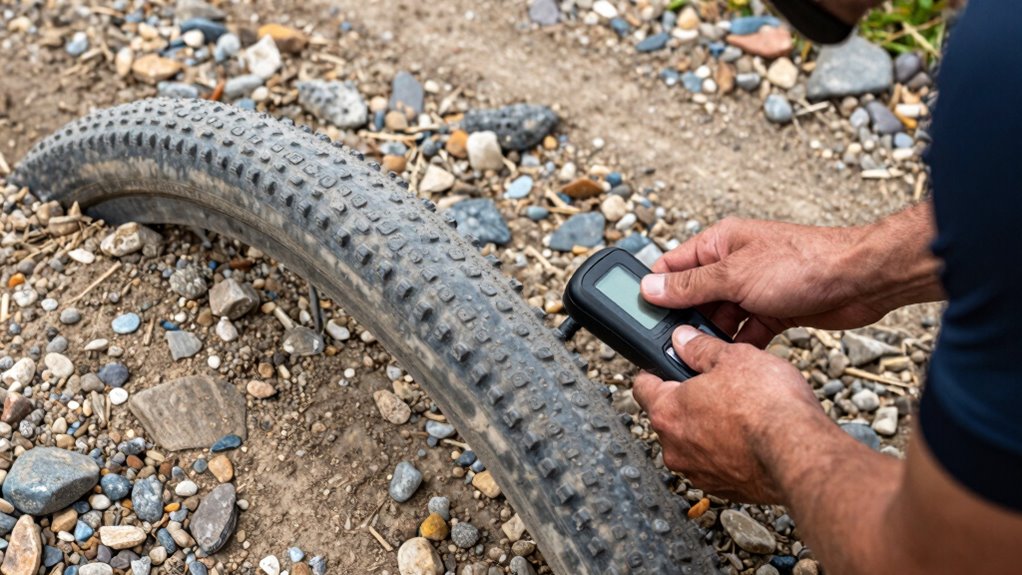
To master surface reading, you should also pay attention to your bike’s condition. Regular bike maintenance is key. Properly inflated tires with suitable tread for gravel help you maintain grip and control, especially on uneven or loose surfaces. Keep your drivetrain clean and well-lubricated, so shifting remains smooth even when terrain becomes challenging. A well-maintained bike responds more predictably, giving you confidence to navigate tricky sections more effectively. Additionally, inspecting brakes before each ride ensures you can rely on them when sudden stops or control adjustments are necessary on unpredictable surfaces.
Hydration strategies play a pivotal role in sharpening your surface-reading ability. When you’re well-hydrated, your mental clarity improves, making it easier to observe subtle surface cues and react swiftly. Dehydration, on the other hand, can impair your concentration, dull your reflexes, and increase fatigue—factors that hinder your ability to read the terrain accurately. Start your rides with a full bottle and plan regular hydration breaks, especially during longer stretches. Consider using electrolyte drinks to replenish lost salts and maintain ideal physical and mental performance. Staying hydrated keeps your senses sharp, allowing you to detect changes in terrain sooner and adapt your riding style accordingly. Incorporating terrain awareness into your riding routine will further enhance your ability to anticipate and respond to surface variations. Developing a mindful riding approach can help you stay present and attentive to these cues, leading to better decision-making on difficult sections.
Developing this surface-reading skill isn’t just about quick reflexes; it’s about cultivating a continuous awareness of your environment, your bike, and your body. As you ride, practice observing the surface carefully—notice how the gravel feels under your tires, listen for sounds that indicate loose or unstable terrain, and stay attentive to your body’s cues, like shifting weight or tension. Also, understanding the importance of tire pressure and how it influences grip can significantly enhance your ability to adapt to different surfaces. Moreover, paying attention to bike positioning and how it affects maneuverability can give you a tactical advantage on tricky terrain. Combining this awareness with proactive bike maintenance and solid hydration strategies will make gravel riding safer, more enjoyable, and considerably less stressful. Over time, your ability to read the terrain will become instinctive, giving you the confidence to tackle more complex routes and embrace the unpredictable nature of gravel roads.
gravel bike tires with good grip
As an affiliate, we earn on qualifying purchases.
As an affiliate, we earn on qualifying purchases.
Frequently Asked Questions
How Can I Practice Surface-Reading Without Riding on Gravel?
You can practice surface-reading without gravel by paying attention to visual cues like dirt, mud, or loose stones on paved paths or indoor tracks. Adjust your tire pressure to mimic gravel conditions, lowering it slightly to feel how different surfaces respond. Focus on noticing how the terrain looks and feels under your tires, sharpening your ability to interpret surface changes quickly, which ultimately makes gravel riding more intuitive and safer.
What Gear Adjustments Improve Surface-Reading During Rides?
Think of your gear as your detective’s toolkit—adjusting it sharpens your terrain perception and refines bike handling. Shift to a lower gear to maintain control over tricky surfaces and keep your cadence steady. Use wider tires with lower pressure to absorb shocks and improve grip. These adjustments help you read the terrain better, anticipate changes, and stay balanced, turning rough patches into manageable segments on your gravel adventure.
Does Surface-Reading Differ Between Day and Night Gravel Riding?
Yes, surface-reading differs between day and night gravel riding. Lighting conditions at night make it harder to spot terrain variability, requiring you to rely more on your experience and subtle cues like vibrations and bike feel. During the day, ample light helps you see surface changes clearly, aiding your decision-making. Adjust your focus accordingly, staying alert to terrain shifts, whether illuminated by sunlight or limited by darkness.
Can Surface-Reading Help Prevent Flat Tires on Rough Terrain?
Yes, surface-reading can help prevent flat tires on rough terrain. By paying close attention to trail awareness, you can spot sharp rocks, thorns, or debris that might cause flats. Adjust your tire pressure accordingly; lower pressure improves grip and comfort, while higher pressure reduces pinch flats. Regularly scanning the trail ahead allows you to react early, avoiding hazards and keeping your ride smoother and flatter-free.
What Common Mistakes Should I Avoid When Developing Surface-Reading Skills?
Back in the day, you’d think surface-reading was just about looking down. Now, you know better. To improve terrain awareness and obstacle anticipation, avoid rushing or fixating only on the path directly ahead. Don’t ignore subtle terrain cues, and steer clear of overconfidence in familiar routes. Instead, keep your focus wide, scan ahead, and stay adaptable. This mindset helps you recognize hazards early and ride more confidently over tricky gravel.
Conclusion
So, next time you’re bouncing over gravel like a pinball, remember that mastering surface reading isn’t just for the pros. It’s your secret weapon against unpredictable terrains and the inevitable dirt shower. With a little practice, you’ll glide over gravel with the grace of a ballet dancer—if ballet dancers wore mud and gravel. Ultimately, it’s less about the bike and more about your keen eye—and maybe a dash of arrogance—making every ride a masterstroke in surface-reading sophistication.
NFL season / tailgating Picks
team gear
As an affiliate, we earn on qualifying purchases.