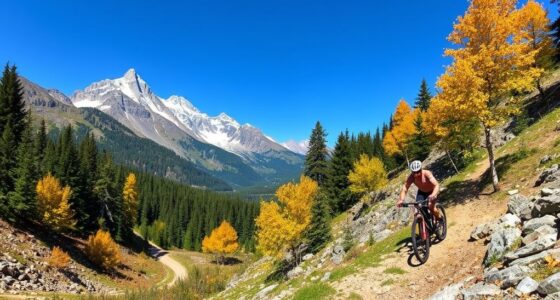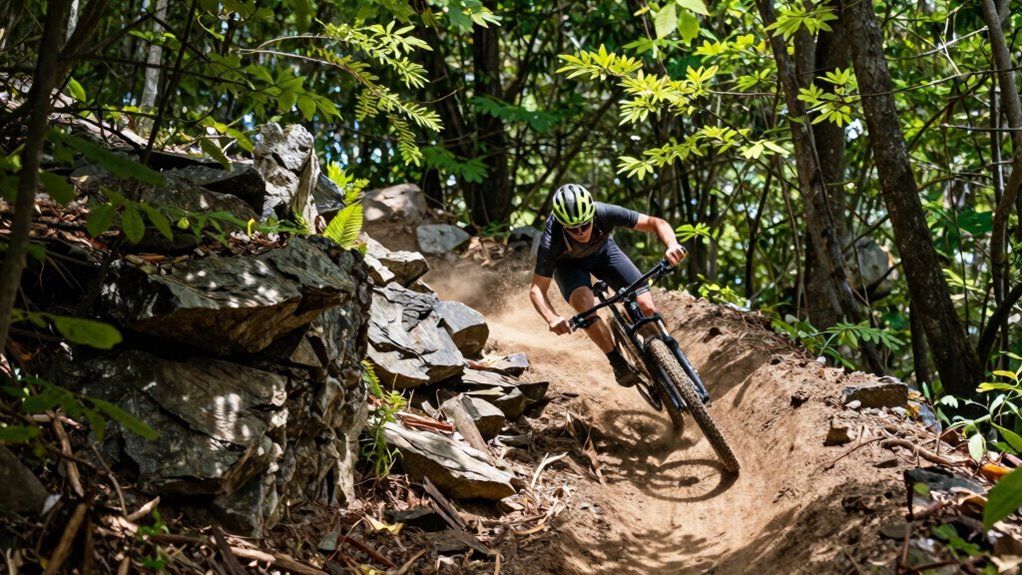

If you want to improve your bike control quickly, mastering rock gardens is key. These challenging trail features force you to refine your gear choices and body position, helping you develop better balance and responsiveness. By riding through rocky sections regularly, you’ll gain confidence and learn how your bike responds to subtle rider movements. The more you practice, the more instinctive your reactions become. Keep exploring these features, and you’ll discover even more control and skill in no time.

Get sports gear delivered free — and shop member deals
- Fast, free delivery on millions of items
- Access to Prime Big Deal Days deals on October 6–7
- Prime Video, Amazon Music and more included
Key Takeaways
- Rock gardens force precise gear selection and body positioning, accelerating skill development.
- Navigating technical features enhances bike response understanding and control.
- Consistent practice on challenging terrain builds confidence and instinctive riding habits.
- Recognizing trail obstacles improves reaction time and trail condition awareness.
- Mastering technical sections transforms intimidating features into manageable skills quickly.
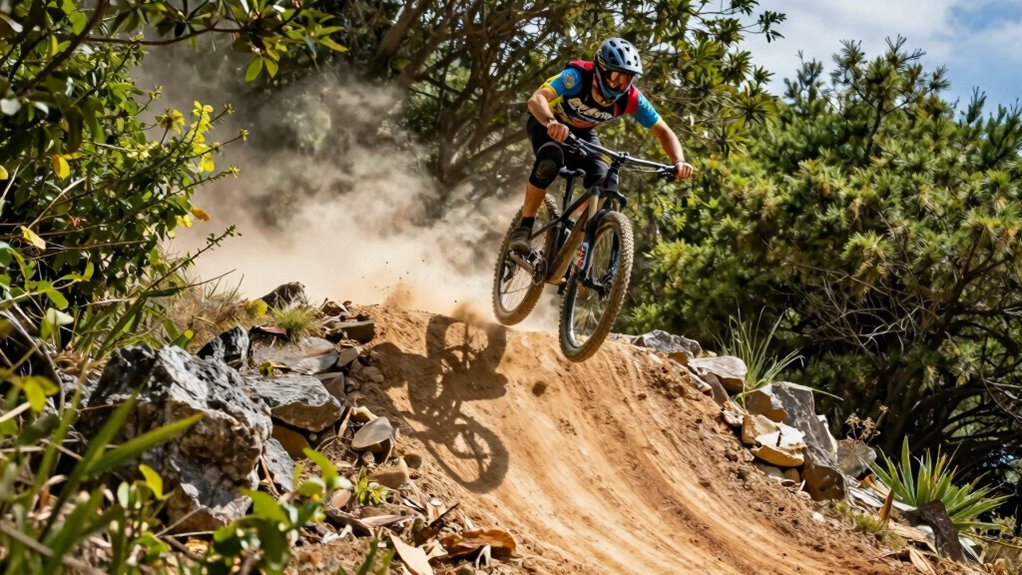
When maneuvering challenging trails, having better bike control can make all the difference in your confidence and safety. One of the quickest ways to improve that control is by mastering a specific trail feature designed to teach you essential skills—rock gardens. These sections force you to adjust your gear selection and body positioning precisely to navigate successfully. Instead of feeling overwhelmed, you’ll find yourself developing a sharper sense of how your bike responds to your movements and choices.
Mastering rock gardens enhances bike control, confidence, and safety on challenging trails.
As you approach a rock garden, focus on selecting the right gear. Usually, a lower gear gives you more control and torque, helping you maintain steady momentum without putting too much strain on your chain or drivetrain. Shifting into a gear that keeps your pedals turning smoothly helps you stay balanced and react quickly to uneven surfaces. Avoid high gears that make pedaling difficult or cause your chain to slip over jagged rocks. Instead, aim for a gear that allows for a steady cadence, giving you the finesse to handle tricky terrain.
Equally important is your body positioning. When you enter the rock garden, stay relaxed and centered on your bike. Keep your elbows slightly bent, and shift your weight back just enough to lift your front wheel over larger obstacles without losing control. Let your legs act as shock absorbers, absorbing the impact of rocks and roots, while your core remains engaged to maintain stability. By keeping your body low and balanced, you reduce the chances of bouncing wildly or losing traction. It’s all about staying adaptable—lean forward slightly on steep sections and shift your weight back on descents to keep the tires gripping the trail. Developing awareness of trail conditions, such as recognizing loose rocks or uneven surfaces, can further enhance your control and safety. Incorporating trail condition awareness into your riding strategy can help you respond more effectively to changing terrain. Recognizing how terrain features influence bike handling can accelerate your learning process and boost your confidence.
Practicing on these features helps you develop a fluid, intuitive riding style. As you get comfortable choosing the right gear and adjusting your body position, you’ll notice your confidence improves. The more you encounter rock gardens, the more your mind and body learn to respond automatically—your instinct becomes to shift gears early and adjust your stance dynamically. This combination of gear selection and body positioning not only makes navigating tough sections easier but also builds the skills you need for a variety of trail features. Understanding trail conditions and how they change can significantly boost your ability to adapt quickly while riding.
Ultimately, these small but vital adjustments become second nature. Over time, you’ll find yourself tackling technical sections with less hesitation and more control. The trail feature that teaches you better bike control fast isn’t just about one obstacle—it’s about understanding how to read the terrain, choose your gear wisely, and position your body effectively. Mastering these elements transforms challenging trails from intimidating to manageable, boosting your riding confidence and safety every time you hit the trail. Recognizing the importance of biodiversity and sustainable trails can help preserve these natural features for future riders to learn from and enjoy.
As an affiliate, we earn on qualifying purchases.
Frequently Asked Questions
How Do I Choose the Right Trail Feature for My Skill Level?
To choose the right trail feature for your skill level, start by evaluating its difficulty. Look for features labeled beginner or easy if you’re new, and gradually move to intermediate or advanced as you improve. Use skill progression tips, like practicing on smaller jumps or gentle berms first, to build confidence. Always ride within your comfort zone and challenge yourself gradually, ensuring steady progress without risking injury.
What Safety Gear Should I Wear When Practicing Trail Features?
Safety comes first—think of it as helmets and protective gear being your armor on the trail. You should always wear a helmet to guarantee helmet safety, along with gloves, knee and elbow pads, and sturdy shoes. Protective gear helps prevent injuries if you fall or hit obstacles. Remember, “Better safe than sorry,” so gear up properly every time you practice trail features to stay protected and confident.
How Often Should I Practice Trail Features to Improve Quickly?
You should practice trail features regularly, ideally 2-3 times a week, to see quick improvements in your mountain biking skills. Consistent practice helps your muscle memory develop and builds confidence. Focus on gradually increasing difficulty, and give yourself time to master each feature. Remember, steady, frequent practice accelerates skill development and enhances your control and safety on the trail.
Can Beginners Successfully Learn Through Trail Features?
Yes, beginners can successfully learn through trail features if they focus on proper bike maintenance and follow trail etiquette. Ensuring your bike is in good shape helps prevent accidents, while respecting trail rules keeps everyone safe. Start with easier features and gradually progress. Practice consistently, listen to experienced riders, and stay aware of your surroundings. With patience and attentiveness, you’ll build confidence and improve your bike skills quickly.
Are There Specific Trail Features Recommended for Advanced Riders?
Yes, advanced riders should focus on trail features like technical rock gardens, drop-offs, and switchbacks to challenge their skills. These features improve mountain biking trail navigation by forcing you to refine balance, control, and precision. Pushing your limits on complex features helps you develop better bike handling and confidence. Always assess the trail’s difficulty and ride within your skill level to avoid accidents and maximize skill development.
Conclusion
Mastering trail features is like learning to dance—you stumble at first, but with each step, your control and confidence grow. I once watched a beginner conquer a tricky switchback, feeling like they’d just discovered a secret to riding smoother. Remember, every rocky turn or steep descent is a step toward mastery. Keep pushing your limits on these features; soon, you’ll find yourself gliding effortlessly, turning challenges into triumphs on every ride.
Fall Picks
fall essentials
As an affiliate, we earn on qualifying purchases.