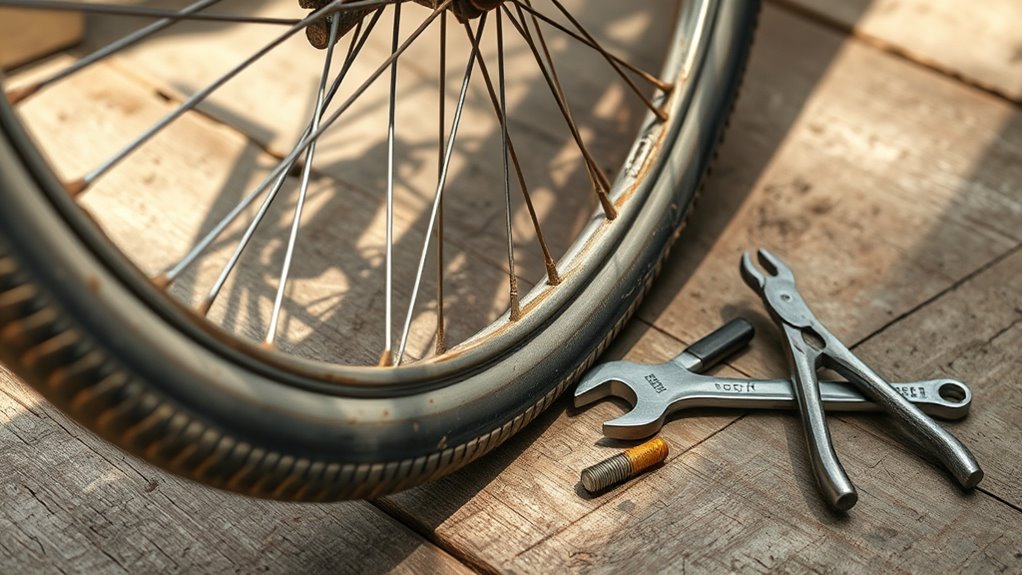

You can true a wheel with just a few basic tools like a spoke wrench, a truing stand or makeshift jig, and some patience. Start by spinning the wheel to spot wobbles or hops, then make small, even adjustments to spoke tension to straighten the rim. Check after each tweak until the wheel runs smoothly. With practice, you’ll improve your skills and keep your wheels in perfect shape—if you continue exploring, you’ll uncover even more simple tricks.
Key Takeaways
- Use a simple spoke wrench to tighten or loosen spokes incrementally on the wobbling side.
- Spin the wheel and observe rim deviations to identify areas needing adjustment.
- Make small adjustments to spoke tension, alternating sides for even truing.
- Use a makeshift truing gauge, like a piece of cardboard or string, to check rim alignment.
- Regularly check and maintain proper tire pressure to prevent unnecessary wheel misalignment.

If you want to get your bike rolling smoothly without a lot of fuss, true wheels with few tools are the perfect solution. When your wheels are true, they spin straight and true, making your ride more efficient and comfortable. You don’t need fancy equipment or a full workshop—just some basic tools and a bit of know-how. One of the most vital aspects of maintaining true wheels is tire maintenance. Regularly inspecting your tires ensures they’re in good shape, properly inflated, and free of damage. Proper tire pressure not only extends tire life but also keeps the wheel true by reducing unnecessary stress on the rim and spokes. When you check your tires, look for cuts, punctures, or uneven wear. Maintaining the correct pressure as recommended by the manufacturer is essential because under-inflated tires can cause rim contact, which leads to wobbling or misalignment, while over-inflated tires increase the risk of blowouts and uneven wear.
Once your tires are in good shape, focus on wheel alignment. Achieving proper wheel alignment is vital for a smooth ride and even tire wear. When wheels are misaligned, you might notice your bike pulling to one side or feeling unstable. Correcting this doesn’t require complicated tools—just a few basic ones like a spoke wrench, a truing stand (or a makeshift jig), and patience. The process involves adjusting the tension of the spokes to straighten the wheel and eliminate hops or wobbles. Start by spinning the wheel to identify any deviations or wobbles, then tighten or loosen spokes accordingly to bring the rim back into alignment. You want to make small, incremental adjustments, checking the wheel after each tweak. Proper robotics integration in maintenance tools can also assist in more precise alignments for dedicated enthusiasts.
True wheels not only improve your ride quality but also extend the lifespan of your tires and spokes. Properly aligned wheels distribute stress evenly, reducing the chance of spoke breakage or rim damage over time. With a little practice, you can master the art of wheel truing and tire maintenance, ensuring your bike stays in top shape without needing specialized tools or professional help. Remember, the key is regular checks and adjustments—by doing so, you’ll enjoy a smoother, safer ride every time. Keeping your wheels true isn’t just about performance; it’s about taking control of your bike’s health with minimal fuss and maximum results.
Frequently Asked Questions
Can I Upgrade My Existing Wheel With Fewer Tools?
Yes, you can upgrade your existing wheel with fewer tools if you focus on tool compatibility and proper wheel alignment. Use compatible tools that fit your wheel’s specifications to make the process easier. Guarantee you follow the manufacturer’s instructions for alignment adjustments. While it’s possible to upgrade with minimal tools, investing in essential equipment ensures safety and precise results. Always double-check your work before hitting the road.
What Safety Precautions Should I Take During Installation?
Imagine safeguarding your journey like donning armor before a quest. During installation, you should wear safety gear such as gloves and eye protection. Make certain the wheel is properly aligned to prevent mishaps. Keep tools organized and follow manufacturer instructions carefully. Double-check all components before finishing. This way, you protect yourself and ensure the wheel’s safety, making your upgrade smooth and secure.
Are There Specific Brands Recommended for Tool-Less Wheels?
For quick release, tool-less wheels, some brands like Shimano, Mavic, and Zipp are highly recommended. They offer reliable quick installation features that make wheel changes fast and easy without needing extra tools. When choosing, look for models with a secure quick release lever and smooth operation. These brands guarantee you get durable, high-quality wheels designed for quick release, so you can switch wheels efficiently and safely during rides or maintenance.
How Long Does a True Wheel With Few Tools Typically Last?
A true wheel with few tools can last several months to a year, depending on usage and maintenance. For example, if you regularly check your wheel’s alignment and perform minimal tool maintenance, it stays durable longer. Generally, the wheel’s durability hinges on how well you care for it and how often you use it. Proper upkeep ensures your wheel remains functional and safe, extending its lifespan markedly.
Is Professional Assistance Necessary for Initial Setup?
You don’t need professional assistance for the initial setup if you’re comfortable with DIY adjustments and understand tool compatibility. Many true wheel kits are designed for easy installation, allowing you to align and secure the wheel yourself. Just verify you have the right tools and follow instructions carefully. If you encounter difficulties or feel unsure, consulting a professional can help avoid mistakes and ensure the wheel is properly aligned and safe to use.
Conclusion
So, the truth is, building a true wheel with just a few tools isn’t just a myth; it’s entirely possible if you understand the basics and stay patient. Relying on simple tools doesn’t mean sacrificing quality or durability. Instead, it shows that with some skill and determination, you can create something reliable and effective. Don’t let the notion of needing many tools hold you back—sometimes, less really is more when it comes to making your own true wheel.