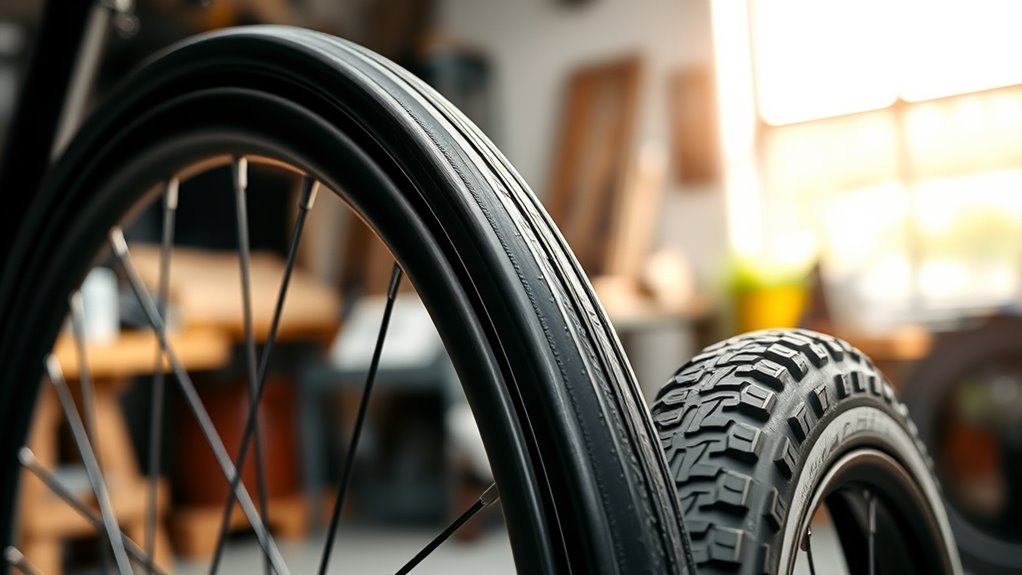

Choosing between tubeless and traditional tubes depends on your priorities. Tubeless setups offer weight savings, fewer flats, and easier on-trail repairs, making them ideal for riders seeking efficiency and reliability. They require compatible rims and sealant, which might add some initial maintenance. If you’re after a smoother ride and fewer interruptions, tubeless is the way to go. Keep exploring to see how each option suits your riding style and terrain preferences.
Key Takeaways
- Tubeless tires reduce weight and rolling resistance, enhancing bike performance and handling.
- They allow quick, on-trail puncture repairs with sealant, minimizing downtime.
- Tubeless setups lower the risk of flats and pinch flats, improving ride durability.
- Traditional tubes are simpler and may be preferred for lower maintenance or budget considerations.
- Build choice depends on riding style, terrain, and preference for ease of repair versus initial setup complexity.

Are tubeless tires better than traditional tube tires? That question often comes up when you’re trying to decide which setup suits your riding style best. Tubeless tires have gained popularity largely because they offer notable advantages, especially when it comes to tire puncture repair and weight savings. Unlike traditional tires with inner tubes, tubeless systems eliminate the need for a separate tube, making the overall setup lighter and reducing rolling resistance. This weight savings can be a real benefit during climbs or long rides, where every ounce matters. Plus, because there’s no tube to pinch or pinch flats, you’re less likely to experience sudden flats from small punctures, making your ride smoother and less interrupted.
When a tubeless tire gets punctured, you can often repair it quickly and easily on the trail. Many tubeless setups come with sealant inside, which automatically seals small holes as soon as they occur, saving you the hassle of removing and replacing a tube. If the puncture is larger, you can temporarily seal it with a plug or use a tubeless tire plug kit to fix the problem until you can do a more thorough repair. This ease of tire puncture repair is a huge advantage because it minimizes downtime and keeps your ride flowing. You won’t have to stop, remove the wheel, and mess around with a spare tube or patch kit; instead, you can often fix the issue on the spot and get back on your way.
Weight savings with tubeless tires aren’t just about removing the tube; the overall setup is often lighter because it requires fewer components. Without the inner tube, your bike feels more responsive, especially during acceleration and descents. This reduced weight also means less rotational mass, which can improve handling and make climbing less taxing. Plus, the sealant inside tubeless tires adds a small amount of weight but offers the benefit of sealing minor punctures, which means you’re less likely to carry a spare tube or patch kit. Over time, the cumulative weight savings can be noticeable, especially on long rides or races where every gram counts.
Frequently Asked Questions
Which Setup Is Easier for Beginners to Install?
You’ll find that installing tubes is generally easier for beginners because of its installation simplicity. With a beginner-friendly setup, tubes are straightforward to install, requiring less effort and fewer tools. You won’t need to deal with sealants or complex procedures, making it a smoother process for newcomers. If you’re just starting out, choosing a tube setup helps you learn the basics without the hassle of tubeless installation.
How Do Tubeless and Tube Setups Compare in Weight?
You’ll find that tubeless setups generally have a lighter setup weight compared to traditional tube setups, mainly because they eliminate the need for inner tubes. This weight reduction can improve your bike’s efficiency and handling. However, the actual weight difference depends on the specific tires and rims you choose. Overall, if you prioritize a lighter build, tubeless options tend to be the better choice for reducing setup weight.
Can I Switch Between Tubeless and Tube Tires Easily?
You can switch between tubeless and tube tires, but it’s not always straightforward. About 30% of bike tires are compatible with both setups, depending on rim and tire compatibility. You’ll need to check your rim’s specifications and verify proper tire compatibility. Switching involves different inflation methods—sealant for tubeless and inner tubes for traditional setups—so be prepared for some adjustments. It’s doable, but it’s best to know your equipment beforehand.
What Maintenance Is Required for Tubeless Tires?
You need to regularly check your tubeless tires for sealant longevity and top it up every few months to prevent leaks. Valve maintenance is also essential; make sure the valves stay clean and airtight. Inspect for any damage or debris and replace or reseal if necessary. Keeping your sealant fresh and valves in good condition helps maintain peak performance and prevents flats during rides.
Are Tubeless Tires More Prone to Punctures?
A stitch in time saves nine, and that’s true for tubeless tires too. They tend to have a lower puncture frequency because their sealant quickly seals small holes, enhancing tire durability. While they might be more resistant overall, larger punctures can still occur, so don’t get complacent. You’ll find that tubeless tires generally offer better durability, but regular maintenance and quick repairs keep you rolling smoothly and safely.
Conclusion
Whether you choose tubeless or tubes, remember that your decision shapes your riding experience. Think of it like picking a partner for a journey—each has its unique strengths and quirks. Tubeless setups are like a smooth sailing boat, offering fewer flats and better performance, while tubes are reliable and simple, perfect for beginners. Ultimately, pick what suits your riding style best, and enjoy the ride, knowing you’ve made the right choice for your adventure ahead.
Related Posts:



Olivia’s writing is not only informative but also inspiring. She has a knack for telling stories that capture the essence of cycling and the joy it brings to people’s lives. Her writing has been praised by readers and industry experts alike for its clarity, depth, and authenticity.
In addition to her writing, Olivia is also an avid cyclist. She enjoys exploring new trails and routes and has participated in several cycling events and races. Her first-hand experience with cycling gives her a unique perspective on the sport, reflected in her writing.
Overall, Olivia is a talented writer passionate about cycling and dedicated to producing high-quality content for FlatironBike. Her contributions to the magazine have helped make it a go-to source for cycling enthusiasts worldwide.