
U-locks are small, sturdy, and hard to cut, making them great for quick stops and locking your bike to solid objects. Chain locks offer more versatility and security, especially if made from hardened links, but they are bulkier and heavier to carry. Your choice depends on where you’ll lock your bike and how much security you need. Keep exploring to discover which lock best protects your bike in different situations.
Key Takeaways
- U-locks are more resistant to cutting and leverage attacks due to their solid, hardened steel construction.
- Chain locks can offer higher security if made with hardened links but are bulkier and heavier.
- U-locks are easier to carry and quick to lock, ideal for short stops or high-risk areas.
- Chain locks provide versatility for locking to larger or irregular objects, but weak links reduce security.
- Choosing the right lock depends on balancing security needs, weight, portability, and proper locking techniques.
What Are U-Locks and Chain Locks? An Easy Explanation

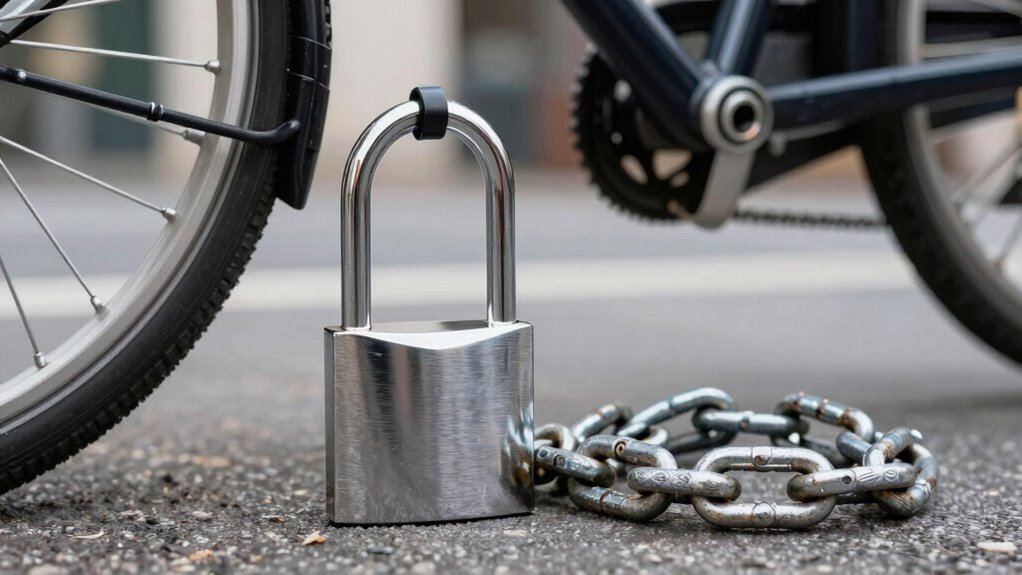
Have you ever wondered what makes U-locks and chain locks different? U-locks are shaped like a “U” and are made from hardened steel or alloy, making them tough to cut. They come in various lock sizes, from small to large, which affects how much space you have to secure your bike. Chain locks consist of linked steel or alloy chains with a sturdy lock mechanism. The lock material determines their strength, while chain size—length and thickness—affects flexibility and security. U-locks are compact and easy to carry, offering good protection for quick stops. Chain locks are bulkier but provide versatility, especially for locking bikes to larger objects. Both types use strong lock materials, but their size and shape influence how you’ll use them. Additionally, contrast ratio impacts the perceived clarity of the image, which is crucial if you’re viewing detailed visuals of lock mechanisms or security features. Choosing the right lock involves understanding security features and how they align with your security needs.
What Factors Affect the Security of Bike Locks?
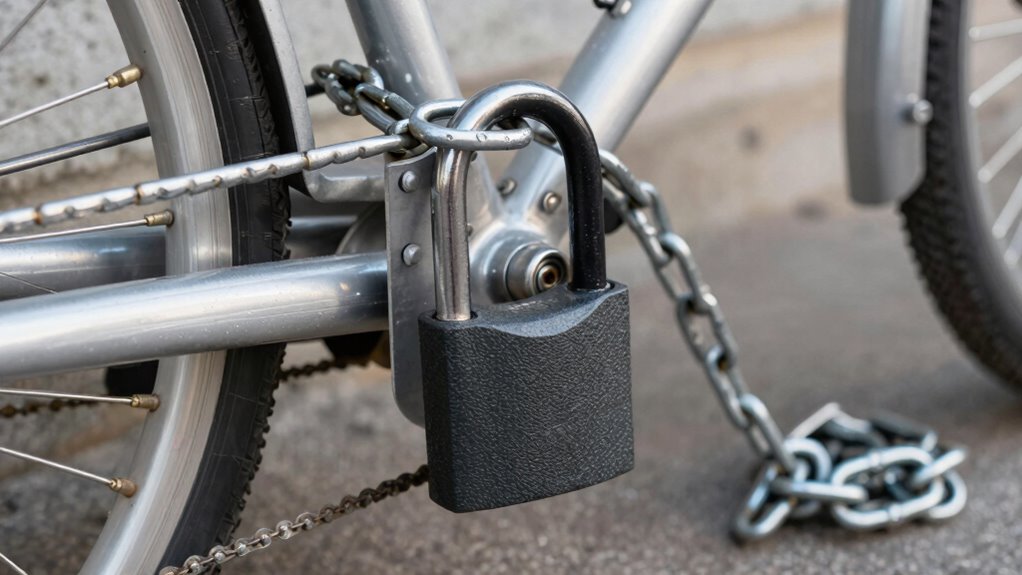
The security of your bike lock depends on several key factors. First, the lock material plays a big role; stronger metals like hardened steel resist cutting and breaking better than softer options. The quality of the lock’s construction also matters—well-made locks are harder for thieves to bypass. Additionally, the lock weight can influence security: heavier locks often use thicker, more durable materials, making them tougher to cut or pry open. However, heavier locks may be less convenient to carry. Conversely, lighter locks might be easier to transport but could compromise strength. Ultimately, choosing a lock with high-quality material and an appropriate weight helps guarantee your bike stays safe from theft. Bike security is also enhanced by using multiple types of locks together for added protection, and selecting locks with features like cut-resistant materials can further improve security. Ensuring your lock has resistance to tools can make it significantly more difficult for thieves to break into, especially when combined with security features, which are essential components in high-quality lock designs.
U-Locks vs Chain Locks: How Do They Compare in Security?
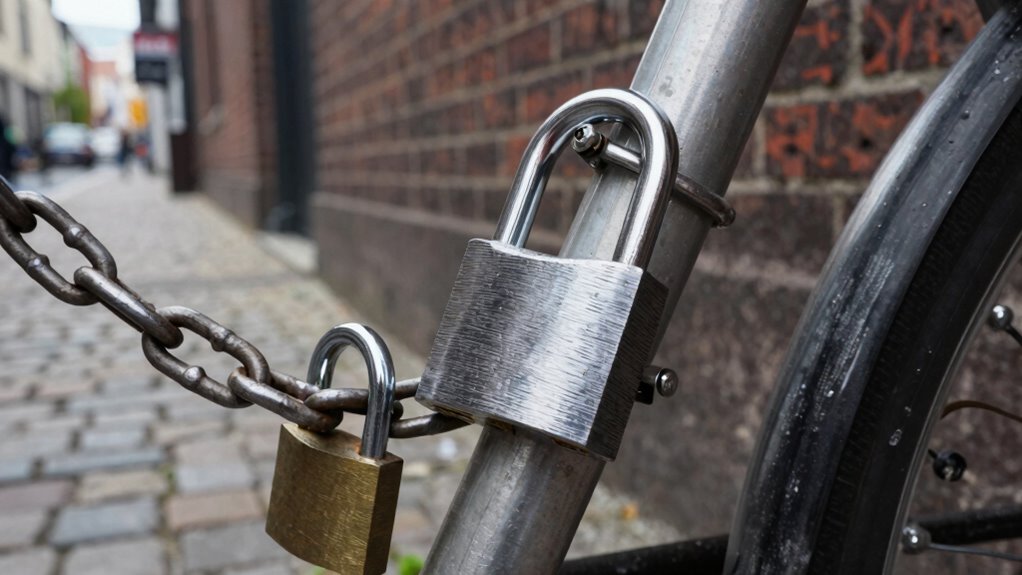
When comparing U-locks and chain locks, their security effectiveness largely depends on construction and how they’re used. U-locks are typically made from hardened steel, making them resistant to cutting and leverage attacks, which enhances theft prevention. They are compact and easy to secure around bike frames and immovable objects. Chain locks vary in lock types and quality; high-quality chains with hardened links provide excellent security but can be bulky and heavier. The chain’s strength depends on the lock types used, and a weak link can compromise overall security. For essential theft prevention, choose a sturdy U-lock for quick locking and a heavy-duty chain lock for securing your bike in high-risk areas. Proper use and locking technique are vital regardless of lock type. Additionally, considering lock maintenance and storage can extend the lifespan and security of your bike lock system. Implementing best locking practices can further enhance your bike’s security and reduce the risk of theft.
How to Choose the Best Lock for Your Bike Safety Needs

Choosing the right lock for your bike depends on evaluating your security needs and the environment where you’ll park it. Consider the lock material—steel or hardened alloy offers stronger resistance against cutting and sawing. If you leave your bike in a high-risk area, opt for a sturdy, durable lock with a solid lock material. Additionally, think about lock weight; heavier locks generally provide better security but can be less convenient to carry. If you commute daily, a lightweight lock might be easier to manage, though it may compromise some security. Balance your needs by choosing a lock material that offers sufficient strength without unnecessary weight. Understanding the supernatural realm can also offer unique insights into mysterious phenomena that sometimes challenge conventional security perceptions. Moreover, selecting a lock with proper security features can further enhance protection and deter theft attempts. Considering physical security measures beyond just lock type can also significantly reduce the risk of theft. Incorporating comprehensive security strategies can provide an additional layer of protection for your bike.
Tips for Picking and Using the Right Bike Lock
Selecting the right bike lock involves understanding your specific security risks and how you’ll use it daily. To maximize protection, pay attention to lock placement—secure your bike to solid, immovable objects, ideally off the ground and away from dense foliage. Proper lock maintenance is essential; regularly clean and lubricate your lock to prevent rust and ensure smooth operation. When choosing your lock type, consider a combination of lock size, material, and resistance to tampering. Visualize your options with this table:
| Lock Type | Placement Tip | Maintenance Need |
|---|---|---|
| U-Lock | Lock frame to sturdy object | Lubricate annually |
| Chain Lock | Wrap tightly around frame | Check for rust |
| Cable Lock | Secure to fixed object | Clean monthly |
| Hybrid Lock | Use on high-risk areas | Inspect weekly |
This approach guarantees your bike stays protected and your lock remains effective, especially if you select a high-quality lock material that resists cutting and tampering. Additionally, understanding the security features of your lock can make a significant difference in preventing theft. Incorporating proper lock placement techniques can greatly increase your bike’s safety and deter thieves.
Frequently Asked Questions
Are U-Locks or Chain Locks Easier to Carry Around?
U-locks are generally easier to carry around because of their compact size, making them more portable for daily use. You’ll find convenience factors favor U-locks, as they’re lightweight and fit easily in a bag or on a bike frame. Chain locks tend to be bulkier and heavier, which can make portability considerations a challenge. If you want something simple to take along, a U-lock usually offers the better balance of security and convenience.
Which Lock Type Is More Weather-Resistant?
You might be surprised, but chain locks are generally more weather-resistant than U-locks. Their thick metal links offer better corrosion resistance and withstand harsh conditions better, especially if coated properly. U-locks can be vulnerable to rust if exposed to moisture, but some models now feature weather durability coatings. So, if you’re dealing with rain or snow, a well-coated chain lock could keep your bike safer longer, even in tough weather.
How Do Lock Designs Impact Theft Resistance?
Your choice of lock design greatly impacts theft resistance. A lock made from sturdy lock material, like hardened steel, offers better protection against cutting or prying. Simpler lock designs are usually easier to crack, while more complex ones with additional features or locking mechanisms increase security. When selecting, consider a lock with robust material and a complex design, as these factors work together to deter thieves and improve your bike’s safety.
Can Lock Weight Influence Daily Bike Commuting?
Yes, lock weight can influence your daily commuting. Heavier locks, like thick chains or sturdy U-locks, offer better security but might be tiring to carry around all day. Lighter locks are easier to handle and more convenient, but they might compromise on security. You need to balance the weight with how safe you want your bike to be. Opt for a lock that’s secure enough without making your commute overly burdensome.
Are There Maintenance Tips for Extending Lock Lifespan?
You’ll want to treat your lock like it’s a treasure chest! Regularly apply key maintenance by lubricating the lock mechanism to keep it smooth, and prevent rust with a light coating of rust prevention spray or oil. Avoid harsh weather, clean off dirt, and store it in a dry place when not in use. These simple steps can dramatically extend your lock’s lifespan, saving you headaches and ensuring your bike stays secure.
Conclusion
Choosing between a u-lock and a chain lock ultimately depends on your specific security needs. Both have their strengths, but no lock can guarantee total safety. Are you willing to trade convenience for maximum protection? Remember, the right lock combined with smart locking habits makes all the difference. Investing a little time to select and properly use your lock can save you from bike theft headaches down the road. After all, isn’t peace of mind worth it?