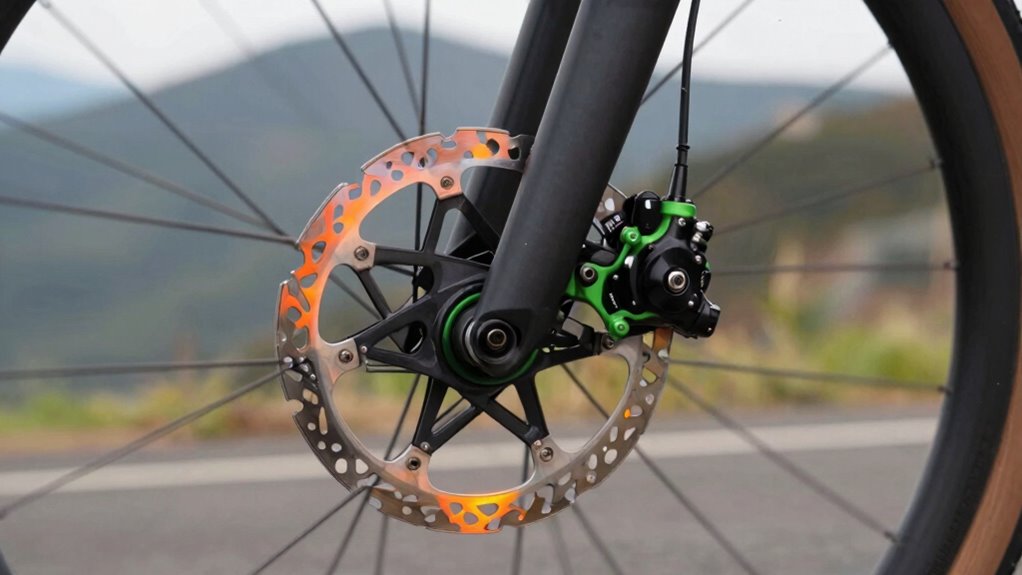

On long descents, your disc rotors heat up faster because continuous braking causes sustained friction between the brake pads and rotor. This friction generates heat, which quickly builds up since the cooling capacity is limited. As you keep applying the brakes, the heat accumulates, especially if the rotor material isn’t ideal or the ventilation isn’t efficient. To learn more about how different factors affect rotor temperature and performance, keep exploring these key details.

Get sports gear delivered free with Prime
- Fast, free delivery on millions of items
- Prime Video, Amazon Music and more included
- Member-only deals all year
Key Takeaways
- Continuous brake lever pressure during long descents causes repeated rotor contact, generating heat over time.
- Prolonged friction from extended braking increases heat accumulation faster than cooling can occur.
- Rotor materials like steel absorb and retain heat more effectively, leading to quicker temperature rise.
- Limited airflow and ventilation around the rotor reduce cooling, causing faster heat buildup.
- Worn brake pads create uneven contact, increasing hotspots and accelerating heat increase during long descents.
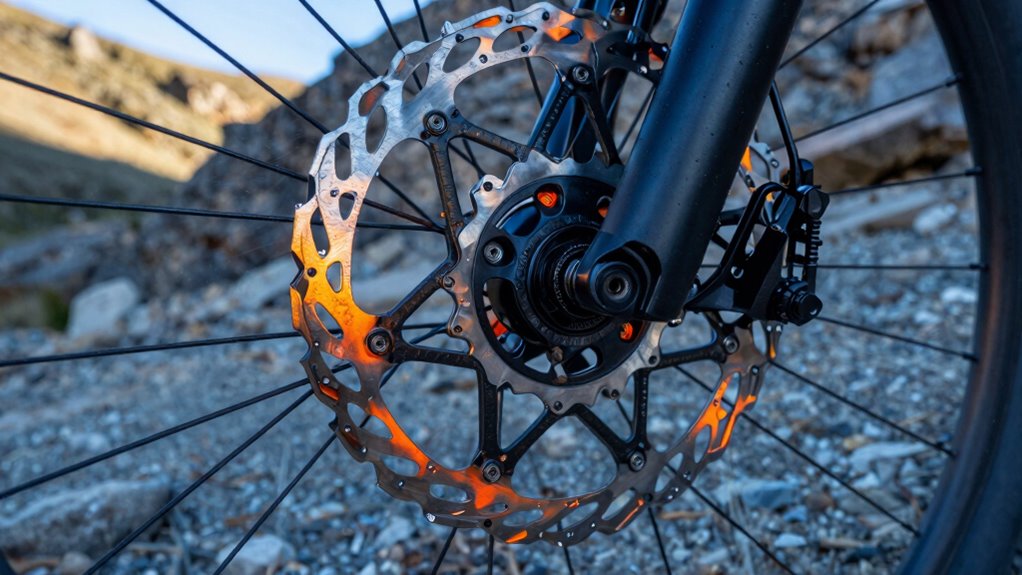
Ever wondered why your disc rotors tend to heat up more quickly during long descents? It’s a common question among cyclists pushing their limits downhill. The answer lies in the mechanics of braking and the materials involved. When you descend for an extended period, you’re constantly applying pressure to the brake levers, which causes your brake pads to grip the rotor repeatedly. This continuous friction generates a significant amount of heat. Over time, this heat accumulates because your braking system isn’t designed to cool instantly. The longer you stay on the brakes, the more heat builds up, leading to higher rotor temperatures.
One key factor influencing how quickly your rotors heat up is the type of rotor material. Different materials have varying abilities to conduct and dissipate heat. For example, aluminum rotors tend to heat up faster but also cool down more quickly, making them suitable for aggressive riding but less ideal for long descents where sustained braking is needed. Steel and stainless steel rotors, on the other hand, can handle higher temperatures better because of their greater heat capacity and durability. They absorb and distribute heat more evenly, reducing the risk of brake fade during prolonged downhill rides. Choosing the right rotor material can make a significant difference in how your braking system performs under stress. Additionally, heat dissipation can be improved with better rotor design and ventilation features, further aiding in managing temperature. Proper airflow around the rotor can also significantly improve cooling during extended braking periods.
Steel rotors handle higher temperatures better, providing more durability and even heat distribution during long descents.
Brake pad wear also plays a *vital* role here. As brake pads wear down over time, their ability to effectively grip the rotor diminishes. Worn pads can cause uneven contact, leading to increased friction in certain areas, which then causes localized hotspots and faster heating. Conversely, fresh, well-maintained brake pads provide more consistent contact and better heat dissipation. When your brake pads are worn, you might find yourself applying more force to slow down, further escalating heat buildup. Proper ventilation and cooling mechanisms in your bike setup can help mitigate heat accumulation, especially on long descents. In essence, your ride’s duration, brake pad condition, and rotor material all intertwine to determine how quickly your disc rotors heat up. During long descents, continuous friction leads to rapid heat accumulation, which can compromise braking efficiency if you’re not attentive. Regular maintenance, choosing appropriate rotor materials, and managing brake pad wear can help you keep your braking system cooler and more reliable. Understanding these factors empowers you to ride more confidently, knowing you can safely tackle long downhill stretches without your brakes overheating or losing effectiveness.
disc brake rotors for mountain bikes
As an affiliate, we earn on qualifying purchases.
As an affiliate, we earn on qualifying purchases.
Frequently Asked Questions
How Does Weather Influence Disc Rotor Heating During Descents?
Weather greatly influences disc rotor heating during descents. Rain impact can reduce heat buildup by cooling the rotors and decreasing friction, preventing them from overheating. Conversely, dry, hot conditions cause less cooling and can make rotors heat up faster. Wind cooling also plays a role; strong winds help dissipate heat more quickly, keeping your brakes cooler and reducing the risk of brake fade or damage during long descents.
Can Rider Weight Affect Disc Rotor Temperature?
Your rider weight can impact disc rotor temperature, as a heavier rider applies more pressure and generates more heat during braking. Additionally, your pedal technique influences how much you brake and how heat is distributed across the rotor. Using smooth, controlled braking helps prevent excessive heat buildup, regardless of rider weight. Focus on consistent pressure and proper technique to manage rotor temperature and avoid overheating during long descents.
Do Different Disc Rotor Materials Impact Heat Dissipation?
Different disc rotor materials impact heat dissipation like a racecar’s cooling system. High conductivity materials, such as aluminum, transfer heat quickly, preventing hotspots, while stainless steel retains heat longer. The rotor surface finish also matters; a smooth finish improves contact and heat transfer, cooling faster. Choosing the right material and finish helps you keep your brakes cooler on long descents, ensuring consistent performance and reducing the risk of brake fade.
How Does Brake Pad Material Affect Rotor Heating?
Your brake pad composition considerably impacts rotor heating. Softer pads generate more friction and heat, causing the rotor to warm up faster. Conversely, harder pads produce less heat but may wear quicker. The rotor surface finish also plays a role; a rougher finish increases friction, raising temperature, while a smoother surface reduces heat buildup. Choosing the right brake pad material and surface finish helps manage rotor temperature during long descents.
Is There a Way to Prevent Disc Rotors From Overheating?
Think of your disc rotors like a pot on a stove—they heat up quickly on long descents. To prevent overheating, you can ride smoothly, avoiding harsh braking, and allow time for cooling during breaks. Upgrading to high-quality rotors or ventilated designs helps dissipate heat better, reducing brake fade and rotor warping. Regular maintenance and avoiding continuous braking also keep your system cooler and safer on steep descents.
Conclusion
Next time you hit a long descent, remember that your disc rotors can heat up to over 300°F, nearly boiling water’s temperature. This rapid heating isn’t just about comfort; it can affect your braking performance and safety. So, stay attentive to how your brakes feel and consider upgrading your rotors or adjusting your riding style. Keeping cool under pressure might just save you from a dangerous brake fade or loss of control.
Halloween Picks
halloween
As an affiliate, we earn on qualifying purchases.