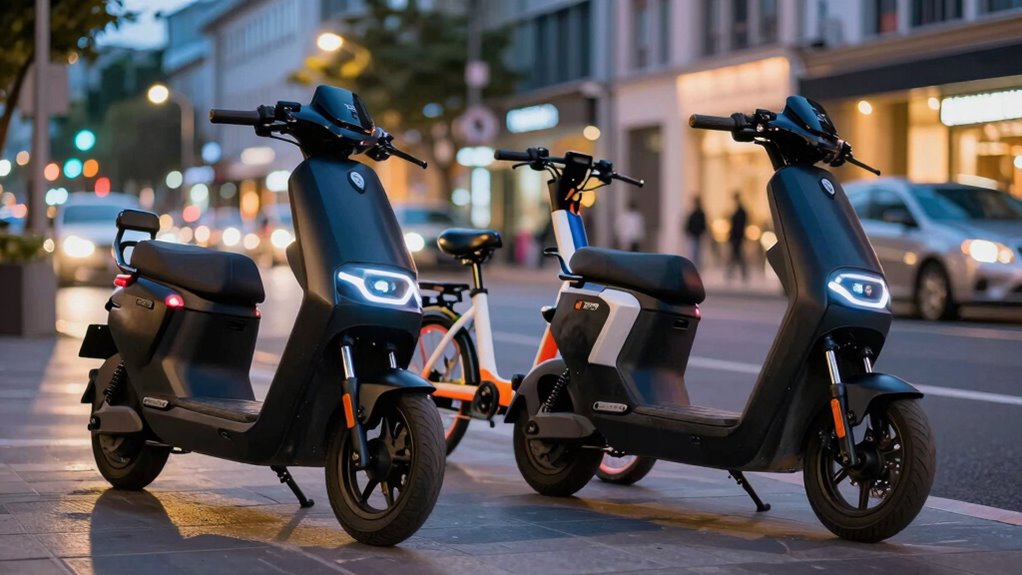

Electric scooters and e-bikes are often compared because they both offer quick, eco-friendly ways to navigate urban areas, but they differ mainly in range, battery life, and charging times. Scooters usually have shorter trips and recharge quickly, while e-bikes are better for longer distances with longer-lasting batteries. These differences help you decide which fits your routine better. Keep exploring to discover more about how these options can suit your lifestyle.

Get sports gear delivered free with Prime
- Fast, free delivery on millions of items
- Prime Video, Amazon Music and more included
- Member-only deals all year
Key Takeaways
- Both are popular electric urban mobility options, competing for the same user base.
- They have similar features like battery technology, charging times, and range, prompting direct comparison.
- Differences in range, speed, and convenience influence users’ choices based on their needs.
- Cost and maintenance aspects make them comparable investment options for daily commuting.
- Innovations in battery tech and charging efficiency lead to ongoing comparisons of performance and value.
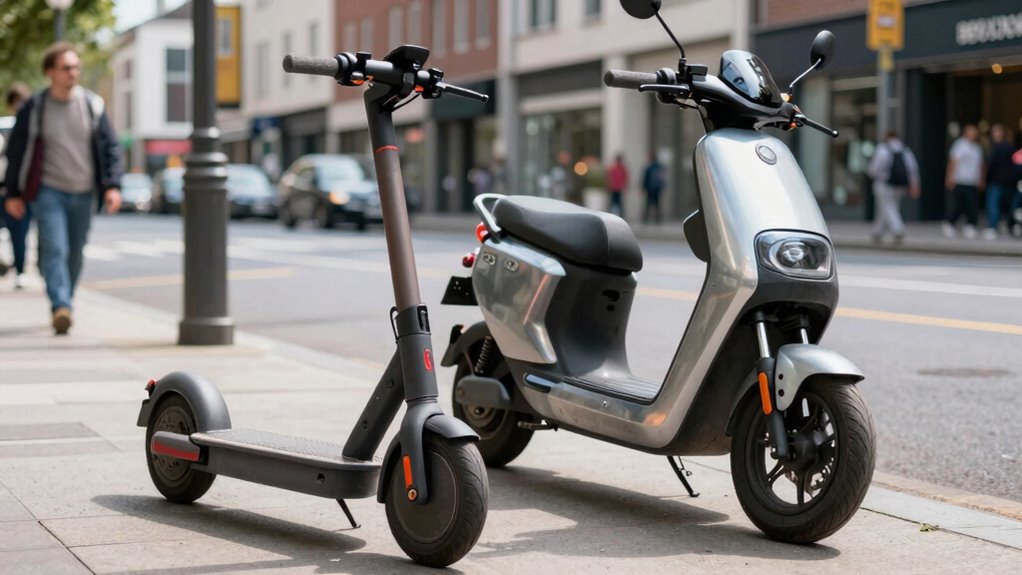
Electric scooters and e-bikes have become popular choices for urban transportation, offering convenient and eco-friendly ways to navigate busy streets. When you compare these two modes of transport, one of the first aspects that come to mind is how they handle power and endurance. Battery life is an essential factor because it determines how far you can go before needing to recharge. Generally, e-bikes tend to have larger batteries, giving you longer ranges—sometimes up to 50 miles or more—making them ideal for longer commutes. Electric scooters usually have smaller batteries, which might only last 10 to 20 miles per charge. This difference influences how you plan your trips. If your daily commute is short, a scooter might suffice; for longer rides, an e-bike could be more practical.
E-bikes offer longer ranges, making them ideal for extended commutes compared to smaller-battery electric scooters.
Charging times also play a significant role in why these vehicles are often compared. You might find that electric scooters typically take about 3 to 5 hours to fully recharge, which fits well if you can leave it charging overnight or during work hours. E-bikes, on the other hand, generally take around 4 to 8 hours for a full charge. While the charging time might seem similar, the larger battery capacity of e-bikes means they often require more time to reach full power, but this is offset by their longer range. Both options benefit from quick-charge technologies, allowing you to recharge in a shorter period if you’re in a rush. Additionally, advancements in battery technology are continually improving charging efficiency, making these vehicles even more convenient for daily use. A better understanding of battery technology can help users appreciate how ongoing innovations enhance overall performance and user experience. Moreover, battery lifespan is a key consideration for durability and long-term value.
Furthermore, battery maintenance is an important aspect that affects the longevity and performance of these vehicles, and understanding proper care can extend the lifespan of your investment.
You also notice that the differences in battery life and charging times affect the overall convenience of each vehicle. If you have a busy schedule and need to rely on your ride daily, understanding how quickly you can recharge is essential. With electric scooters, quick top-ups are often feasible during short breaks, especially if they support fast-charging. E-bikes might need more planning, but their extended battery life reduces the frequency of charges. It’s worth noting that the development of advanced battery technology continues to improve reliability and lifespan, further influencing user choices.
Ultimately, the comparison comes down to your specific needs and daily routines. If you prioritize quick, short trips and minimal downtime, an electric scooter with a smaller battery and rapid charging might be better. However, if you need a vehicle that can handle longer distances with fewer stops, an e-bike’s larger battery and longer charging times become a valuable feature. Both options are designed to fit into an active urban lifestyle, but understanding their battery life and charging times helps you choose the one that matches your mobility needs best.
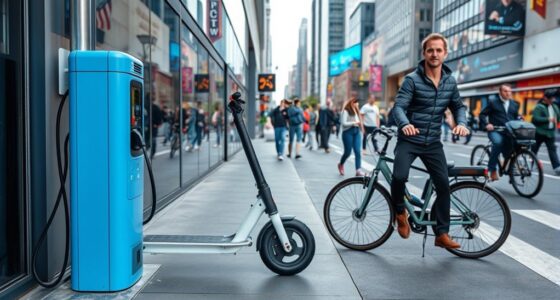
electric scooter with fast charging
As an affiliate, we earn on qualifying purchases.
As an affiliate, we earn on qualifying purchases.
Frequently Asked Questions
How Do Maintenance Costs Differ Between Electric Scooters and E-Bikes?
You’ll find that maintenance costs differ mainly because of battery replacement and wear and tear. E-bikes tend to have higher maintenance costs due to their more complex mechanical parts and larger batteries, which may need replacement over time. Electric scooters usually require less maintenance, but their batteries can also wear out faster if used heavily. Overall, e-bikes might cost more to maintain long-term, especially with battery replacements.
Are There Legal Restrictions for Riding E-Scooters Versus E-Bikes?
You’ll find that legal restrictions for riding e-scooters and e-bikes vary by city. E-scooters often face age limits, speed caps, and designated riding zones, impacting urban accessibility. E-bikes typically have fewer restrictions but may require registration or a license. Storage solutions matter, too, as many cities restrict where you can park these vehicles. Always check local laws to guarantee compliance and avoid fines, especially in busy urban areas.
Which Is More Environmentally Friendly: Electric Scooters or E-Bikes?
Think of electric bikes as gentle giants and scooters as nimble dancers—both eco-friendly, but bikes often edge out in environmental friendliness. You’ll find bikes better for urban integration, blending seamlessly into city life, and social acceptance, as they’re seen as more sustainable. While scooters use less energy per ride, e-bikes tend to have a longer lifespan and lower overall environmental impact, making them the greener choice for conscious city explorers.
How Does Battery Life Impact Daily Usage of Each Vehicle?
Battery life greatly impacts your daily use of electric scooters and e-bikes. Higher battery capacity means you can ride longer between charges, reducing your charging frequency. If your battery isn’t large enough, you’ll need to recharge more often, which could limit your trips and convenience. So, choosing a vehicle with a suitable battery capacity guarantees smoother rides and fewer interruptions, making your daily commute more reliable and enjoyable.
Can E-Bikes and E-Scooters Be Used Interchangeably on Bike Lanes?
You can often use e-bikes and e-scooters interchangeably on bike lanes, but it depends on local shared lane regulations. For instance, some cities allow both, while others restrict e-scooters due to safety gear requirements or speed limits. Notably, over 80% of riders prefer bike lanes for safety, highlighting the importance of understanding specific rules. Always check your area’s regulations to stay compliant and ride safely.
Conclusion
So, next time you see an electric scooter or e-bike zoom past, remember—they’re basically the superheroes of urban transportation. They’re faster than your morning coffee kicks in, more eco-friendly than hugging a tree, and way more exciting than your last Netflix binge. These two might be different vehicles, but they’re both revolutionizing how you conquer the city. So hop on, ride out, and get ready to feel like you’re flying—because with these, you basically are!
Halloween Picks
halloween
As an affiliate, we earn on qualifying purchases.