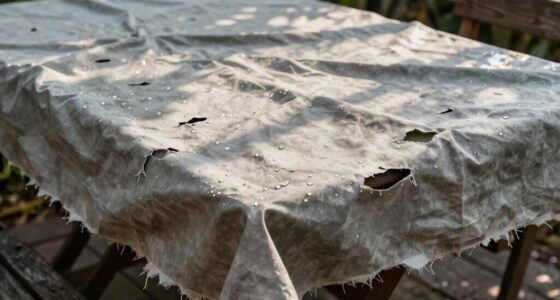
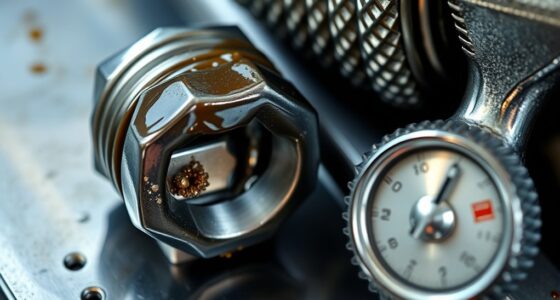
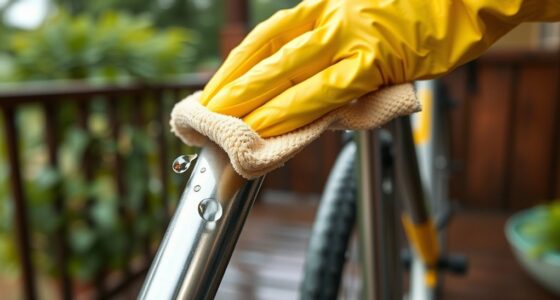
Seatposts seize in frames over time mainly due to corrosion and rust caused by moisture, dirt, sweat, and weather exposure. When you neglect regular cleaning and lubrication, dirt and moisture get trapped, accelerating oxidation and making it harder to remove the seatpost later. Rough, corroded surfaces lock the parts together, requiring excessive force. By understanding how improper maintenance speeds up this process, you can discover simple strategies to prevent it and keep your bike functioning smoothly.

Get sports gear delivered free — and shop member deals
- Fast, free delivery on millions of items
- Access to Prime Big Deal Days deals on October 6–7
- Prime Video, Amazon Music and more included
Key Takeaways
- Corrosion from moisture and grime creates rust that bonds the seatpost to the frame.
- Exposure to weather accelerates oxidation, weakening metal interfaces over time.
- Lack of regular cleaning and lubrication allows dirt buildup, promoting seizing.
- Rough, uneven contact surfaces due to rust increase friction and lock-in risk.
- Neglecting maintenance permits corrosion to develop, making removal increasingly difficult.

Over time, seatposts can seize in frames, often making removal a challenging task for cyclists and mechanics alike. This issue primarily stems from material corrosion, which gradually weakens the connection between the seatpost and the frame. When metal parts are exposed to moisture, sweat, and varying weather conditions without proper care, corrosion begins to develop. Over time, this corrosion causes the metal surfaces to stick together, making it difficult to slide the seatpost out without applying excessive force. If you neglect regular maintenance practices, such as cleaning and lubricating these contact points, the problem only worsens. Regular inspections and proper cleaning are essential to prevent corrosion from taking hold. Additionally, understanding how material corrosion occurs can help you better prevent this issue from developing. Applying appropriate protective coatings can also help shield metal surfaces from moisture and oxidation.
Corrosion is compounded when you leave dirt, grime, or moisture trapped around the seatpost area. Over time, these elements promote oxidation, which results in rust and other forms of material degradation. When rust forms on either the seatpost or the frame’s inner surface, it creates a rough, uneven interface that can lock the parts together. The more you ride in wet or humid conditions without taking steps to prevent corrosion, the more likely your seatpost will seize. Many cyclists overlook these maintenance practices, assuming that a quick wipe-down is enough, but neglecting thorough cleaning and lubrication accelerates material corrosion and makes removal even more difficult. Proper maintenance practices can significantly reduce the risk of seizing. Being proactive with preventative care can save you from the frustration of stuck components later on.
As an affiliate, we earn on qualifying purchases.
Frequently Asked Questions
Can Seatpost Seizing Be Completely Prevented?
Seating seizing can be greatly minimized, but not entirely prevented. You should regularly apply proper lubrication techniques like grease or anti-seize compound to the seatpost and inside the frame. Ensuring frame compatibility and avoiding forceful removal also help. Over time, corrosion can still occur, so periodic maintenance is essential. With these practices, you’ll reduce the chances of seizing, but occasional sticking might still happen due to unavoidable factors like corrosion or wear.
How Often Should I Check My Seatpost for Seizing?
You should check your seatpost for seizing every few months, especially if you ride frequently or in wet conditions. Regular inspections help catch issues early, preventing seatpost corrosion and ensuring frame compatibility. Look for any signs of rust, sticking, or difficulty adjusting height. Keeping your seatpost clean and well-lubricated also reduces seizing risks. Staying proactive saves you time and effort in the long run.
Does Seatpost Material Affect the Likelihood of Seizing?
Yes, seatpost material influences the likelihood of seizing. Aluminum and steel seatposts are more prone to corrosion, especially if they’re incompatible with your frame, leading to seizing. Carbon fiber seatposts rarely seize but require proper frame compatibility to avoid damage. To prevent issues, verify your seatpost material matches your frame’s material and check for corrosion regularly. Proper lubrication also helps reduce seizing risks over time.
Are There Specific Tools Recommended for Removing a Seized Seatpost?
Think of removing a seized seatpost like chipping away at stubborn ice; you’ll need the right tools. Use a strong, long-handled clamp or a seatpost removal tool, and consider applying penetrating oil to loosen things up. Proper lubrication techniques and thorough frame preparation beforehand can prevent future issues. Be patient, avoid excessive force, and guarantee you’re working with the correct tools to avoid damaging your frame.
What Are the Signs That a Seatpost Is About to Seize?
You’ll notice a seatpost is about to seize if it becomes noticeably harder to adjust, or if there’s resistance when trying to insert or remove it. Regular seatpost lubrication helps prevent this, and you should verify your seatpost and frame compatibility to avoid sticking. If you feel increased friction or difficulty, it’s a sign you should address potential corrosion or dirt buildup early, before it seizes completely.
Conclusion
So, next time you avidly slide your seatpost into the frame, remember—you’re inviting a slow, unglamorous battle of wills. Over time, that once-smooth fit transforms into a stubborn, rusted relic. Sure, it’s a quaint reminder of aging, but who needs that drama? A little preventative care and patience can save you from wrestling with your bike—because nothing says “ride or die” like a seatpost that refuses to budge.
NFL season / tailgating Picks
team gear
As an affiliate, we earn on qualifying purchases.