To fix disc brake rub with the 3-step alignment routine, start by slightly loosening the caliper bolts to free up movement. Check if the rotor is true and straighten it carefully if needed. Then, shift the caliper so it’s centered over the rotor before tightening the bolts securely. Spin the wheel to see if the rubbing stops. If you follow these steps, you’ll keep your brakes quiet and effective—plus, there’s more to guarantee long-lasting performance.
Key Takeaways
- Loosen caliper bolts slightly to allow movement for proper rotor alignment.
- Spin the wheel and observe for rubbing, then gently shift the caliper to center over the rotor.
- Tighten caliper bolts securely while maintaining caliper position.
- Test the wheel spin again to ensure no rubbing occurs; re-adjust if necessary.
- Check rotor condition and cleanliness to prevent future rubbing issues.

4 Pcs Bicycle Disc Brake Pads Adjusting Tool Mounting Assistant Brake Pads Disc Brake Pads Alignment Tool (Arc and Ellipse Shape)
- Package Includes: 2 arc and 2 ellipse adjusting tools
- Tool Sizes: Ellipse: 2.2''L x 0.7''W, Arc: 3.3''L x 0.55''W
- Material: Stainless steel for durability and safety
As an affiliate, we earn on qualifying purchases.
As an affiliate, we earn on qualifying purchases.
Why Proper Disc Brake Alignment Matters for Your Ride
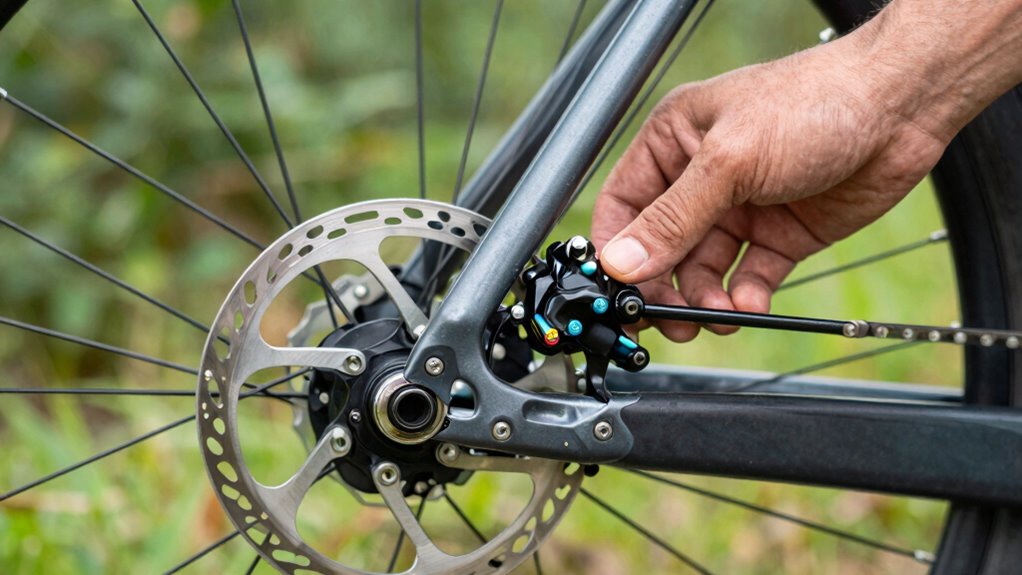
Proper disc brake alignment is essential because misalignment can cause uneven brake pad contact, leading to squealing, reduced stopping power, and premature wear. When your brakes aren’t aligned correctly, the brake pads may press unevenly against the rotor, increasing brake pad wear and risking rotor warping over time. Warped rotors create vibrations and reduce braking efficiency, making your ride less safe. Misaligned brakes also cause the pads to contact the rotor unevenly, accelerating wear and decreasing their lifespan. Ensuring proper alignment keeps brake pad contact smooth and consistent, preventing uneven wear patterns and the risk of rotor warping. Additionally, high-quality rotors contribute to better heat dissipation and overall braking performance. Proper alignment also helps prevent brake noise and enhances your overall braking experience. Regularly checking and maintaining correct brake alignment is a key part of brake system upkeep to ensure safety and optimal performance, especially since proper disc brake adjustment can significantly extend the lifespan of your braking components. Maintaining correct adjustment procedures is crucial for optimal brake performance and safety.
How to Prepare Your Bike and Tools for Easy Brake Adjustment
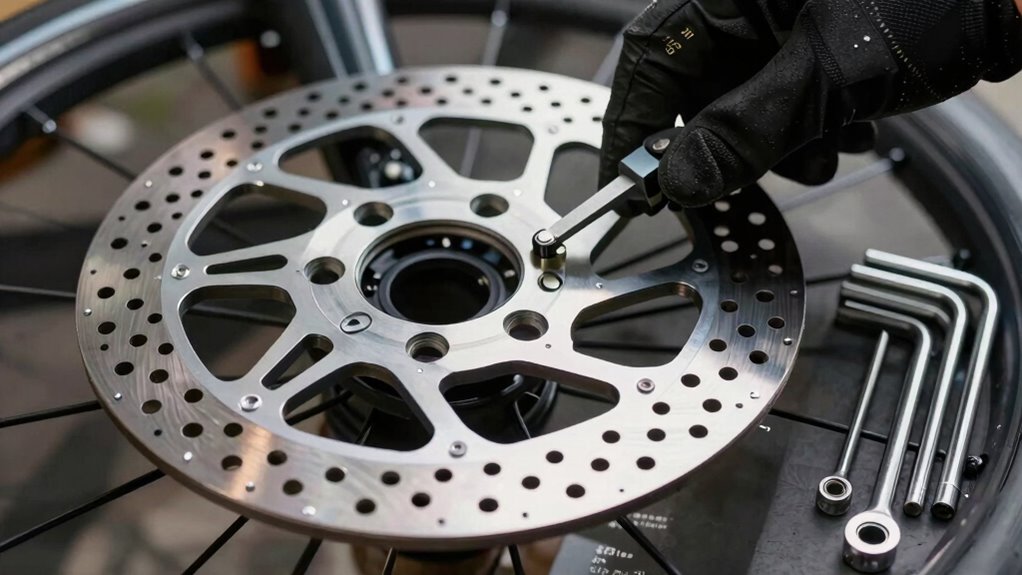
Before you start adjusting your disc brakes, it’s important to gather the right tools and prepare your bike to guarantee a smooth process. Proper bike maintenance begins with effective tool selection to make adjustments easier. First, ensure you have a set of Allen wrenches, a torque wrench, and a clean cloth. These tools will help you make precise adjustments without damaging components. Second, inspect your bike to confirm that the wheel is securely mounted and the brake rotor is clean and free of debris. Third, position your bike on a stable surface or bike stand to give you easy access. Ensuring your bike is properly aligned can significantly reduce the effort needed during adjustments. Preparing your bike and using the right tools will streamline brake adjustments, ensuring you get the best performance and avoid unnecessary frustration. Additionally, taking a moment to familiarize yourself with proper maintenance techniques, including the importance of caring for your brake rotor, can help you achieve consistent, reliable results. Remember that understanding the types of disc brake systems can also assist in making more effective adjustments.
Quick Fix: How to Realign Your Disc Brakes in 3 Simple Steps
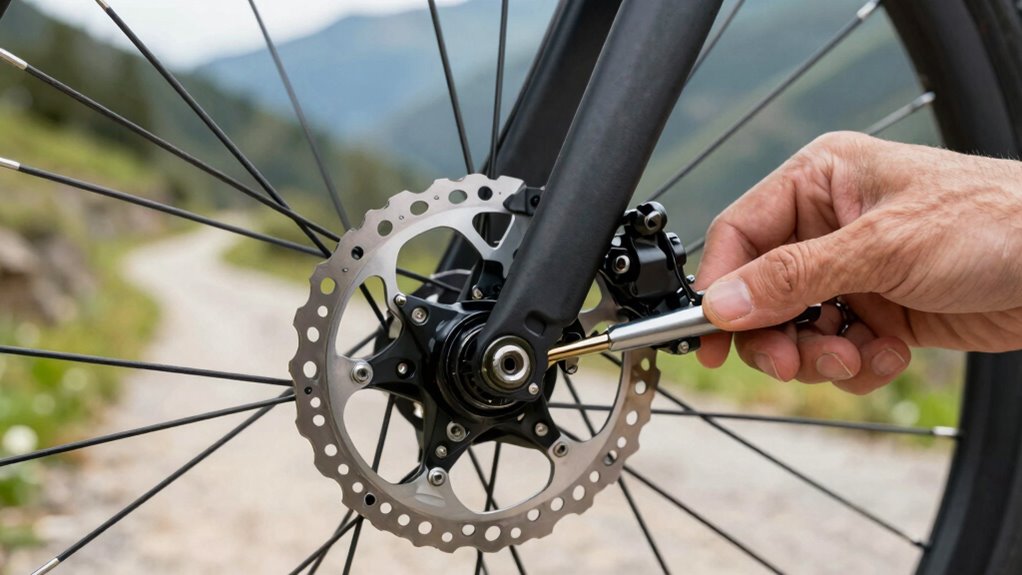
To quickly fix disc brake rub, start by loosening the brake caliper bolts slightly. This allows you to adjust the caliper positioning, ensuring it lines up properly over the rotor. Check the rotor trueness first; a bent or warped rotor causes uneven contact, so if needed, true the rotor carefully. Once loosened, gently shift the caliper so it’s centered over the rotor, then tighten the bolts securely without misaligning it. Spin the wheel to test if the rub persists. If it does, recheck caliper positioning and rotor trueness, making small adjustments until the brake pads contact the rotor evenly. Using proper alignment techniques ensures the brake system functions smoothly and prevents ongoing rubbing issues. Regular inspection of the brake components can help identify potential problems early and maintain optimal performance. Additionally, ensuring the brake hardware is clean and free of debris can prevent brake squeal and improve contact quality. Performing proper maintenance and adjustments can extend the lifespan of your brake system and ensure reliable stopping power. This quick fix often restores smooth braking and prevents ongoing rubbing issues.
Troubleshooting Common Disc Brake Rubbing Problems
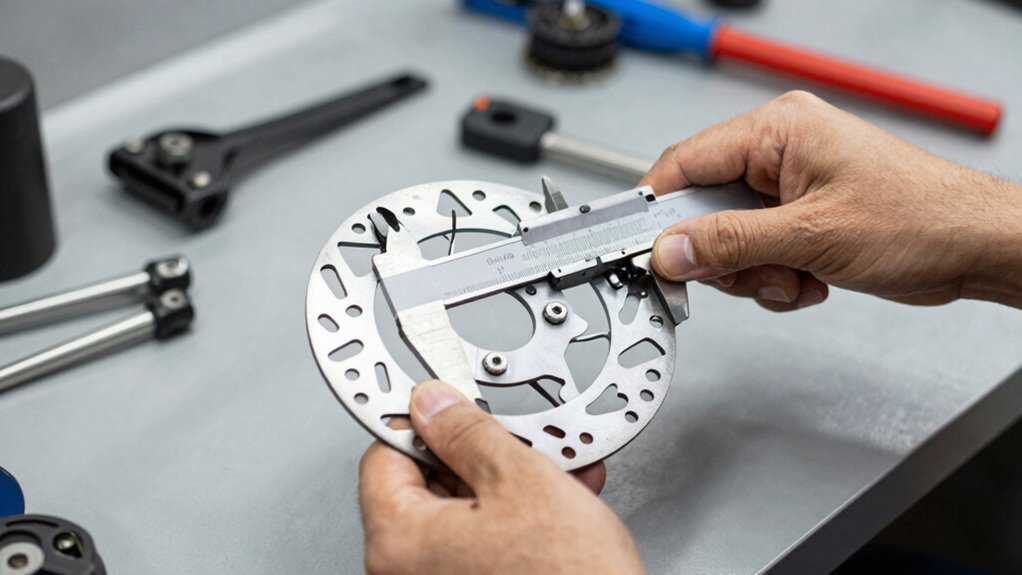
Are you experiencing persistent disc brake rubbing despite recent adjustments? It’s time to troubleshoot effectively. First, perform a caliper inspection to check for misalignment or sticking pistons. Proper caliper maintenance is essential for ensuring your brake system functions smoothly. Next, examine your brake pads for uneven wear or damage, and consider pad replacement if necessary. Additionally, verify that your brake components are properly registered and inspected, as neglecting this can lead to ongoing issues. Proper brake system inspection and timely replacement are key to smooth, quiet disc brakes. To ensure optimal performance, regularly monitor brake performance and address issues promptly. Verifying that your rotor isn’t warped or contaminated is also crucial. Ensuring your brake system is properly maintained and inspected can help prevent ongoing issues. Here’s what to focus on: 1. Confirm the caliper is properly aligned and moves freely. 2. Replace worn or damaged brake pads for ideal contact. 3. Check the rotor’s surface for warping or debris, and clean or replace if needed. Addressing these issues can often resolve persistent rubbing, saving you from ongoing squealing and uneven braking. Proper inspection and timely replacement are key to smooth, quiet disc brakes.
Tips to Keep Your Disc Brakes Aligned and Rubbing-Free Long-Term
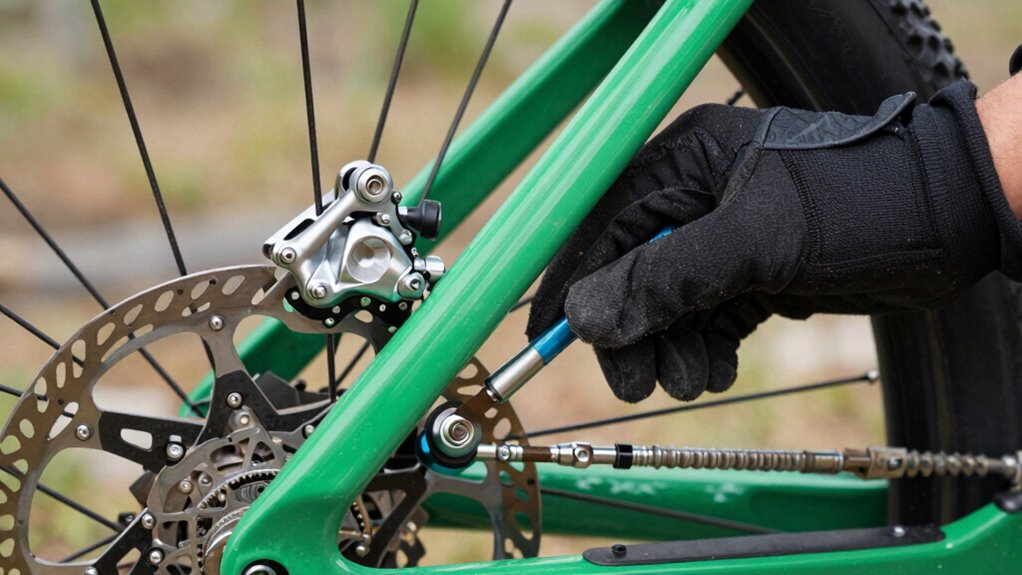
Maintaining proper disc brake alignment over time is essential for long-term squeal-free operation. To prevent uneven pad wear and rotor distortion, regularly check your brakes for signs of misalignment. Keep your calipers properly adjusted and ensure they’re centered over the rotor. Avoid riding your brakes excessively, which can cause uneven pad wear and heat buildup leading to rotor warping. When installing new pads, make sure they’re seated correctly to prevent rubbing issues later. Periodic inspections help catch misalignments early, reducing the risk of rotor distortion. Additionally, keep your rotors clean and free of debris, which can cause uneven contact. Proper caliper adjustment and timely maintenance are key to keeping your disc brakes aligned, preventing rubbing, and extending their lifespan. Regularly inspecting your brake components and understanding brake system maintenance can further help maintain optimal brake performance and ensure long-lasting, reliable operation. Employing filtration techniques can also minimize contaminants that may affect the braking components and overall system health. Being aware of component wear can help you identify issues before they become serious problems, saving you time and money in the long run.
Frequently Asked Questions
Can Disc Brake Rubbing Cause Permanent Damage to My Bike?
Yes, disc brake rubbing can cause permanent damage to your bike if left unresolved. Continuous rubbing may lead to caliper corrosion, weakening the brake system, and rotor warping, which affects braking performance. Over time, these issues can compromise your bike’s safety and require costly repairs. To prevent this, regularly check your brake alignment, keep components clean, and address any rubbing issues promptly to avoid long-term damage.
How Often Should I Check My Disc Brake Alignment?
Think of your bike’s brake system as a delicate dance that needs regular practice. You should check your disc brake alignment every few rides, especially after rough terrains or adjustments. Regular brake maintenance helps catch minor issues early, preventing bigger problems. During alignment troubleshooting, look for uneven pad wear or sticking. Consistent checks guarantee smooth braking and extend the lifespan of your brakes, keeping your ride safe and reliable.
Are There Specific Tools Recommended for Precise Brake Adjustments?
You should use caliper tools and rotor gauges for precise brake adjustments. Caliper tools help you set the piston position accurately, ensuring even brake pad contact. Rotor gauges measure the rotor’s thickness and runout, making sure it’s within specifications. These tools give you the accuracy needed to fix disc brake rub effectively. Always invest in quality caliper tools and rotor gauges to achieve consistent, professional results during your brake maintenance.
Does Brake Pad Material Affect the Likelihood of Rubbing?
Yes, brake pad material influences the likelihood of rubbing. Different brake pad compositions, like ceramic, semi-metallic, or organic, can affect how well the pads fit and move within the caliper. Some materials are softer and more flexible, reducing rubbing, while others might cause more friction if they expand or wear unevenly. Selecting the right pad material for your riding conditions helps prevent unnecessary contact and ensures smoother braking.
Can Riding Conditions Influence Disc Brake Alignment Issues?
Yes, riding conditions can influence disc brake alignment issues. Rough riding surfaces or uneven terrain can cause your wheels to shift slightly, leading to misalignment. Weather conditions like rain or mud can cause debris buildup around the brake components, increasing the chance of rubbing. Regularly inspecting your brakes and adjusting alignment as needed helps prevent rubbing caused by these riding conditions. Stay vigilant to keep your brakes performing smoothly.
Conclusion
By mastering these simple steps, you can keep your disc brakes perfectly aligned, ensuring a smooth, quiet ride. Imagine gliding effortlessly over the trail, the brakes responding instantly without any squeal or rub. With a little attention and routine checks, your bike remains a reliable partner on every adventure. Keep those calipers in line, and enjoy the feeling of control and confidence with each pedal stroke—your smoothest ride yet starts now.