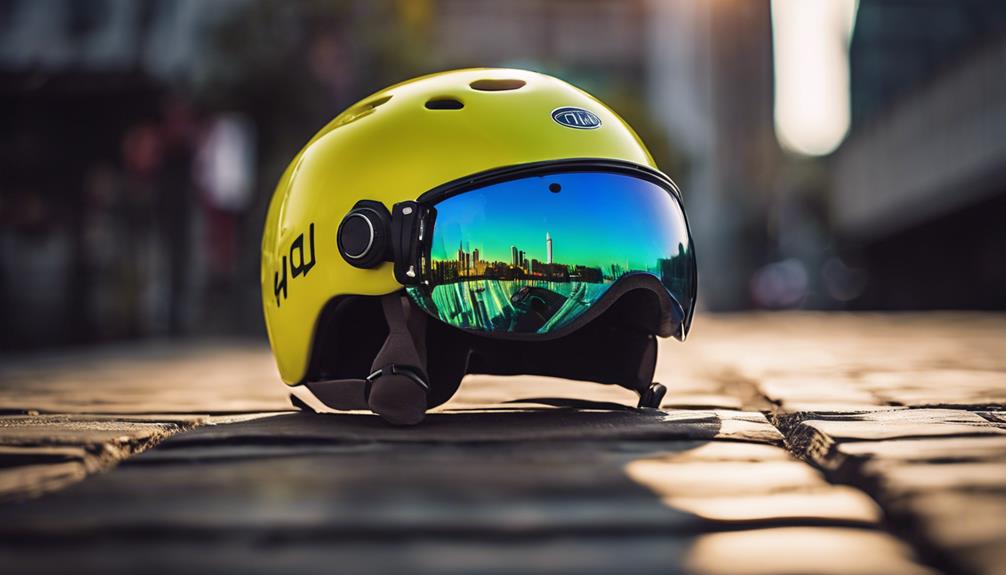
I rank these four helmets by how well they fit the promise of convertible full-face protection: a removable chin bar, credible downhill credentials, practical ventilation and features that make sense for the ride. The Leatt MTB Enduro 4.0 is my strongest match for riders who want to switch between a full-face setup for descents and a lighter trail configuration for climbs. The Bell Super DH MIPS is the more feature-rich convertible choice, while the Fly Racing Rayce is a straightforward downhill-focused pick for riders who do not need a removable bar.

Get sports gear delivered free with Prime
- Fast, free delivery on millions of items
- Prime Video, Amazon Music and more included
- Member-only deals all year
That distinction matters: only the Leatt and Bell models here are described as having removable chin bars. The ILM HT58 and Fly Rayce are fixed full-face helmets, so they may suit bike-park days but are less adaptable on mixed rides. Certification details also differ, and the supplied specs do not establish identical test coverage across every model. I weigh those differences alongside fit, weight information, ventilation and the limits of the product details, rather than treating every full-face helmet as interchangeable.
Complete the kit


Key Takeaways
- The Leatt Enduro 4.0 is the clearest choice for riders who specifically want a removable chin bar and a helmet suited to changing between climbs and descents.
- The Bell Super DH MIPS combines a tool-free removable chin bar with Spherical Technology, but accurate sizing and following the chin-bar instructions matter.
- The Fly Racing Rayce has ASTM F1952-15 listed alongside CPSC and CE standards, making it a fixed-bar option for downhill and bike-park use rather than a convertible pick.
- The ILM HT58 includes goggles and an adjustable fit, but the supplied listing specifies only a medium size and cites CPSC and ASTM F1447 standards.
- Check each helmet’s certification, fit range and intended use against your riding; the models differ in chin-bar design, available size information and the standards listed.
| Leatt MTB Enduro 4.0 Convertible Full-Face Helmet |  | Best Overall Convertible | Chin bar: Removable with locking system | Listed size: S, 51–55 cm | Weight: 12.96 ounces listed | VIEW LATEST PRICE | See Our Full Breakdown |
| Bell Super DH MIPS Mountain Bike Helmet |  | Best Feature-Rich Convertible | Chin bar: Removable, tool-free, wraparound | Sizes: S: 52–56 cm; M: 55–59 cm; L: 58–62 cm | Protection technology: Spherical Technology with MIPS | VIEW LATEST PRICE | See Our Full Breakdown |
| Fly Racing Rayce Full-Face Mountain Bike and BMX Helmet |  | Best Fixed Full-Face for Downhill | Shell and liner: Poly-alloy shell with EPS liner | Certifications: ASTM F1952-15, CPSC 1203 and CE EN1078 | Ventilation: TFV system with intake and exhaust ports | VIEW LATEST PRICE | See Our Full Breakdown |
| ILM HT58 Adult Full-Face Mountain Bike Helmet with Goggles |  | Best Accessory Bundle for Fixed Full-Face Riding | Shell: Polycarbonate | Inner material: Expanded Polypropylene; description also notes EPS foam | Chin bar: Extended, EPP-reinforced, fixed | VIEW LATEST PRICE | See Our Full Breakdown |
| convertible full-face bike helmet | Chin bar | Certifications | Listed size | Weight |
|---|---|---|---|---|
| Leatt MTB Enduro 4.0 Convertib | Removable with locking system | ASTM F1952-10, NTA 8776, CPSC 1203, EN1078, AS/NZS 2063:2008 | S, 51–55 cm | 12.96 ounces listed |
| Bell Super DH MIPS Mountain Bi | Removable, tool-free, wraparound | — | — | — |
| Fly Racing Rayce Full-Face Mou | — | ASTM F1952-15, CPSC 1203 and CE EN1078 | — | — |
| ILM HT58 Adult Full-Face Mount | Extended, EPP-reinforced, fixed | CPSC and ASTM F1447 | Medium only in the supplied details | 1.6 pounds |
More Details on Our Top Picks
Leatt MTB Enduro 4.0 Convertible Full-Face Helmet
The Leatt Enduro 4.0 is my leading recommendation because its removable chin bar addresses the main reason riders search for a convertible full-face helmet: keeping additional coverage available for descents without wearing a fixed full-face shell for every part of a ride. Leatt describes it for ventilation on climbs and full-face protection on descents, so its intended role is more clearly matched to mixed-terrain riding than either the Fly Rayce or ILM HT58, which have fixed chin bars.
Its protection package includes 360 Degree Turbine Technology, PowerBridge absorbers and dual-density impact foam. Those are distinct elements of the stated design, not a reason to assume a specific outcome in a crash. The supplied certification list includes ASTM F1952-10, NTA 8776, CPSC 1203, EN1078 and AS/NZS 2063:2008. I would check the helmet documentation and current local requirements before relying on any certification for a particular use. Compared with the Bell Super DH MIPS, Leatt’s description gives more emphasis to turbine and dual-density elements, while Bell names Spherical Technology and a tool-free bar.
For comfort between descents, the ventilated shell and moisture-wicking washable liner make this more versatile on paper than the fixed-bar options. A breakaway adjustable visor and sunglasses dock also suit trail riding where a rider may swap between eyewear choices. The stated weight is 12.96 ounces, but the provided size details cover only size S, 51–55 cm. That makes fit verification especially important: a listed measurement for one size cannot tell me whether the correct size is available or how another size will fit.
This is not a universal solution. A removable bar adds a component and requires the rider to understand how it locks; a fixed full-face helmet such as the Fly may be simpler for someone who wants a dedicated bike-park setup. Bell is the closest rival if a buyer prefers a named tool-free removal system and more complete size ranges in the supplied details. I put Leatt first because its configuration and described climb-to-descent purpose make the strongest overall case for convertible use, with the caveat that buyers must confirm fit and read the chin-bar instructions.
Pros:- Removable chin bar supports changing between trail and full-face configurations.
- Lists ASTM F1952-10 and several additional cycling-related certifications.
- Includes turbine technology, PowerBridge absorbers and dual-density foam in its protection design.
- Washable moisture-wicking liner, adjustable breakaway visor and sunglasses dock support varied trail use.
Cons:- The supplied sizing information covers only size S, so other size availability needs checking.
- The removable chin bar’s locking system requires careful use and instruction reading.
- The listed weight should not be compared directly with figures supplied for different sizes or products.
Best for: Trail and enduro riders who want a removable chin bar for descents and a more ventilated configuration for climbs.
Not ideal for: Riders who want a fixed, downhill-focused helmet, or anyone unable to confirm that the listed size range fits them.
- Chin bar:Removable with locking system
- Listed size:S, 51–55 cm
- Weight:12.96 ounces listed
- Certifications:ASTM F1952-10, NTA 8776, CPSC 1203, EN1078, AS/NZS 2063:2008
- Protection features:360 Degree Turbine Technology, PowerBridge absorbers and dual-density impact foam
- Liner:Washable, moisture-wicking
- Visor and eyewear:Adjustable breakaway visor and sunglasses dock
Our verdict“I recommend the Leatt Enduro 4.0 first for riders who want a helmet that can shift between trail-friendly riding and full-face descents.”
Bell Super DH MIPS Mountain Bike Helmet
The Bell Super DH MIPS is the strongest alternative to the Leatt for riders who want a removable chin bar but also value a detailed fit system and a broad set of downhill-oriented features. Bell specifies a tool-free, wraparound chin bar, which makes switching configurations a central feature rather than an incidental one. Its listed size ranges—small 52–56 cm, medium 55–59 cm and large 58–62 cm—also give buyers more size information than the Leatt listing provides here.
Bell’s signature protection feature is Spherical Technology with MIPS, described as designed to help redirect impact forces. The helmet is listed as full-DH certified, with the chin bar designed to meet ASTM 1952 testing. That statement is not identical to Fly’s explicit ASTM F1952-15, CPSC 1203 and CE EN1078 list, or Leatt’s multi-standard list, so I would check the Bell’s documentation for the exact certification details relevant to a rider’s use. The manual’s guidance on chin-bar limits is part of the purchase decision, not an optional detail.
Compared with Leatt, Bell supplies more fit and hardware detail: Float Fit DH, a Fidlock buckle, 19 vents, two brow ports and four chin-bar vents. X-Static and XT2 quick-drying padding and an integrated breakaway camera mount add practical touches for longer days. The goggle-friendly eye port and adjustable visor also make it a natural match for downhill eyewear. These details create a more equipment-focused package than the simpler fixed Fly Rayce, but they do not remove the need to select the right shell size and check fit carefully.
The tradeoff is that Bell’s feature set can be unnecessary for riders who mainly want a straightforward full-face helmet or do not need a camera mount and convertible bar. Like Leatt, it requires proper chin-bar use; Bell explicitly warns that poor fit can be dangerous and directs riders to the manual for chin-bar limits. I rank it second because it is a compelling, well-specified convertible option, while Leatt’s stated trail-to-descent intent makes that model the clearer all-around match for mixed riding.
Pros:- Tool-free removable chin bar supports switching between riding configurations.
- Spherical Technology with MIPS is designed to help redirect impact forces.
- Three listed size ranges and Float Fit DH give buyers useful fit-system details.
- Ventilation, quick-drying padding, goggle-friendly eye port and breakaway camera mount add practical utility.
Cons:- Correct sizing is especially important; an ill-fitting helmet can be dangerous.
- The chin bar has stated limits, so buyers need to read the manual before use.
- The supplied certification description is less specific than the full standard lists provided for some alternatives.
Best for: Riders seeking a removable-bar helmet with detailed sizing, a named fit system, goggle compatibility and downhill-focused features.
Not ideal for: Buyers who prefer a simple fixed full-face design, or riders who will not follow the fit and chin-bar instructions.
- Chin bar:Removable, tool-free, wraparound
- Sizes:S: 52–56 cm; M: 55–59 cm; L: 58–62 cm
- Protection technology:Spherical Technology with MIPS
- Certification information:Full DH certification; chin bar designed to meet ASTM 1952 testing
- Ventilation:19 vents, 2 brow ports and 4 chin-bar vents
- Fit and buckle:Float Fit DH and Fidlock buckle
- Padding and extras:X-Static and XT2 quick-drying padding; integrated breakaway camera mount
Our verdict“I would choose the Bell Super DH MIPS when I want a feature-rich, tool-free convertible helmet and can confirm the fit precisely.”
Fly Racing Rayce Full-Face Mountain Bike and BMX Helmet
The Fly Racing Rayce is not convertible, but it earns a place here as a clear alternative for riders who decide they would rather keep a fixed chin bar than trade protection coverage for a removable design. Its listed use includes downhill and bike-park riding, and its certifications are explicitly stated as ASTM F1952-15, CPSC 1203 and CE EN1078. That makes its intended role easier to read than the ILM HT58’s supplied CPSC and ASTM F1447 claims, though buyers should still match the exact certification and helmet documentation to their riding.
The shell uses poly-alloy with an EPS liner, and the helmet includes TFV ventilation, an adjustable visor and a D-ring closure. Removable, washable comfort lining and cheek pads offer a straightforward way to refresh the interior after regular use. Compared with Leatt and Bell, the Rayce does not offer a removable chin bar, so it is less adaptable on rides that include long climbs or less technical sections. In return, its fixed design avoids the configuration change involved with a convertible helmet.
Weight information needs careful reading: the details give an approximate 930 g for size M, while the listed item weight is 1.14 kg. Those figures may refer to different measurements or packaging, and they are not directly comparable with the size-specific figures for other models. The description also identifies an adult Large item, so a buyer should check the actual size options and fit rather than rely on the model name alone. A full-face design can feel warm in some conditions, and its ventilation does not make it equivalent to a lighter open-face helmet.
I place the Rayce below both convertible models because it cannot switch configurations, not because it lacks a downhill-focused purpose. Against the ILM HT58, it offers a more explicit downhill certification list and named D-ring closure, while ILM includes goggles and a fit adjustment system in its description. The Rayce makes the most sense for riders who expect to keep the chin bar on and value its listed standards, washable liner and adjustable visor over convertibility.
Pros:- Lists ASTM F1952-15, CPSC 1203 and CE EN1078 certifications.
- TFV ventilation system includes intake and exhaust ports.
- Removable, washable liner and cheek pads support regular cleaning.
- Adjustable visor and D-ring closure suit a dedicated full-face setup.
Cons:- Fixed chin bar means it is not a convertible helmet.
- Full-face coverage may feel warm in some riding conditions.
- Weight details vary between the approximate size M figure and listed item weight.
Best for: Downhill and bike-park riders who want a fixed full-face helmet with ASTM F1952-15 listed.
Not ideal for: Riders seeking one helmet for climbs and descents, or anyone who prioritizes a removable chin bar.
- Shell and liner:Poly-alloy shell with EPS liner
- Certifications:ASTM F1952-15, CPSC 1203 and CE EN1078
- Ventilation:TFV system with intake and exhaust ports
- Closure:D-ring strap
- Visor:Adjustable, with aluminum hardware
- Liner:Removable and washable, with cheek pads
- Weight information:Approx. 930 g for size M; listed item weight 1.14 kg
Our verdict“I would choose the Rayce for dedicated downhill or bike-park use when a fixed full-face design is preferable to a convertible one.”
ILM HT58 Adult Full-Face Mountain Bike Helmet with Goggles
The ILM HT58 is the accessory-led option in this lineup: it pairs a fixed full-face helmet with padded goggles, so riders can get a coordinated off-road setup without sourcing eyewear separately. Its extended chin bar has an EPP-reinforced design, while the helmet’s listing describes EPS foam and a polycarbonate outer shell. The supplied safety standards are CPSC and ASTM F1447. Those are not the same claims as the downhill-specific ASTM F1952 details listed for Fly, Leatt and Bell, so I would not choose the ILM on the assumption that all four have equivalent downhill certification.
For adjustment, the HT58 includes an adjustable fit system, adjustable visor, ventilation and a removable washable liner. Those are useful features for a fixed full-face helmet, particularly when a buyer wants to tune the fit and clean the interior. Compared with the Fly Rayce, the ILM includes goggles and describes an adjustable fit system, while Fly provides a more explicit set of listed downhill and cycling certifications and a D-ring closure. Against Leatt and Bell, the main limitation is more basic: the chin bar does not come off, so the helmet is less suited to changing between climbs and descents.
The supplied information names only medium size, which is the biggest buying uncertainty. Proper fit matters more than the included goggles, and the product details do not provide a size range or enough information to judge fit availability for other head measurements. Its listed weight is 1.6 pounds, but comparisons with other models remain imperfect because the other figures may use different sizes or measurement methods. I would confirm the exact size range and fit instructions before choosing it.
I rank the HT58 fourth because the roundup is specifically about convertible full-face helmets. It can still suit a buyer who wants a fixed off-road helmet and values included goggles, but the Leatt and Bell are stronger matches for removable-bar use, while the Fly presents a clearer downhill-oriented certification list. Treat the ILM as a bundle-oriented fixed option, not as a substitute for a convertible design without checking its use and certification details.
Pros:- Includes padded goggles with the helmet.
- Extended chin bar is described as EPP-reinforced.
- Adjustable fit system and visor allow some fit and setup adjustment.
- Ventilation and a removable, washable liner support regular riding and cleaning.
Cons:- Fixed chin bar does not provide convertible use.
- Only medium size is specified in the supplied details.
- CPSC and ASTM F1447 are the listed standards; downhill-specific ASTM F1952 is not provided.
Best for: Riders who want a fixed full-face off-road helmet with goggles included and can confirm that the available size fits.
Not ideal for: Riders who need a removable chin bar, want clearly listed downhill-specific certification, or need size choices beyond the specified medium.
- Shell:Polycarbonate
- Inner material:Expanded Polypropylene; description also notes EPS foam
- Chin bar:Extended, EPP-reinforced, fixed
- Certifications:CPSC and ASTM F1447
- Listed size:Medium only in the supplied details
- Weight:1.6 pounds
- Included accessories:Padded goggles
- Fit and care:Adjustable fit system; removable, washable liner
Our verdict“I would consider the ILM HT58 for a fixed full-face setup with included goggles, after confirming its size range and certification suitability.”

How We Picked
I ranked these helmets around the practical meaning of convertible full-face, not around a general claim that more features always make a better helmet. The first question is whether the chin bar actually comes off. The Leatt Enduro 4.0 and Bell Super DH MIPS are the two true convertible models in this group; the Fly Racing Rayce and ILM HT58 are fixed full-face designs. That makes the Leatt and Bell more relevant to riders who want one helmet for varied trail conditions, while the other two are included as alternatives for buyers who prefer a dedicated full-face setup.
Next, I compared the provided certification information and intended riding. The Fly lists ASTM F1952-15, CPSC 1203 and CE EN1078, and is described for downhill and bike-park riding. Bell states full DH certification and says its chin bar is designed to meet ASTM 1952 testing. Leatt lists ASTM F1952-10 and several other standards, including CPSC 1203 and EN1078. ILM lists CPSC and ASTM F1447, which is a different set of claims from the downhill-specific details supplied for Fly, Leatt and Bell. These labels are not interchangeable; riders should check the helmet’s own documentation and confirm it fits their local rules and riding needs.
I also considered how each design handles fit, ventilation and day-to-day use. Removable, washable liners appear on several models, while Bell supplies a named fit system and a Fidlock buckle. Leatt’s listed weight is 12.96 ounces, but its size information is for size S only; other entries list different weight figures or omit comparable sizing details. I do not treat those numbers as a like-for-like weight test. The ILM listing specifies medium only, which limits how confidently a buyer can judge fit availability from these details.
Finally, the order reflects usefulness for the title’s specific request. Leatt ranks first because its removable chin bar and climb-to-descent purpose make the convertible idea explicit. Bell follows closely, with tool-free removal and more detailed sizing and feature information. Fly earns a place as a downhill-oriented fixed full-face option with a clearly listed downhill standard, while ILM is the accessory-led pick for buyers who want goggles included but should verify sizing and certification relevance before choosing it. A helmet can only perform as intended when it fits correctly, so I treat size availability and instructions as meaningful parts of the decision.
| convertible full-face bike helmet | Chin bar | Listed size | Certifications | Liner |
|---|---|---|---|---|
| Leatt MTB Enduro 4.0 Convertib | Removable with locking system | S, 51–55 cm | ASTM F1952-10, NTA 8776, CPSC 1203, EN1078, AS/NZS 2063:2008 | Washable, moisture-wicking |
| Bell Super DH MIPS Mountain Bi | Removable, tool-free, wraparound | — | — | — |
| Fly Racing Rayce Full-Face Mou | — | — | ASTM F1952-15, CPSC 1203 and CE EN1078 | Removable and washable, with cheek pads |
| ILM HT58 Adult Full-Face Mount | Extended, EPP-reinforced, fixed | Medium only in the supplied details | CPSC and ASTM F1447 | — |
Factors to Consider When Choosing Best Convertible Full-face Bike Helmets
I would start by deciding whether I actually need a removable chin bar. That separates the two convertible models, Leatt and Bell, from the fixed-bar Fly and ILM. From there, I would compare fit, certification language, intended terrain and comfort features rather than choosing by the number of features alone.Choose a removable bar only if you will use both configurations
A convertible chin bar is most useful when a ride genuinely changes character: climbing or pedaling on trails before committing to steep descents, for example. Leatt explicitly positions its Enduro 4.0 for ventilation on climbs and full-face coverage on descents. Bell also has a removable bar, with a tool-free design. By contrast, Fly Rayce and ILM HT58 have fixed chin bars, which make them more direct choices for riders who expect to ride full-face throughout.
Before buying a convertible helmet, check how the bar attaches, how it locks and what the manufacturer says about riding with it removed or attached. Bell’s details specifically warn about chin-bar limits and point riders to the manual. Leatt also uses a locking system. A removable part is only useful if the rider understands the approved setup and can handle the change correctly. If you do not expect to remove it, the extra mechanism may offer little value compared with a fixed design.
Read certification claims as product-specific details
Certification labels are not interchangeable, and a list for one helmet does not prove the same performance or intended use for another. Fly lists ASTM F1952-15, CPSC 1203 and CE EN1078. Leatt lists ASTM F1952-10 alongside NTA 8776, CPSC 1203, EN1078 and AS/NZS 2063:2008. Bell states full DH certification and says its chin bar is designed to meet ASTM 1952 testing. ILM lists CPSC and ASTM F1447.
I would check the manufacturer’s current product documentation for the exact standard, revision and configuration covered, especially for a helmet with a removable chin bar. Match that information to your riding and local rules. A general full-face label or accessory bundle is not a replacement for checking downhill-specific claims when that is the intended use.
Treat fit as a safety requirement, not a convenience feature
A helmet has to fit securely and comfortably to be a sensible choice. Measure your head according to the manufacturer’s instructions, then compare the measurement with the model’s size chart. Bell provides ranges for small, medium and large, while the supplied Leatt details cover size S only and the ILM details specify medium only. Fly’s supplied information identifies an adult Large item, with an approximate weight for size M; neither detail tells a buyer to skip checking the model’s actual available sizes.
Pay attention to the fit system and closure as well as the circumference range. Bell lists Float Fit DH and a Fidlock buckle; Fly uses a D-ring closure; ILM describes an adjustable fit system. A comfortable fit should remain stable without excessive pressure. Follow the manufacturer’s instructions for helmet adjustment and chin-bar installation, and do not assume that a size label maps identically between brands.
Compare ventilation and weight with the right context
Full-face helmets can feel warmer than open-face models, and removable bars do not make every ride feel like wearing a lightweight trail helmet. Leatt describes ventilation for climbing, Bell lists 19 vents plus brow and chin-bar vents, Fly uses a TFV airflow system, and ILM also describes ventilation. The number and placement of openings matter to the helmet’s overall design, but the supplied details do not provide a controlled comparison of airflow.
Weight figures also need context. Leatt lists 12.96 ounces without a clear comparable size note in the product details, Fly gives approximately 930 g for size M and a separate 1.14 kg item weight, and ILM lists 1.6 pounds. Bell’s supplied specs do not give a weight. I would avoid ranking these numbers as though every one used the same size and measurement method; use the manufacturer’s size-specific figure when available and consider whether the helmet’s fit and intended protection suit the ride.
Match extras to your riding rather than treating them as protection proof
Visors, goggles, liners and mounts can improve convenience, but they do not replace fit or certification checks. ILM includes goggles, which may appeal to a buyer assembling a fixed off-road setup. Bell has a goggle-friendly eye port, adjustable visor and integrated breakaway camera mount. Leatt offers an adjustable breakaway visor and sunglasses dock, while Fly includes an adjustable visor and washable cheek pads.
Think about the equipment you already own. If you ride with goggles, check the eye-port shape and visor adjustment. If you use glasses or sunglasses, look for a compatible dock or enough clearance. Washable liners help with routine care, but confirm that replacement or fitting instructions match the exact model. Pick extras that support your use; do not let them outweigh the more basic questions of fit, intended terrain and removable-bar requirements.
Frequently Asked Questions
Which helmets in this roundup are actually convertible?
The Leatt MTB Enduro 4.0 and Bell Super DH MIPS are described with removable chin bars. The Fly Racing Rayce and ILM HT58 are fixed full-face designs, so they can suit riders who want full-face coverage throughout a ride but do not meet the removable-bar part of the convertible brief. I would confirm the exact assembly and riding instructions in the manufacturer documentation for either convertible model.
Which option is most suited to downhill and bike-park riding?
The Fly Racing Rayce is explicitly described for downhill and bike-park riding and lists ASTM F1952-15, CPSC 1203 and CE EN1078. Bell states full DH certification and describes its chin bar as designed to meet ASTM 1952 testing; Leatt lists ASTM F1952-10 among several standards. Those claims are product-specific, so I would check each helmet’s current documentation and confirm the certification applies to the configuration and use I have in mind.
Is a removable chin bar right for every mountain-bike rider?
No. A removable bar is most useful if a ride moves between sections where you want different helmet configurations and the manufacturer permits the intended setup. Leatt and Bell offer that flexibility, while Fly and ILM keep a fixed full-face layout. If you expect to wear full-face coverage for the whole ride, a fixed helmet may be simpler. If you choose a convertible model, learn the locking system and follow the manual’s instructions and limits.
How should I decide between Leatt and Bell?
I would lean toward Leatt for its explicit climb-to-descent positioning and its listed turbine technology, PowerBridge absorbers and dual-density foam. I would favor Bell if its tool-free chin bar, stated size ranges, Float Fit DH system, Fidlock buckle, goggle-friendly eye port or camera mount better match my needs. The supplied Leatt size information covers only size S, while Bell lists three ranges; either way, I would use the current size chart and follow all chin-bar instructions before buying.
Does the included ILM goggle make it a better choice than the Fly Rayce?
It makes the ILM HT58 a more convenient package for a buyer who wants goggles included, but it does not automatically make it the better downhill helmet. ILM lists CPSC and ASTM F1447 and specifies only medium in the provided details. Fly lists ASTM F1952-15, CPSC 1203 and CE EN1078, along with downhill and bike-park use. I would choose based on fit, the exact certification needed and whether the included eyewear is useful—not on the bundle alone.
Conclusion
For a rider who wants one helmet to adapt between climbs and descents, I would start with the Leatt MTB Enduro 4.0; it is the clearest match for convertible trail use, provided the available size fits and the chin-bar instructions suit the rider. Choose the Bell Super DH MIPS instead if its tool-free bar, listed size ranges, fit system and goggle-oriented details are the stronger match. Both are the actual removable-bar options here, and both call for careful setup.
If I wanted a dedicated full-face helmet for downhill or bike-park riding, I would compare the Fly Racing Rayce first for its explicitly listed ASTM F1952-15 certification and washable liner. If included goggles matter more and a fixed chin bar is acceptable, the ILM HT58 is the accessory-focused alternative—but I would confirm size availability and check whether its listed standards match my use. For every pick, the final decision should rest on a secure fit, verified product documentation and the way I actually ride.
Fall Picks
fall essentials
As an affiliate, we earn on qualifying purchases.