
In cycling, balancing cadence and torque is key to optimizing your power and efficiency. Higher cadence means faster pedal revolutions, spreading effort out and reducing muscle fatigue, while more torque involves applying greater force for explosive power, especially during climbs or sprints. Too much of one can cause inefficiency or quick fatigue, so skilled cyclists learn to switch and adjust based on terrain and effort. If you want to master this essential trade-off, you’ll find important insights as you explore further.
Key Takeaways
- Cadence is the pedal revolutions per minute, while torque is the force applied to turn the pedals.
- High cadence reduces muscle fatigue but may decrease power if torque is too low.
- Increasing torque boosts power, especially during climbs or sprints, but can cause quicker fatigue at low cadence.
- Balancing cadence and torque optimizes efficiency, energy use, and performance based on terrain and effort.
- Effective cyclists adapt their cadence and torque dynamically for various riding conditions and goals.

Have you ever wondered whether focusing on cadence or torque makes a difference in your cycling performance? It’s a common question among cyclists trying to optimize their efficiency and speed. The truth is, both elements play a pivotal role, but understanding how they interact can help you ride smarter. When it comes to gear efficiency and pedal technique, knowing whether to prioritize higher cadence or greater torque can markedly impact your overall performance.
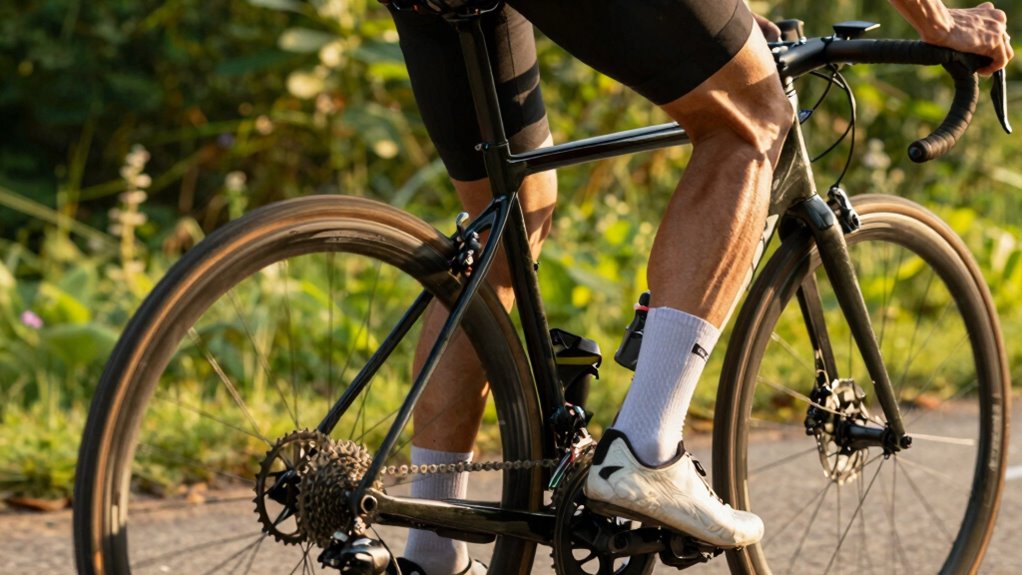
Cadence refers to how fast you spin your pedals, typically measured in revolutions per minute (RPM). Maintaining a higher cadence often feels more effortless and can reduce muscle fatigue because it distributes effort across more pedal strokes. Pedal technique becomes essential here, as smooth, controlled movements maximize gear efficiency, allowing you to sustain high cadence without wasting energy. When you focus on keeping a consistent cadence, you’re training your body to become more efficient at converting your effort into forward motion, especially when climbing or sprinting. But, pushing for a higher cadence isn’t always ideal — if your gear is too light, you might spin out or lose power; if it’s too heavy, you risk tiring quickly or developing inefficient pedaling habits.
Higher cadence reduces fatigue and improves efficiency with smooth, controlled pedal technique.
Torque, on the other hand, is the force you apply to the pedals. It’s about pushing hard when needed, especially during climbs or accelerations. Applying more torque can help you generate more power, but it often requires a different pedal technique — one that emphasizes strength and control. When you rely heavily on torque, gear efficiency can drop if your technique isn’t precise because you may be wasting energy battling resistance or bouncing in the saddle. Striking a balance between torque and cadence is key. For example, during sprints, increasing torque with a lower cadence can produce explosive power, but over longer distances, a moderate approach with a steady cadence and appropriate torque tends to be more sustainable. Additionally, understanding your cycling biomechanics can help you develop a more efficient pedaling style. Incorporating pedal stroke analysis into your training can reveal areas where you waste energy and help you refine your technique for better performance.
Furthermore, muscle engagement plays a significant role in how effectively you can apply torque and maintain cadence, influencing your overall efficiency. Ultimately, the trade-off between cadence and torque isn’t about choosing one over the other but about understanding how they complement each other. Improving your pedal technique ensures you can adapt to different terrains and conditions, optimizing gear efficiency whether you’re spinning quickly or pushing hard. By experimenting with different combinations and paying attention to how your body responds, you’ll find a rhythm that maximizes your strength while conserving energy. The most effective cyclists learn to switch gears — literally and figuratively — adjusting cadence and torque to match the demands of each ride, all while refining their pedal technique to become more efficient and powerful.
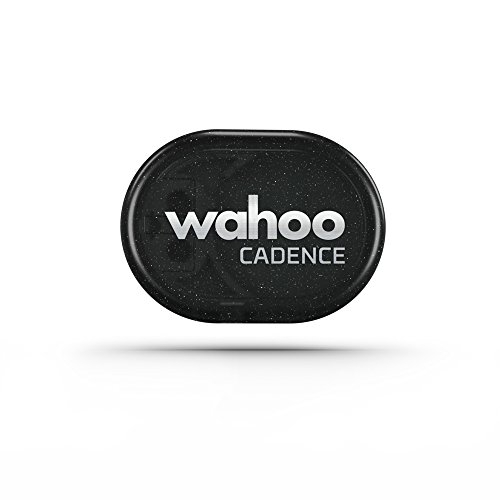
Wahoo RPM Cycling Cadence Sensor for Outdoor, Spin and Stationary Bikes, Blue
SPEED / CADENCE MEASUREMENT – Track and capture real-time cycling speed and cadence with compatible training apps, including…
As an affiliate, we earn on qualifying purchases.
As an affiliate, we earn on qualifying purchases.
Frequently Asked Questions
How Do Cadence and Torque Affect Cycling Efficiency?
You influence cycling efficiency by balancing cadence and torque. Higher cadence with lower torque reduces muscle fatigue and promotes pedal smoothness, helping you ride longer without tiring. Conversely, applying more torque at a lower cadence can cause quicker muscle fatigue and uneven pedaling. Find a sweet spot where your cadence is comfortable, and torque is efficient, so your muscles work smoothly and sustainably, maximizing your cycling performance.
Can Adjusting Cadence Improve Climbing Performance?
Adjusting your cadence can considerably boost climbing performance, especially since studies show that maintaining a higher cadence reduces rider fatigue. By selecting the right gear, you can keep your cadence within an ideal range, making climbs feel easier and less exhausting. When you focus on gear selection, you conserve energy, improve efficiency, and sustain momentum longer. This simple change can make steep ascents less intimidating and more manageable.
What Gear Settings Optimize Torque and Cadence Balance?
You should choose gear ratios that keep your cadence comfortable while maximizing torque, often around 70-90 RPM. To optimize this balance, shift to lower gears on climbs, which allows you to pedal with more torque at a steady cadence. Incorporate efficient pedal techniques like smooth, controlled strokes to maintain power without wasting energy. This combo helps you climb effectively without overexerting or sacrificing cadence.
How Do Cycling Disciplines Prioritize Cadence Versus Torque?
In different cycling disciplines, you naturally lean towards certain gear selection to prioritize either cadence or torque. For instance, sprinters favor high torque for explosive power, while endurance riders optimize cadence for fatigue management over long distances. You adapt your approach based on your goals, balancing gear choices to maintain efficiency and prevent fatigue. This mindful gear selection helps you enjoy your ride while achieving the best performance suited to your discipline.
Are There Injury Risks Linked to High Cadence or Torque?
High cadence can increase injury risk by causing muscle fatigue and overuse, leading to issues like tendinitis or joint pain. Conversely, high torque puts more strain on your muscles and joints, especially during intense pedal strokes, increasing the chance of strains or sprains. To avoid injury, find a balanced pedal stroke that minimizes muscle fatigue and distributes effort evenly, ensuring you don’t overstress your muscles or joints during rides.

PUIBERS 1/4'' Newton Meter Torque Wrench, Bike Torque Wrench 1/4 3-25 NM/22.6-221.3 IN.LB,Dual-Direction Adjustable 72 Tooth Drive Small Torque Wrenches for Bike, Motorcycle and Car Repair
1.High Precision ±3%: The accuracy of this 1/4 torque wrench is ±3%, with a torque range of 3-25Nm/22.6-221.3…
As an affiliate, we earn on qualifying purchases.
As an affiliate, we earn on qualifying purchases.
Conclusion
Understanding the cadence-torque trade-off can boost your cycling efficiency. Did you know that cyclists who maintain a cadence of around 90 RPM often conserve energy better and reduce fatigue? By mastering this balance, you can ride longer and more comfortably. So, experiment with your cadence and torque, find what works best for your body, and enjoy smoother, more powerful rides. Remember, small adjustments make a big difference on the road.

Yuecoom Electric Bike LCD Display, 5 Pin SW900 Waterproof Smart Battery Meter Control Panel with Real-Time Power Consumption Tracking, for E-Bikes and Scooters Handlebars Accessories
High-Quality Materials: Electric Bike LCD Display 5-Pin Waterproof design, durable ABS material, lightweight and strong to withstand daily…
As an affiliate, we earn on qualifying purchases.
As an affiliate, we earn on qualifying purchases.

Magene P715 S Power Meter Pedals – ±1% Precision, 120h Battery Life, Seamless Bike Compatibility, ANT+ & Bluetooth for Cycling
±1% Consistent Power Accuracy, Record Your Every Effort Precisely
As an affiliate, we earn on qualifying purchases.
As an affiliate, we earn on qualifying purchases.