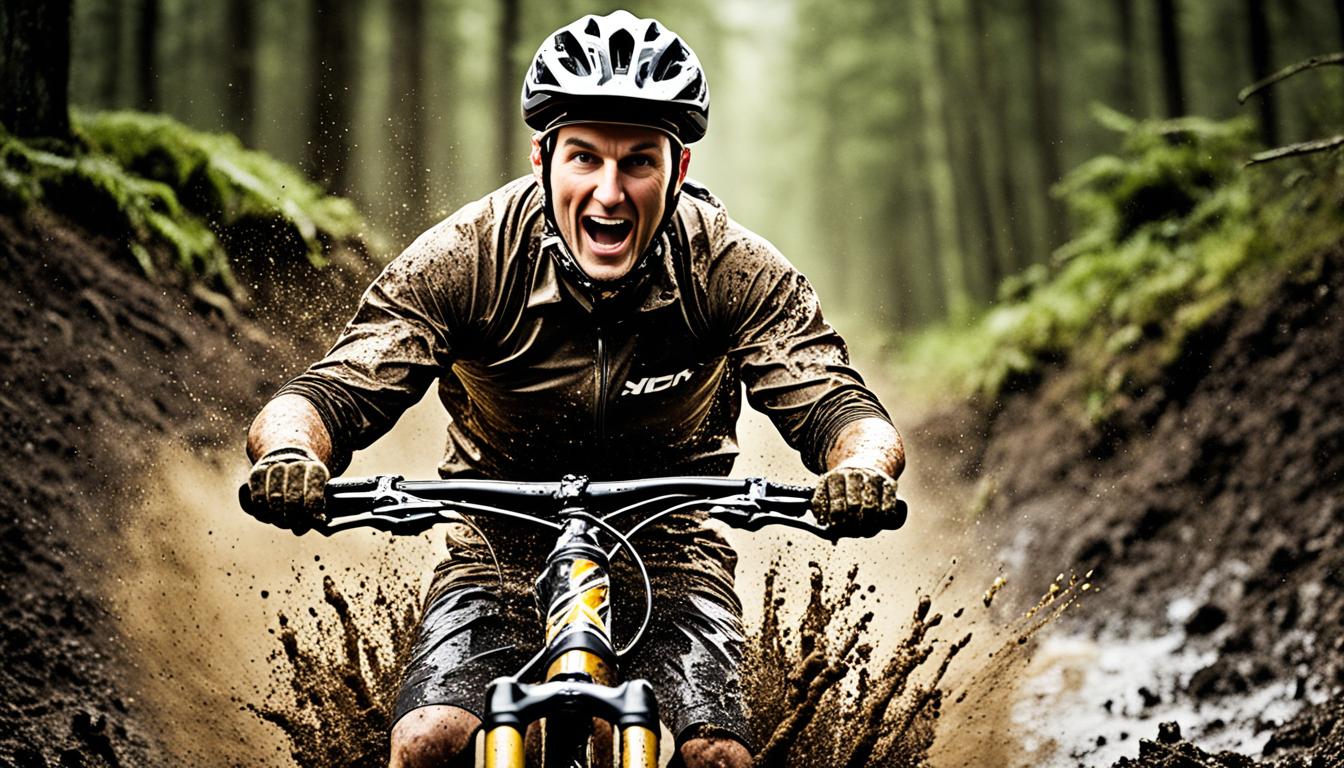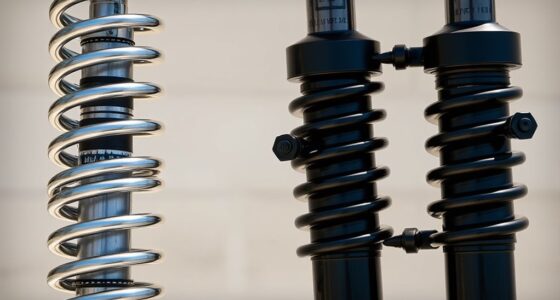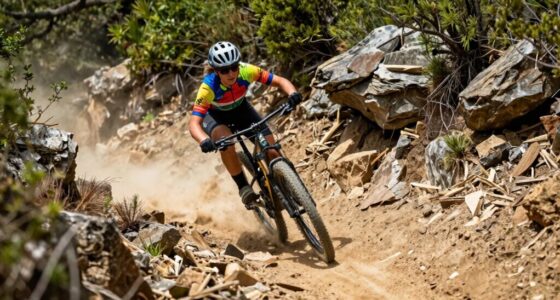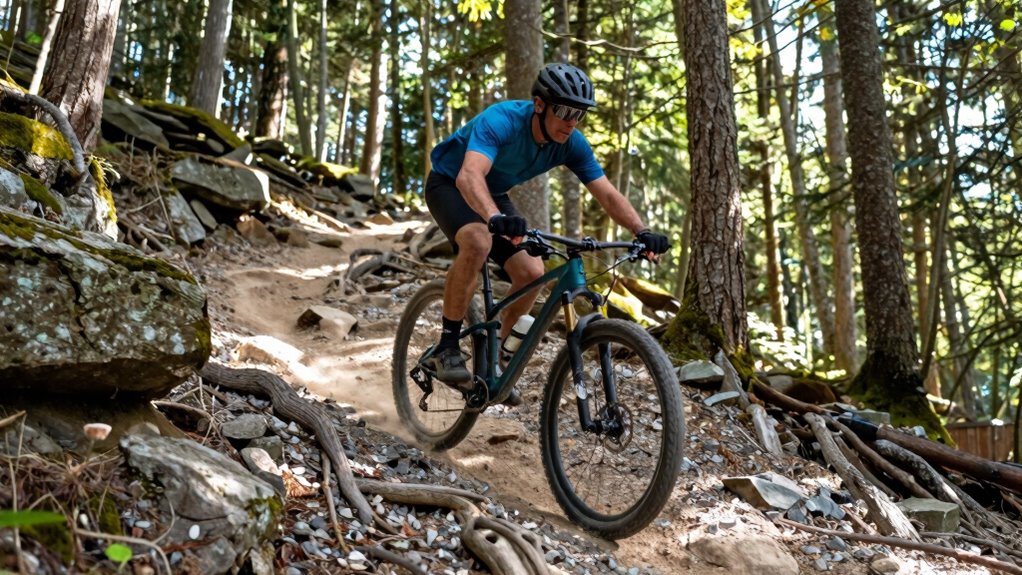
To climb technical trails without spinning out, focus on maintaining a steady, controlled cadence and precise body positioning. Use well-suited gears for the terrain, and stay in a gear that allows smooth power application without sudden surges. Keep your weight centered and slightly back to improve traction. Regularly check your bike’s condition and fine-tune suspension for better control. Keep these tips in mind, and you’ll gain more techniques to conquer tricky climbs effectively.

Get sports gear delivered free — and shop member deals
- Fast, free delivery on millions of items
- Access to Prime Big Deal Days deals on October 6–7
- Prime Video, Amazon Music and more included
Key Takeaways
- Maintain a steady, moderate cadence to prevent wheel spin and improve traction on technical sections.
- Use proper body positioning, shifting weight back for better control and grip.
- Choose appropriate gear ratios tailored to the trail’s steepness and surface conditions.
- Ensure tires have sufficient traction and are properly inflated for optimal grip.
- Practice smooth, controlled pedal strokes to avoid sudden power surges that cause spinning.
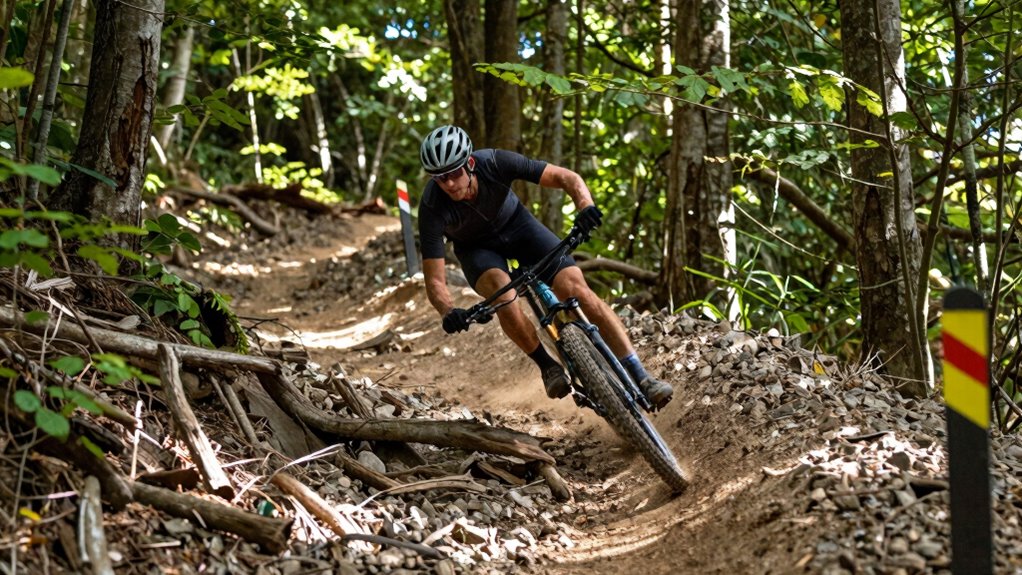
Gear upgrades play a vital role in climbing technical trails without spinning out. Investing in a quality drivetrain with a wide gear range allows you to find the perfect cadence on steep, uneven sections. Consider upgrading to tires with better traction and sidewall protection—these help grip loose or rocky surfaces, giving you added confidence. Suspension upgrades also make a significant difference; a well-tuned fork and rear shock absorb impacts and maintain traction when steering through rough terrain. Don’t overlook the importance of quality wheelsets, which can improve stability and reduce the risk of flats during intense climbs. Your riding style and trail conditions may also require specific gear adjustments, so take the time to customize your setup accordingly. Proper bike maintenance ensures your components perform optimally and reduces unexpected issues during climbs. Additionally, understanding trail conditions can help you choose the right gear setup and line to minimize the risk of spinning out. Developing a riding technique** that emphasizes smooth and controlled movements can further enhance your ability to tackle technical terrain successfully. Regularly practicing these technique skills will help you develop a better feel for your bike’s reactions, making you more confident on tricky climbs. Incorporating trail feedback** into your riding can help you adjust your approach and improve your overall performance.
Ultimately, climbing technical trails without spinning out depends on a combination of trail knowledge, gear improvements, and refined technique. Maintain your trail and bike diligently, invest in quality components suited for rough terrain, and ride with focus and patience. Over time, these efforts will improve your control and help you conquer even the most challenging technical climbs with confidence.
mountain bike drivetrain upgrade
As an affiliate, we earn on qualifying purchases.
As an affiliate, we earn on qualifying purchases.
Frequently Asked Questions
What Gear Should I Carry for Technical Trail Climbing?
You should carry essential gear like a multi-tool, tire levers, and a spare tube for trail maintenance. Make sure your bike fit is optimized for comfort and control, which helps prevent spinning out. A pump is also crucial to keep your tires at the right pressure. Consider carrying a small patch kit and gloves for added safety. This gear guarantees you’re prepared, confident, and ready to handle technical climbs smoothly.
How Do I Choose the Best Line on Tricky Sections?
Think of trail surface and line selection as your map through a maze. To choose the best line on tricky sections, look ahead for the most solid, stable surface, avoiding loose rocks or muddy patches. Keep your eyes focused on the trail, not just your front wheel. Pick a line that offers the best grip and smoothest flow, and stay flexible to adapt as the trail shifts beneath you.
What Are Common Mistakes to Avoid on Technical Climbs?
To avoid common mistakes on technical climbs, focus on maintaining proper rider posture, keeping your weight centered and balanced. Don’t overlook trail maintenance; loose or rutted surfaces can cause spins, so choose your line wisely and stay alert. Avoid over-committing to tricky sections, and keep your eyes ahead to anticipate obstacles. Proper posture and awareness help you stay controlled, preventing spins and ensuring a smoother, safer climb.
How Can I Improve My Technical Trail Climbing Skills Quickly?
To improve your technical trail climbing skills quickly, focus on consistent practice and refining your bike handling. Keep your bike well-maintained to prevent mechanical issues, and pay attention to trail nutrition—fueling properly helps maintain stamina and focus. Practice precise line choice and body positioning, and gradually tackle more challenging climbs. With dedication, you’ll build confidence and technique faster, making tough climbs feel more manageable.
When Should I Walk Versus Ride on Difficult Sections?
You should walk on difficult sections when trail etiquette suggests it’s safer for everyone, like narrow or slippery spots, or if you’re unsure about your skill. Consider weather conditions; wet or muddy trails increase the risk of slipping, so walking might be better. Knowing when to ride or walk helps protect the trail, keeps you safe, and shows respect for other riders. Trust your judgment and prioritize safety in tricky sections.
Conclusion
Mastering technical trail climbs without spinning out is like wielding a superhero’s grip on your bike. Keep your weight centered, pick your line wisely, and stay smooth with your pedal strokes. Practice patience and stay confident—because with each climb, you’re revealing skills that make mountain biking feel like a walk in the park… if that park had walls of fire and endless roots. So keep pushing, and soon, technical trails will feel like your second nature!
NFL season / tailgating Picks
team gear
As an affiliate, we earn on qualifying purchases.