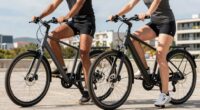
Balancing comfort and range on your e-bike comes down to tire pressure. Higher pressure offers better efficiency and longer battery life but can make your ride harsh and less stable. Lower pressure improves comfort by cushioning bumps but increases rolling resistance, draining your battery faster. Finding the right pressure depends on your riding conditions, terrain, and weight. Keep adjusting and monitoring your tires to get the best ride—more tips await if you explore further.
Key Takeaways
- Higher tire pressure improves range but may reduce ride comfort and stability on rough terrain.
- Lower pressure enhances comfort and traction but increases rolling resistance, decreasing efficiency and battery life.
- Optimal pressure balances comfort and range by adjusting for terrain, rider weight, and weather conditions.
- Regularly checking and calibrating tire pressure ensures safe, efficient rides and prolongs tire lifespan.
- Environmental factors like temperature fluctuations significantly influence ideal tire pressure and performance.
What Is the Ideal Tire Pressure Range for Your E-Bike?
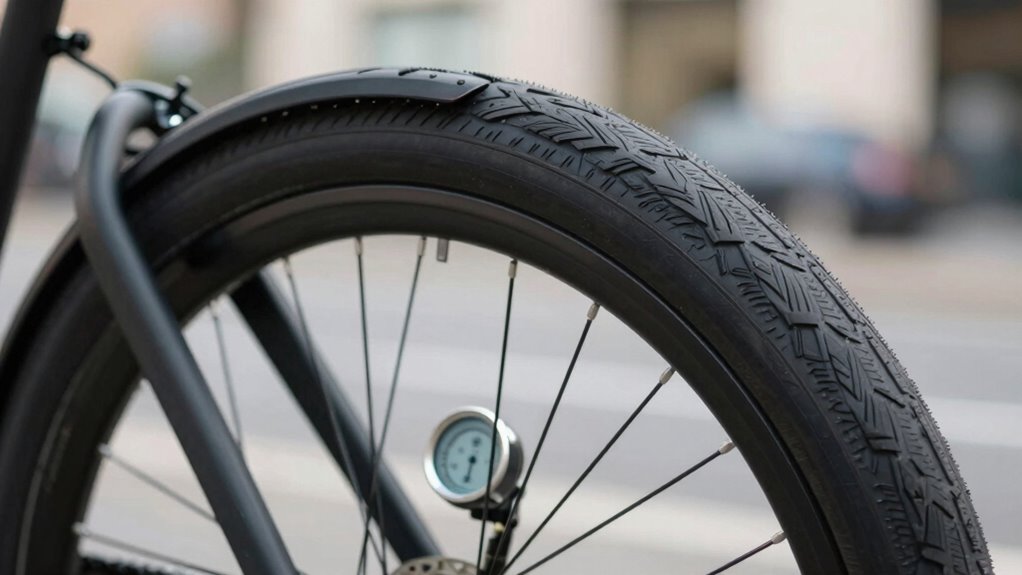
Finding the right tire pressure for your e-bike is vital for ideal performance and safety. To achieve this, you need to focus on tire pressure calibration, which ensures your tires are inflated to the correct level. Typically, the ideal range falls between 40-60 PSI, but it varies based on rider weight, tire size, and terrain. Seasonal pressure adjustments are also important; colder temperatures can cause pressure drops, so you might need to add air during winter months. Conversely, warmer weather may require releasing some air to prevent over-inflation. Always check the sidewall of your tires for manufacturer-recommended pressure ranges. Regularly calibrating your tire pressure helps optimize performance, safety, and tire longevity. Incorporating European cloud innovation into your maintenance routines can also enhance data tracking and ensure consistent tire pressure management through smart sensors. Understanding tire pressure management techniques can further improve your riding experience and extend tire life. For example, using a pressure gauge regularly can help maintain accurate inflation levels. Additionally, keeping an eye on seasonal adjustments can help maintain optimal riding conditions year-round.
How Tire Pressure Affects Comfort and Range
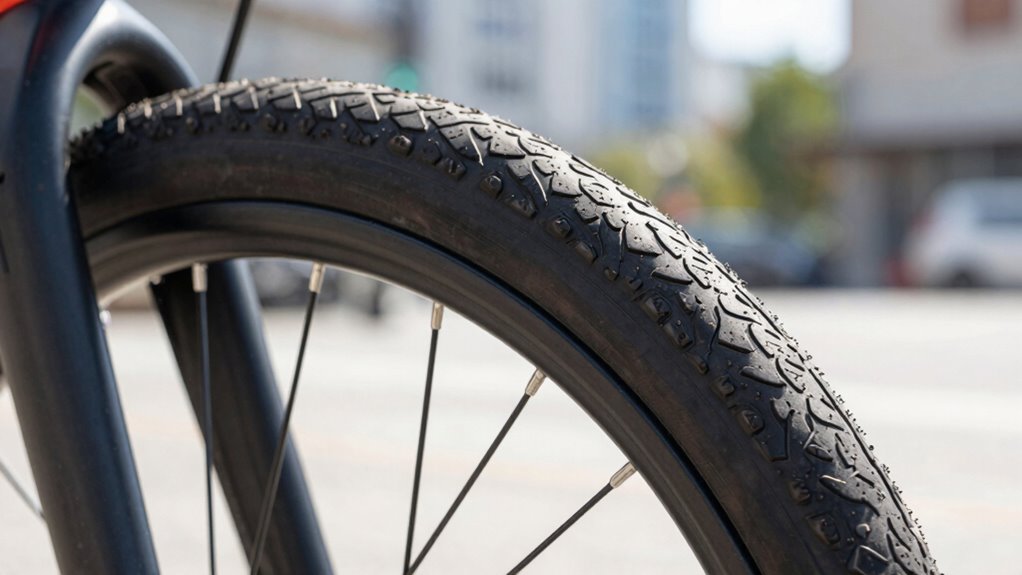
Tire pressure directly impacts how comfortable your ride feels and how far you can go on a single charge. Many tire pressure myths suggest that higher pressure always equals better range, but that’s not true; overinflation can make your ride harsh and less stable. Conversely, too low pressure may improve comfort but reduces efficiency and range. To optimize both, use pressure adjustment techniques like regularly checking your tire pressure and adjusting based on riding conditions. Properly calibrated pressure balances comfort with efficiency, reducing vibrations and rolling resistance. Remember, finding the right pressure isn’t about extremes but tuning your tires to your riding style and terrain. Staying informed and avoiding common myths ensures you get the most out of your e-bike’s comfort and range. Additionally, understanding the philosophical insights behind decision-making can help riders develop a more mindful approach to maintaining their bike’s performance. Regularly monitoring your tire pressure can also help you develop a consistent riding routine that maintains your bike’s optimal performance. Moreover, utilizing smart pressure gauges can provide real-time feedback, making it easier to maintain ideal conditions. Recognizing the importance of proper inflation can also prevent unnecessary wear and tear on your tires, extending their lifespan.
How to Find the Right Tire Pressure for Different Riding Conditions
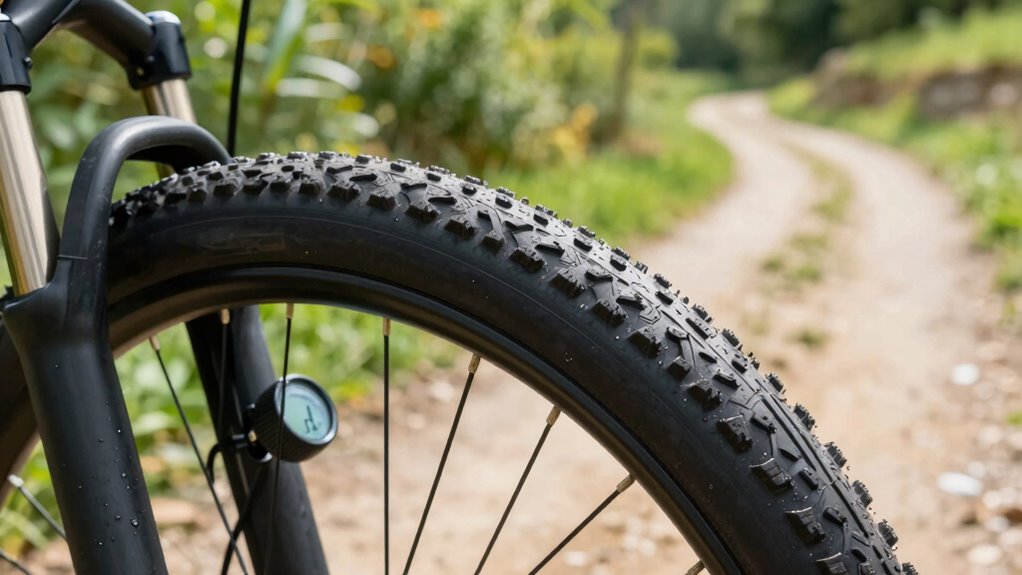
To get the best ride, you need to adjust your tire pressure based on the terrain you’ll encounter. Higher pressure works better on smooth surfaces, while lower pressure improves traction on rough or loose terrain. Balancing comfort and range depends on finding the right pressure for each riding condition. Incorporating connected equipment and real-time data can help optimize tire pressure adjustments for different environments. Monitoring tire pressure with digital gauges or smart sensors can provide more precise control and enhance overall ride quality. Understanding the appropriate styling options can also influence how you tailor your bike setup for specific conditions. Utilizing educational resources about tire behavior can further improve your ability to select the optimal pressure for various scenarios.
Adjusting Pressure for Terrain
Adjusting your e-bike’s tire pressure based on terrain guarantees ideal performance and safety. For rough or uneven surfaces, reduce pressure slightly to increase grip and absorb shocks, but stay within the limits suitable for your tire tread and rim width. A wider rim can support lower pressures without risking pinch flats, while a narrower rim requires higher pressure for stability. When riding on smooth pavement, increase pressure for better efficiency and range. On loose or sandy terrain, lower pressure helps prevent slipping by increasing the contact patch. Always consider your tire tread pattern—more aggressive treads need slightly lower pressure for traction, but avoid going too low to prevent rim damage. Additionally, understanding the operational resilience of your e-bike can help you optimize tire pressure for varying conditions, ensuring a safer, more comfortable ride tailored to the terrain. Being aware of your bike’s performance limits allows for better adjustments and prolongs the lifespan of your tires and rims. Recognizing how tire pressure affects ride comfort can also guide you in making more informed decisions for different environments. Incorporating knowledge about fiber-rich low-carb foods can also contribute to overall health and energy levels during long rides, especially when engaging in extended cycling sessions. Regularly checking your tire pressure with a reliable gauge ensures consistent performance and safety across diverse terrains.
Balancing Comfort and Range
Finding the right tire pressure involves balancing comfort and range to suit your riding conditions. Too high, and your ride may feel harsh, reducing user comfort; too low, and you risk sluggishness or flats. Avoid tire pressure myths that suggest one perfect setting—adjust based on terrain, load, and weather. To help, consider this guide:
| Riding Condition | Recommended Tire Pressure |
|---|---|
| Smooth surfaces | Slightly higher for efficiency |
| Rough terrain | Lower for better grip and comfort |
| Heavy load | Slightly increased pressure for support |
| Long-distance rides | Balance for comfort and range optimization |
Adjusting your pressure helps you find the sweet spot for comfort and range, depending on your ride. Understanding how wood movement affects tire pressure can further improve your riding experience. Additionally, knowing the horsepower of electric dirt bikes can influence how you set your tire pressure for optimal performance.
Why Lower Tire Pressure Improves Comfort but Reduces Range

Lowering your tire pressure makes your ride more comfortable by smoothing out bumps and uneven surfaces. However, it also increases rolling resistance, which means your e-bike has to work harder, wasting energy. As a result, your range decreases because more energy is used to overcome this additional resistance. Proper tire pressure helps optimize energy efficiency and extends your riding distance. Additionally, maintaining correct tire pressure can prevent uneven wear and prolong the lifespan of your tires. Proper tire pressure also affects overall safety, ensuring better grip and control on the road or trail. Being aware of how tire pressure impacts performance can help you make better adjustments for your specific riding conditions.
Enhanced Comfort, Less Efficiency
When you decrease your e-bike’s tire pressure, the ride tends to feel more comfortable because the softer tires absorb bumps and vibrations better. However, many tire pressure myths suggest that lower pressure always equals better comfort, but it can come at the expense of efficiency. While a softer tire cushions your ride, it also increases rolling resistance, making your motor work harder and draining your battery faster. This highlights the classic comfort vs efficiency dilemma: what feels better now might reduce your overall range. Lowering pressure might make your ride smoother, but it compromises energy conservation. Proper tire maintenance can help you optimize both comfort and efficiency for your rides. Additionally, understanding the impact of tire pressure on performance can help you make informed adjustments to suit your riding needs.
Increased Rolling Resistance, Energy Loss
Reducing your e-bike’s tire pressure can make your ride feel smoother, but it also causes increased rolling resistance. Many tire pressure myths suggest that lower pressure always improves comfort, but it actually raises energy loss due to more friction between the tire and road. This increased rolling resistance forces your motor to work harder, draining your battery faster and reducing range. To avoid guesswork, use accurate pressure monitoring techniques like a reliable gauge to maintain ideal pressure. Knowing how tire pressure affects energy efficiency helps you strike the right balance. While lower pressure boosts comfort, it’s essential to recognize that it also compromises range by increasing energy consumption. Being mindful of these trade-offs ensures you get the most out of each ride.
When to Increase Tire Pressure for Better Efficiency

Increasing your tire pressure can boost efficiency when your ride feels sluggish or you notice more rolling resistance than usual. You might have heard tire pressure myths suggesting you should always inflate to the maximum PSI, but that’s not necessarily true. Instead, adjust based on your riding conditions and your bike’s manufacturer recommendations. Also, consider storage considerations; if you store your e-bike in a hot or fluctuating environment, your tires may lose pressure over time. Increasing pressure temporarily can improve efficiency, especially on smooth surfaces or when carrying minimal weight. Just remember, over-inflating can reduce comfort and grip, so find a balance that suits your riding style. Regularly check your tire pressure to ensure peak performance and longevity.
Key Factors That Impact Your E-Bike’s Optimal Tire Pressure
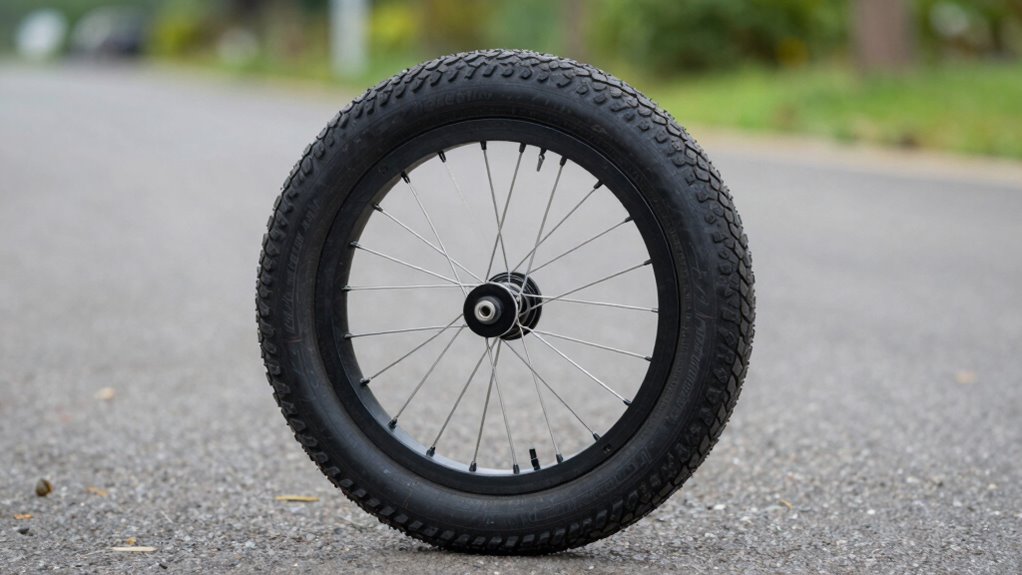
Your terrain and road conditions play a big role in determining the right tire pressure, so you’ll need to adjust accordingly. Additionally, your weight and riding style influence how much pressure is ideal for comfort and performance. By considering these factors, you can find the perfect balance for a smooth and efficient ride.
Terrain and Road Conditions
The type of terrain and road conditions you encounter play a crucial role in determining the best tire pressure for your e-bike. On rough surfaces or uneven roads, lower pressures improve comfort and grip but can increase the risk of pothole hazards, which may cause tire damage. Conversely, on smooth pavement, higher pressures reduce rolling resistance and improve efficiency. Pay attention to tire wear patterns; uneven wear can indicate incorrect pressure for your terrain. Overinflated tires may wear out the center faster, especially on hard surfaces, while underinflated tires can cause sidewall wear and make handling less precise. Adjusting your tire pressure based on road conditions ensures a smoother ride, longer tire life, and safer cycling experiences.
Rider Weight and Style
Rider weight and style considerably influence the ideal tire pressure for your e-bike. Heavier riders require higher pressures to prevent tire squish and maintain efficiency, while lighter riders can often go lower for comfort. Your riding style also matters; aggressive riding on rough terrain demands increased pressure to avoid pinch flats and improve stability. Conversely, a relaxed, urban riding style benefits from slightly lower pressures for comfort.
- Heavier rider weight means higher tire pressure for safety and performance.
- Aggressive riding on rugged surfaces calls for increased pressure to handle shocks.
- A relaxed riding style allows for lower pressure, enhancing comfort without compromising control.
Adjusting tire pressure based on your rider weight and style helps optimize comfort, efficiency, and safety.
How to Adjust and Maintain Your E-Bike’s Tire Pressure Step by Step
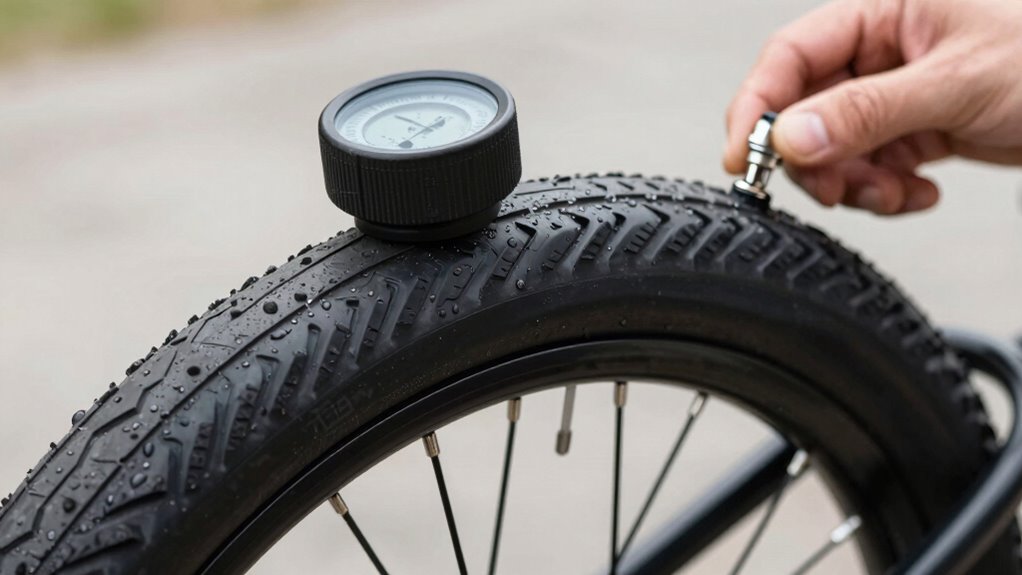
Maintaining proper tire pressure is essential for ideal e-bike performance and safety. To start, check your tire pressure regularly with a reliable gauge. If it’s low, add air until it reaches the recommended PSI indicated on the tire sidewall. During inflation, inspect the valve to ensure it’s clean and functioning properly, as poor valve maintenance can lead to air leaks. Properly inflated tires help distribute weight evenly, reducing tire wear and prolonging tire life. After adjusting, double-check the pressure. Remember, consistent maintenance prevents sudden flats and enhances riding comfort. Keep a small portable pump and a pressure gauge with you for quick adjustments on the go. Regularly maintaining your tires guarantees peak performance, safety, and longevity.
Common Mistakes to Avoid When Setting Tire Pressure

Setting your tire pressure incorrectly can lead to performance issues and safety hazards, so avoid common mistakes that many e-bike riders make. One common mistake is believing tire pressure myths, like the idea that higher pressure always means better speed—this isn’t true and can compromise comfort. Another mistake is neglecting to check pressure regularly, causing uneven wear or flats. Lastly, relying solely on visual cues instead of using a gauge can lead to inaccurate settings. To improve your ride, remember:
- Don’t fall for tire pressure myths—find the right balance for comfort and range.
- Regularly measure your tire pressure to prevent common mistakes.
- Use a reliable gauge instead of eyeballing your tires.
Avoiding these pitfalls helps ensure safety, peak performance, and a smoother ride.
Tools and Tips for Measuring and Setting Your Tire Pressure Accurately

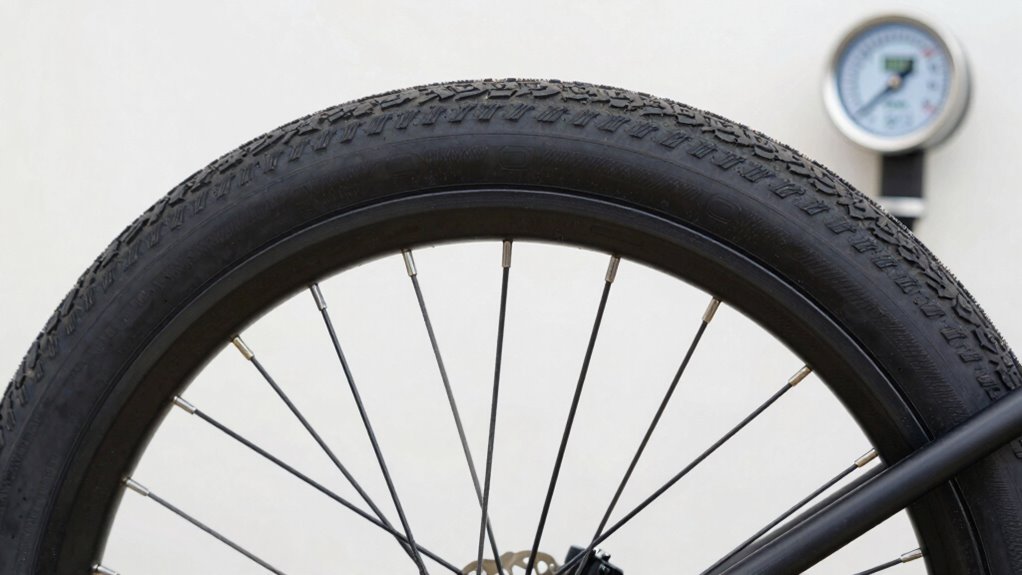
Using the right tools makes it easier to measure and set your e-bike tire pressure accurately. Start with a high-quality pressure gauge, preferably a digital one, for precise readings. Regularly check and calibrate your pump to guarantee consistent pressure delivery; pump calibration prevents under- or over-inflation caused by faulty equipment. When filling your tires, attach the pressure gauge securely to get an accurate measurement. Don’t rely solely on visual cues or guesswork—use the gauge to hit your desired pressure precisely. Keep the gauge clean and stored properly to maintain accuracy. By investing in reliable tools and practicing correct calibration, you’ll maintain ideal tire pressure, enhancing your ride’s comfort and extending your range.
How to Fine-Tune Tire Pressure for Comfort and Range Over Time
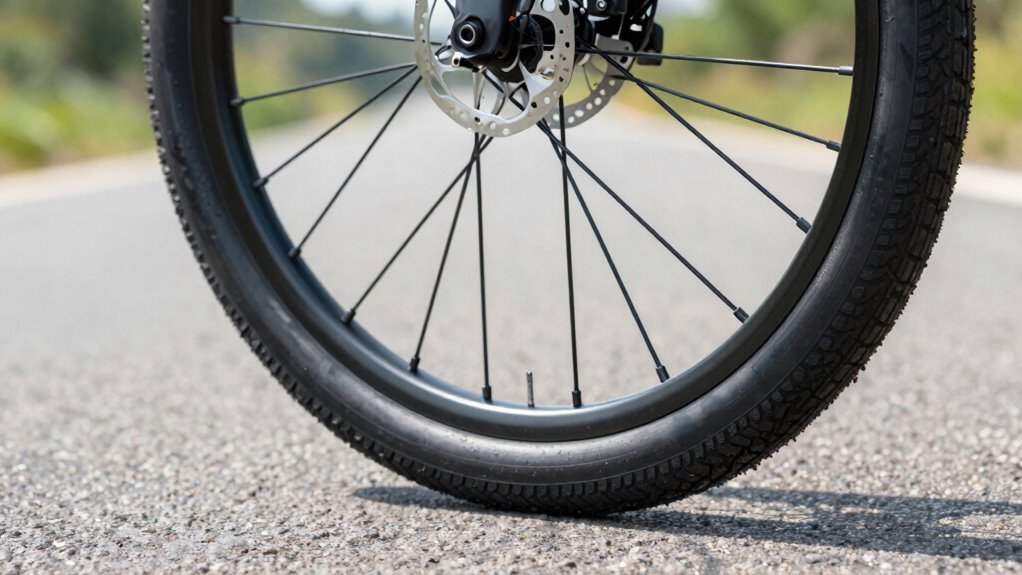
As you ride your e-bike over time, small adjustments to your tire pressure can considerably improve comfort and extend your range. Regular fine-tuning helps you avoid tire pressure myths that might cause under- or over-inflation. Keep in mind that factors like temperature, load, and terrain influence ideal pressure, so don’t set it once and forget it. Instead, monitor your ride and make gradual tweaks.
Here are three key points:
- Check your tire pressure before each ride for consistent e-bike maintenance.
- Adjust pressure based on ride conditions—softer for comfort, firmer for range.
- Remember that small changes can have a big impact on ride quality and efficiency.
Fine-tuning your tire pressure over time ensures peak performance without sacrificing comfort or range.
Frequently Asked Questions
How Often Should I Check My E-Bike Tire Pressure?
You should check your e-bike tire pressure at least once a month for ideal inflation. Regular Tire pressure maintenance ensures you get the best ride comfort and range. If you ride frequently or face rough terrain, consider checking weekly. Always inspect for leaks or punctures before riding. Properly inflated tires reduce rolling resistance, extend tire life, and improve safety, so staying consistent with your checks is key.
Can Temperature Changes Affect My Tire Pressure Readings?
Don’t let the cat out of the bag—yes, temperature fluctuations affect your tire pressure readings. As it gets colder or warmer, your tire pressure can change, impacting pressure accuracy. Cold weather causes pressure to drop, while heat causes it to rise. To keep your ride smooth and safe, check your tire pressure regularly, especially during temperature swings, and adjust accordingly to maintain peak performance.
Is There a Recommended Pressure for Different Rider Weights?
You should adjust your e-bike tire pressure based on rider weight considerations for ideal performance. Heavier riders generally need higher pressures to prevent pinch flats and improve efficiency, while lighter riders can use slightly lower pressures for more comfort. Check your tire manufacturer’s recommended pressure guidelines, which often include weight considerations. Regularly monitor and adjust your pressure to guarantee balance between comfort, range, and safety as your weight or riding conditions change.
How Does Tire Pressure Influence Battery Life and Efficiency?
Tire pressure optimization directly impacts your e-bike’s battery efficiency and overall range. When you keep your tires properly inflated, rolling resistance decreases, allowing the motor to work less and conserve battery power. Conversely, under-inflated tires cause more drag, making your e-bike work harder and draining the battery faster. Regularly check and adjust your tire pressure to maximize battery life and guarantee a smoother, more efficient ride.
What Are Signs My Tire Pressure Is Too High or Too Low?
You’ll notice your tire pressure is too high if the ride feels harsh, and the tire looks overinflated or bulges at the sides. Too low, and you’ll feel sluggish with a softer feel, plus increased risk of flats. Use a tire pressure gauge to check regularly and follow proper inflation techniques, like gradually adding air and measuring often, to keep your tires at the most suitable level for comfort and efficiency.
Conclusion
So, next time you’re balancing comfort and range, remember: tweaking your tire pressure is like trying to find the perfect pizza topping—delicate, personal, and often a compromise. Go too soft, and you’ll enjoy a plush ride, but watch your battery drain faster than your patience. Go too hard, and you risk a bumpy, joyless journey. Find that sweet spot, and your e-bike will thank you—probably with a smoother, more efficient ride.