
To fix a flat, start by identifying whether you have a tubed or tubeless setup. For tubed tires, remove the wheel, completely deflate the tube, and patch or replace the tube before reinstalling and inflating it properly. For tubeless, locate the puncture, seal it with a compatible repair kit, and guarantee the tire bead seats correctly. Mastering these steps helps you respond quickly and confidently—keep going to learn more tricks for smooth, hassle-free fixes.
Key Takeaways
- Identify whether your tire is tubed or tubeless to follow the correct repair method.
- For tubed tires, remove the wheel, deflate the tube, and patch or replace the tube as needed.
- For tubeless tires, locate the leak, seal it with a tubeless repair kit, and reinflate.
- Ensure proper valve function and secure sealing during inflation for both types.
- Practice mounting, sealing, and inflating techniques to speed up repairs and prevent future flats.

Getting a flat tire can quickly turn a smooth ride into a stressful situation, but knowing how to fix it can save you time and hassle. Whether you’re dealing with a tube or tubeless setup, understanding the basics of mounting techniques and valve types helps you get back on the road faster. The key is to be familiar with the different methods used to install tires and the specific valves they use, as each impacts how you repair and maintain your wheels.
Mastering tire mounting and valve types speeds up flat repairs and keeps your ride smooth.
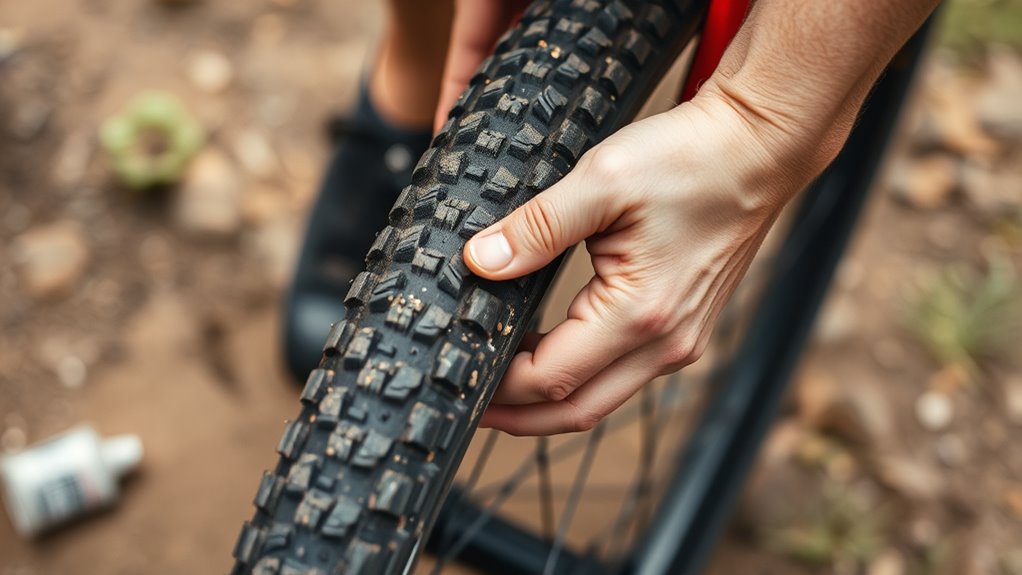
For tubed tires, mounting techniques are straightforward but require some care. First, you need to remove the wheel from your bike, then deflate the tube completely. When installing the tube back into the tire, start by partially inflating it to give it shape. Carefully insert the valve stem through the rim’s hole, ensuring it’s straight and secure. As you fit the tire onto the rim, work your way around, making sure the tube isn’t twisted or pinched between the tire and rim. Once the tire is seated correctly, use your hands or a tire lever to ensure the bead is evenly mounted all around. Be cautious not to pinch the tube between the rim and tire, as this can cause punctures later. When inflating, follow the recommended pressure for your tire and double-check that the valve is functioning properly. Knowing your valve type and proper mounting techniques makes repairing flats quicker and less frustrating. Whether you’re replacing a tube or sealing a puncture in a tubeless setup, understanding these fundamentals ensures you’re prepared for most situations on the trail or road. Mastering these skills allows you to handle flats confidently, saving you time and keeping your ride smooth.
Frequently Asked Questions
How Do I Convert From Tubeless to Tube Setup?
To convert from tubeless to tube setup, first remove the tubeless tire and check tire compatibility with inner tubes. Deflate the tire completely, then carefully unseat the bead from the rim. Insert a compatible inner tube, ensuring it’s properly aligned. Carefully reinflate the tire, making sure the bead seats correctly. This conversion process is straightforward if you verify your rim and tire compatibility beforehand, ensuring a smooth switch.
What Tools Are Essential for Fixing a Flat Quickly?
You’ll need a few essential tools for a quick flat fix. Start with a reliable pump and pump accessories, like a pressure gauge, to guarantee proper inflation. Tire levers are vital for removing the tire from the rim without damage. Having a patch kit or spare tube on hand speeds up repairs. With these tools, you can efficiently fix flats and get back on the road or trail in no time.
Can I Repair a Tubeless Tire While Riding?
Yes, you can repair a tubeless tire while riding, but it’s like trying to tame a wild beast! First, stop safely, then add tire sealant if needed to seal small punctures. Check rim tape for damage, as it keeps the air in. Use a quick-release or CO2 inflator to re-inflate, and ride on, knowing you’ve tamed that unruly tire just enough to keep going!
How Often Should I Check My Tires for Potential Flats?
You should check your tires regularly, ideally before every ride, to prevent flats. Consistent tire pressure maintenance helps catch small leaks early and keeps your tires in top shape. Make a habit of inspecting for cuts, embedded debris, or wear, and follow flat prevention tips like maintaining proper pressure and avoiding rough terrain. Frequent checks reduce the risk of sudden flats and guarantee a smoother, safer ride.
What Are the Signs of a Slow Leak in Tubeless Tires?
You might notice a slow leak in your tubeless tires if you see air pressure loss over time or uneven tire wear. These signs indicate air is escaping gradually, even if you don’t see a puncture. Regularly check your tire pressure and look for uneven tread patterns. If you notice these issues, it’s time to inspect your tire closely and consider re-sealing or replacing it to prevent further problems.
Conclusion
Remember, fixing a flat isn’t just about repairing your bike—it’s about restoring your journey. Think of your tire as a vessel carrying your adventures; when it’s punctured, your path pauses. But with a simple fix, you’re reigniting that flame, ready to roll forward again. Embrace each repair as a symbol of resilience, turning setbacks into comebacks. So, patch that tube or seal that tubeless, and keep your spirit rolling toward new horizons.