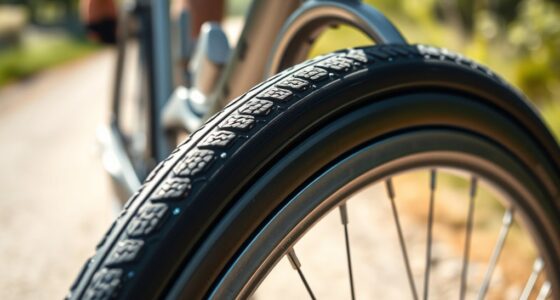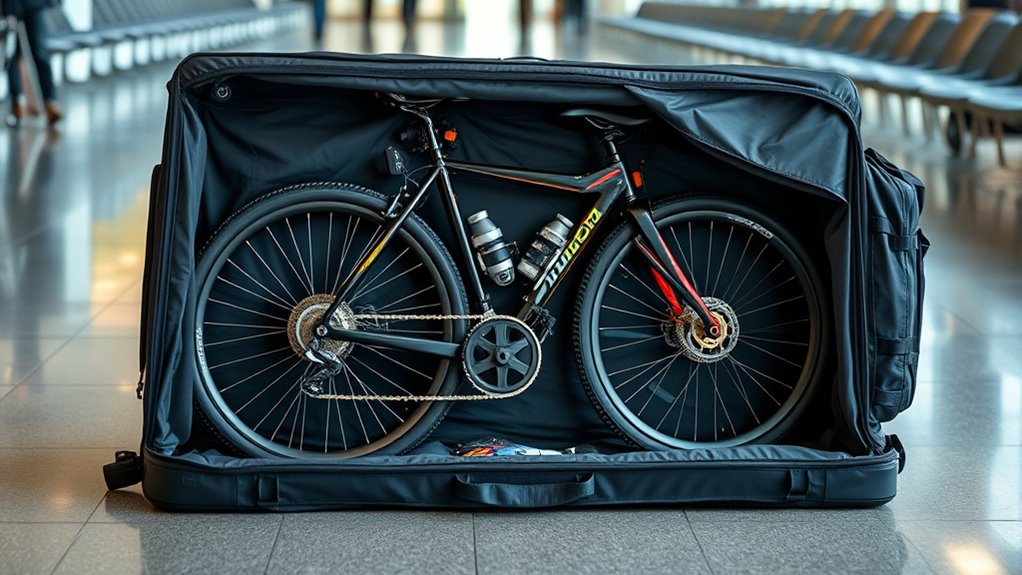

To pack your bike for flights, start by checking tire pressure, tightening loose bolts, and lubricating the chain. Remove pedals and handlebars, then carefully wrap delicate parts with bubble wrap or foam padding. Use a sturdy bike case or bag and secure the bike tightly inside, filling gaps with padding. Label your package clearly and consider adding fragile stickers. Ensuring compliance with airline policies and inspecting your bike upon arrival will help keep your ride safe. Keep going for more detailed tips to make your trip seamless.
Key Takeaways
- Thoroughly prepare the bike by checking tire pressure, tightening bolts, lubricating the chain, and removing removable parts.
- Use a sturdy case or bag, padding delicate components with bubble wrap, and secure the bike tightly inside.
- Measure the packed bike to ensure it meets airline size and weight restrictions; label clearly and add fragile stickers.
- Verify airline policies and TSA regulations for bike packing, including size limits, fees, and required documentation.
- Insure the bike against damage or loss, and inspect it for damages upon arrival before reassembling and riding.
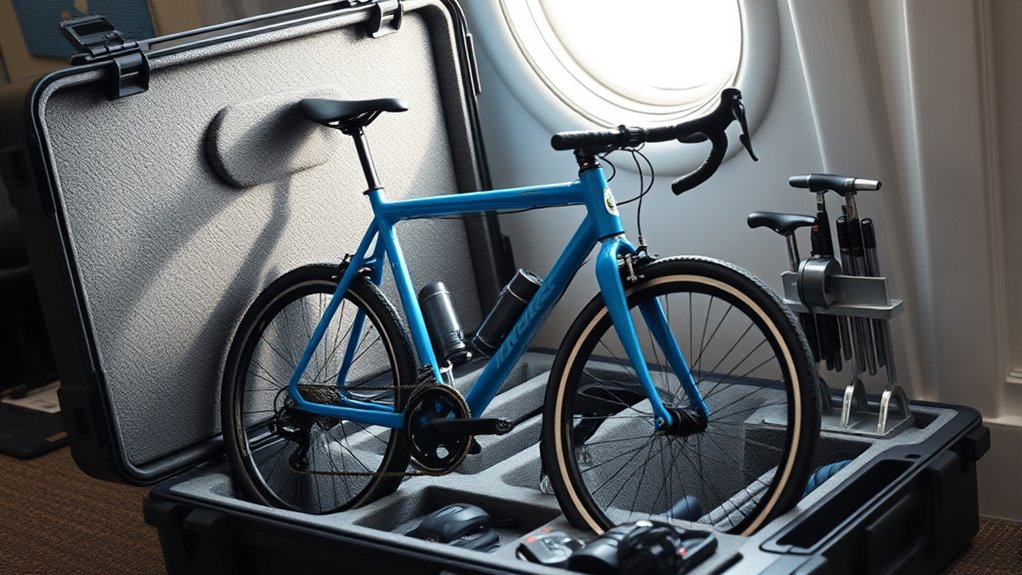
Traveling with your bike can be straightforward if you know how to pack it properly for flights. The key is to prepare your bike in a way that protects it from damage and complies with airline regulations. Start by performing some basic bike maintenance before packing. Check the tires for proper inflation, tighten any loose bolts, and lubricate the chain to guarantee your bike is in good shape. Doing this not only makes your bike ready for riding once you arrive but also minimizes the risk of issues during transit. Additionally, consider removing any removable parts like pedals or handlebars to make packing easier and to prevent damage. Wrap delicate components with bubble wrap or foam padding, and secure everything tightly within a bike box or travel case designed specifically for cycling gear.
Proper bike maintenance and secure packing ensure safe travel and compliance with airline rules.
Choosing the right packing method is essential. Many travelers opt for a hard-shell bike case or a sturdy bike bag, which offers better protection during handling and transit. Make sure the bike is securely fastened inside, with padding filling any gaps. Once packed, double-check your airline’s size and weight restrictions for bikes to avoid extra fees or complications at check-in. Label your package clearly and, if possible, add fragile stickers to alert handlers to treat it carefully.
While preparing your bike, don’t forget about travel insurance. It’s a necessary part of the process because it can cover damages or loss during transit. Confirm that your insurance policy includes coverage for bikes, especially if you’re traveling internationally or on a long trip. Having insurance provides peace of mind, knowing that if something happens, you’re financially protected. Some policies also cover repairs or replacement if your bike gets damaged due to mishandling or accidents during travel.
To further safeguard your gear, consider using specialized bike padding or protective inserts, which can absorb shocks and prevent scratches during transport. When you arrive at your destination, inspect your bike carefully before leaving the baggage claim area. Look for any dents, scratches, or loose parts. If you notice any damage, document it immediately and report it to the airline’s baggage service. This step is essential, especially if you have travel insurance that covers damages. Once you’ve confirmed your bike’s condition, reassemble any parts you removed and give it a quick bike maintenance check-up to guarantee everything is in working order before heading out on your adventure.

VEVOR Bike Travel Bag, Transport Universal Bicycle Storage Case Bag with TSA Lock, Support Plates, Protection and Fork Mount Stabilisation, Bicycle Case Max. Wheelbase 51 in for Airplane, Outdoor Use
Road Bike Fit: This bike travel bag fits wheelbases up to 51 in (130 cm). You remove wheels,…
As an affiliate, we earn on qualifying purchases.
As an affiliate, we earn on qualifying purchases.
Frequently Asked Questions
Can I Pack My Bike in a Carry-On Bag?
You can’t usually pack your bike in a carry-on bag because airline bike policies typically require bikes to be checked. To safeguard your bike frame, use padded bike frame protection or a hard case. Check your airline’s bike policies beforehand, as they vary. Disassemble your bike, secure all parts, and pack it carefully to avoid damage and extra fees. Always confirm with your airline to ensure compliance.
Are There Size Limits for Bike Boxes or Bags?
Imagine your bike as a soaring bird ready for adventure; its cage must fit within airline baggage policies. Most airlines specify bike box dimensions, typically around 62 inches combined length, width, and height, but check your airline’s guidelines for exact bike box dimensions. Staying within these limits prevents surprises at the airport, ensuring smooth travel. Always review specific airline baggage policies to avoid extra fees or delays.
Do I Need to Deflate My Bike Tires Before Packing?
Yes, you should deflate your bike tires before packing. Lowering the tire pressure helps prevent damage during transit and reduces the risk of the tires bursting. Use proper packing techniques by carefully release your tires, securing the valves, and padding the wheels. This ensures your bike stays protected and arrives in good condition. Always check airline guidelines for specific packing requirements related to tire pressure and bike box size.
Is There a Weight Restriction for Checked Bike Luggage?
Think of your bike as a precious treasure needing safe passage. Most airlines set weight limits for checked luggage, often around 50 pounds, but these vary. To avoid surprises, check airline baggage policies before packing. Use sturdy bike packaging materials to protect your gear and stay within weight restrictions. If you exceed the limit, you might face extra fees or have to repack, so weigh your bike beforehand to guarantee smooth sailing.
How Do I Prevent Damage During Transit?
To prevent damage during transit, you should use bike padding like bubble wrap or foam to protect your bike’s delicate parts. Make sure to securely pack your bike inside a sturdy case or box, following airline policies on size and weight restrictions. If you’re unsure, check with your airline beforehand. Proper padding and adhering to airline policies will help keep your bike safe and damage-free during transit.
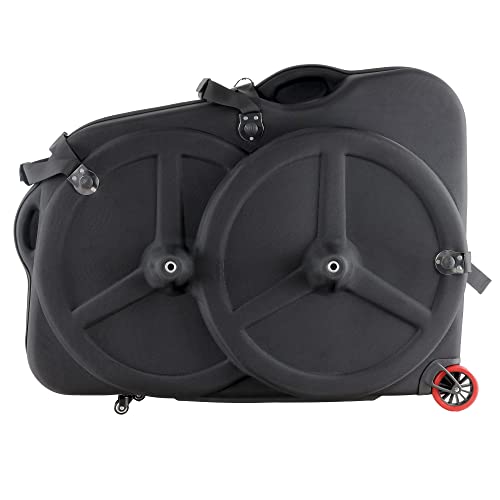
CyclingDeal Bike Travel Case – 700c Bikes – Bicycle Air Flights Travel Hard Case Box Bag EVA Material Lightweight & Durable with TSA Lock – Great for Road Bike -Transport Equipment Pro
COMPATIBILITY: This case is suitable for 700C road bikes with QR and Thru axles wheels. It is NOT…
As an affiliate, we earn on qualifying purchases.
As an affiliate, we earn on qualifying purchases.
Conclusion
Now that you know how to pack your bike for flights, you’ll save time and avoid extra fees. Remember, over 80% of travelers find properly packed bikes arrive without damage, so take your time. With a little prep, your bike will be ready for adventure wherever you go. Safe travels, and enjoy exploring new places on two wheels—your journey starts with the perfect packing!

Foam Wrap Roll 10 Inch Wide x 50 FT Length Packing Foam Roll for Moving Supplies and Protection for Fragile, Cushioning Foam Packing Sheets for Wrapping Dish Packing Material
PERFECT CHOICE – Come with 1 Roll Dish Cushion Foam Roll. Dimensions: 10 inches width x 590 inches…
As an affiliate, we earn on qualifying purchases.
As an affiliate, we earn on qualifying purchases.
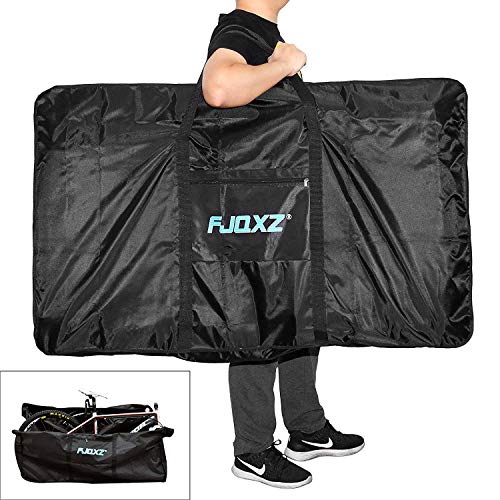
Huntvp Bike Travel Bag Bicycle Transport Carrying Case with a Carry Bag for 26-29inch Folding Bike Foldaway Bicycle
Material: Made from 1680D nylon fabric for durability and longevity.
As an affiliate, we earn on qualifying purchases.
As an affiliate, we earn on qualifying purchases.