
When you climb standing, you engage your core, legs, and upper body more to maintain stability and generate power, especially with larger muscle groups like your quadriceps, glutes, and calves. This position allows for greater force on steep terrain but increases joint stress on knees and hips. Sitting reduces joint load and conserves energy, shifting focus to your core for stability. Understanding these biomechanics helps you optimize your technique and prevent injury, with more insights to discover ahead.

Get sports gear delivered free with Prime
- Fast, free delivery on millions of items
- Prime Video, Amazon Music and more included
- Member-only deals all year
Key Takeaways
- Standing climbing engages larger muscle groups like quadriceps and glutes, producing more force but increasing joint stress.
- Seated climbing reduces joint load and conserves energy, relying more on core stability and leg muscles for sustained effort.
- Proper biomechanics in both positions optimize power transfer and minimize injury risks during prolonged cycling.
- Standing requires dynamic balance and core engagement, while seated emphasizes stability and controlled muscle activation.
- Alternating between positions enhances muscle engagement, reduces fatigue, and manages joint stress for improved performance.
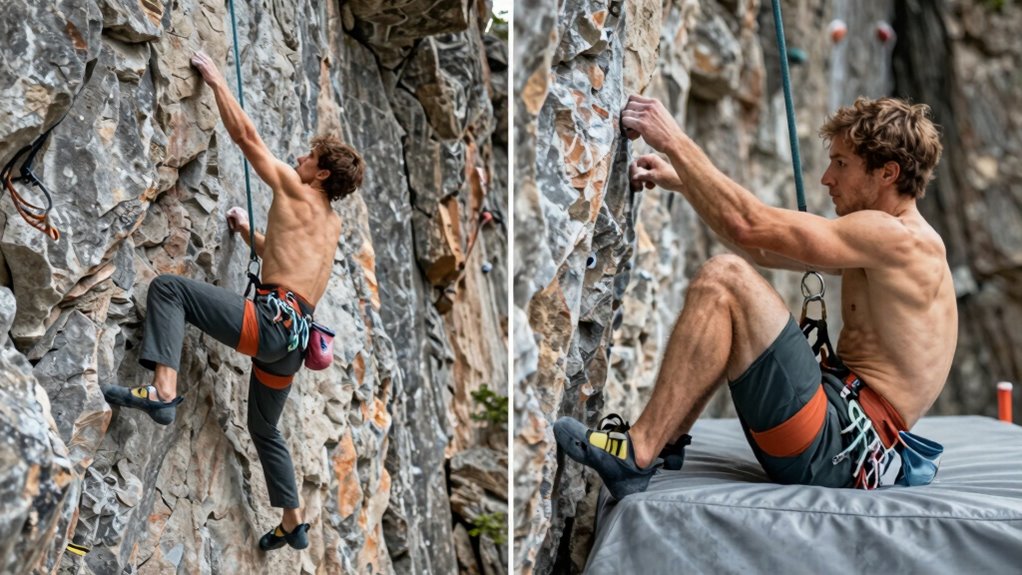
Climbing techniques vary considerably depending on whether you’re standing or seated, and understanding the biomechanics behind each approach can help maximize performance and reduce injury risk. When you’re standing on the pedals, your body relies heavily on muscle engagement from your core, legs, and upper body to maintain stability and generate power. This position allows you to utilize larger muscle groups, such as your quadriceps, glutes, and calves, which can produce more force and help you tackle steep or challenging sections. However, the increased muscle engagement also means your joints, especially your knees and hips, endure more stress. If you’re not careful, this can lead to overuse injuries or strain, particularly if your technique isn’t ideal or if you’re climbing for extended periods. Incorporating proper climbing technique can further help to reduce these risks. Additionally, maintaining proper bike fit and posture plays a crucial role in optimizing biomechanics and minimizing injury.
Seated climbing shifts the biomechanics considerably. By sitting, you reduce the amount of muscle engagement needed to maintain balance, allowing your legs to focus solely on power delivery. This position places less joint stress on your knees and hips because your body is more supported and your weight is distributed more evenly through the saddle. As a result, seated climbing often feels less taxing on your joints, making it a good choice for conserving energy during long climbs. Yet, since your upper body is less involved in stabilization, you rely more on your core muscles to keep your torso steady, especially when climbing steep grades. This increased core demand can help prevent fatigue but also requires you to maintain good posture to avoid unnecessary strain. Proper core strength can significantly improve your seated climbing efficiency and reduce discomfort. Developing targeted muscle engagement can enhance your stability and power transfer in both positions. Moreover, understanding these biomechanics can help you tailor your training regimen to improve overall climbing performance.
Both positions have their advantages and trade-offs. Standing climbing enables you to use the full range of muscle engagement, which can increase power and handle steep terrain effectively. However, it also amplifies joint stress, particularly if you overuse it or lack proper technique. Seated climbing, on the other hand, minimizes joint stress and conserves energy, but it demands greater core stability and can be less effective on very steep sections. When switching between the two, pay attention to your body’s signals. Proper technique and gradual adaptation can help you leverage each position’s benefits while minimizing injury risks. Balancing standing and seated efforts allows you to optimize muscle engagement and manage joint stress, ultimately improving your climbing efficiency and endurance.
ergonomic bike saddle for climbing
As an affiliate, we earn on qualifying purchases.
As an affiliate, we earn on qualifying purchases.
Frequently Asked Questions
How Does Climbing Posture Affect Long-Term Joint Health?
Your climbing posture considerably impacts long-term joint health by influencing joint stress and muscular engagement. A poor posture can increase joint stress, leading to wear and tear over time, especially in knees and hips. Proper form promotes balanced muscular engagement, reducing strain on joints. Consistently maintaining good posture encourages healthier joint function, preventing chronic pain or injury, and supporting sustained climbing performance.
What Are the Psychological Impacts of Standing Versus Seated Climbing?
Standing climbing acts like a mental marathon, challenging your confidence and building resilience with each effort. It pushes you to confront fears and embrace a sense of mastery, boosting your mental strength. Seated climbing, on the other hand, offers a calmer mental space, fostering focus and reducing anxiety. Your choice shapes your psychological landscape—either fueling your confidence or providing a soothing environment for reflection and growth.
How Do Different Climbing Surfaces Influence Biomechanics?
Different climbing surfaces markedly influence your biomechanics. A surface with better grip allows you to exert more force efficiently, reducing fatigue. The climbing angle also plays a role—steeper angles require more upper body strength, altering your movement mechanics, while gentler slopes engage your legs more. You’ll find that surface grip and angle together determine your stability, energy expenditure, and overall technique, shaping how you approach each climb.
Are There Specific Training Methods to Optimize Standing or Seated Climbing?
You can optimize your climbing by tailoring your training, like a chef perfecting a recipe. For standing climbing, focus on muscle engagement through explosive movements and plyometrics, while practicing technique modifications that boost power. Seated climbing calls for endurance drills and controlled movements to enhance sustained muscle engagement. Incorporate specific drills, and you’ll turn your muscles into a well-oiled machine, ready to conquer any wall — or at least look impressive trying.
How Does Fatigue Differently Impact Biomechanics in Each Position?
When you get fatigued, standing climbing tends to challenge your muscle endurance more, especially in your legs and core, making your movement less stable. In seated climbing, grip strength becomes more critical as fatigue sets in, affecting your ability to hold onto holds firmly. Fatigue impacts biomechanics differently in each position, so focusing on specific muscle endurance and grip strength training can help you perform better and last longer.
Conclusion
So, when choosing between standing and seated climbing, consider how each position impacts your muscle engagement and energy use. Standing climbing demands more core and leg strength, boosting power but increasing fatigue. Seated climbing offers stability and reduced strain, perfect for endurance. But which approach truly aligns with your goals? Could alternating between both positions optimize your overall performance? Ultimately, understanding these biomechanics helps you climb smarter, not just harder, revealing your full potential on every ascent.
NFL season / tailgating Picks
team gear
As an affiliate, we earn on qualifying purchases.