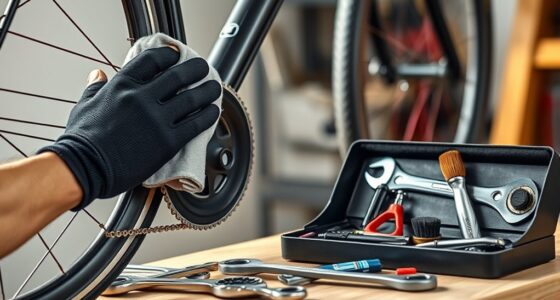

Cleaning your bike too often can damage paint, strip protective layers, and wash away essential lubricants, leading to rust, corrosion, and mechanical issues. Harsh chemicals and aggressive scrubbing can chip paint and expose metal, while frequent cleaning may cause components to seize up or become noisy. If you want to keep your bike in top shape without causing harm, it’s important to find the right balance and use proper techniques. Keep going to learn how to do it right.

Get sports gear delivered free — and shop member deals
- Fast, free delivery on millions of items
- Access to Prime Big Deal Days deals on October 6–7
- Prime Video, Amazon Music and more included
Key Takeaways
- Over-cleaning can strip protective wax, exposing paint and metal to dirt, moisture, and UV damage.
- Frequent washing may remove essential lubricants, causing mechanical parts to stiffen or seize.
- Excessive cleaning risks damaging delicate paintwork with harsh chemicals or abrasive tools.
- Repeated stripping of protective coatings accelerates rust formation and paint oxidation.
- Over-maintenance can lead to unnecessary wear and increased repair costs if proper techniques aren’t used.

Cleaning your bike regularly is essential to keep it running smoothly, but doing it too often can actually cause more harm than good. When you over-clean, you risk damaging the delicate paintwork, especially if you use harsh chemicals or abrasive tools. Scrubbing aggressively or using high-pressure water can chip away at the paint, exposing the metal underneath to rust and corrosion. Once the paint is compromised, your bike’s appearance suffers, and it becomes more vulnerable to environmental damage. It’s a fine balance—you want to keep your bike clean without stripping away protective coatings.
Over-cleaning can damage paintwork and expose metal, increasing rust risk—balance is key for bike maintenance.
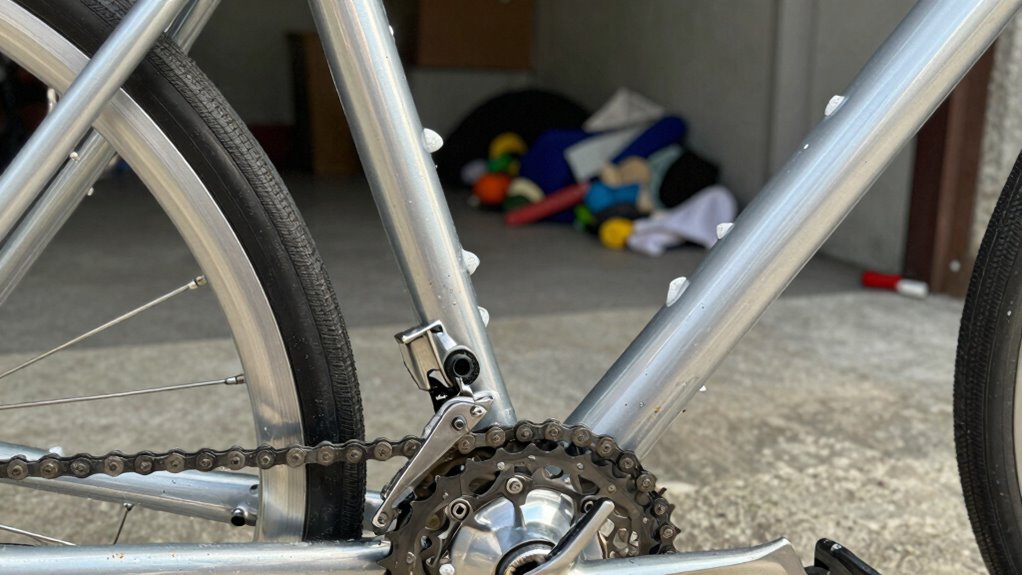
Another common issue caused by excessive cleaning is lubrication problems. Bike components like chains, derailleurs, and brake pivots rely on a thin film of lubricant to function properly. When you clean too frequently or use strong cleaning agents, you might wash away this essential lubrication. Without proper lubrication, moving parts can become stiff, squeak, or even seize up, reducing your bike’s efficiency and increasing wear and tear. This can lead to costly repairs and decreased safety during rides. Instead of overzealously scrubbing every part, focus on cleaning only the areas prone to dirt buildup and use appropriate lubricants afterward to maintain smooth operation. Additionally, using proper cleaning techniques can help prevent stripping away protective layers and preserve the bike’s integrity. Regularly inspecting your bike for signs of wear and preventative maintenance can save you time and money in the long run. Engaging in routine bike care practices ensures that small issues don’t develop into major problems.
Furthermore, frequent cleaning can sometimes encourage the removal of protective wax or sealants applied to your bike’s paint. These protective layers act as barriers against dirt, moisture, and UV rays. When you strip them away repeatedly, your bike’s paint becomes more susceptible to scratches, fading, and oxidation. Over time, this deterioration not only diminishes your bike’s aesthetic appeal but also accelerates the development of rust on exposed metal parts. To prevent this, consider applying a fresh coat of wax after cleaning, which provides an extra shield against environmental damage. Proper cleaning techniques can help preserve these protective layers and extend your bike’s lifespan. Neglecting other vital aspects of maintenance, like checking tire pressure or brake adjustment, can undermine the benefits of a clean bike.
As an affiliate, we earn on qualifying purchases.
Frequently Asked Questions
Can Frequent Cleaning Damage My Bike’s Paint or Finish?
Yes, frequent cleaning can damage your bike’s paint or finish. Using harsh chemicals or abrasive scrubbers might accelerate paint deterioration and cause finish erosion. Even regular washing with gentle products can lead to tiny scratches, which over time, weaken the protective coating. To prevent this, opt for mild cleaners, soft brushes, and gentle rinsing. Proper care ensures your bike stays shiny without risking unnecessary damage to its paint or finish.
Is There an Optimal Frequency for Cleaning Different Bike Parts?
Sure, because your bike’s parts secretly thrive on chaos, right? The ideal cleaning frequency varies: wipe down the chain after every ride, clean the frame weekly, and check the drivetrain monthly. A balanced bike cleaning schedule prevents buildup without stripping paint or causing wear. Keep it consistent, but don’t obsess—over-cleaning can be just as harmful as neglect. Find your rhythm for each part, and your bike will thank you.
What Cleaning Products Should I Avoid to Prevent Damage?
You should avoid harsh chemicals like bleach or degreasers with strong solvents, as they can damage your bike’s paint and components. Also, steer clear of abrasive pads that might scratch the frame or delicate parts. Instead, opt for bike-specific cleaners and soft brushes or cloths. Using gentle, appropriate products helps preserve your bike’s finish and functionality, ensuring it stays in great shape without unintended damage.
How Can I Tell if I’Ve Over-Cleaned My Bike?
You can tell you’ve over-cleaned your bike if it looks excessively shiny or new, but still feels sticky or squeaky. Over cleaning habits may strip protective coatings or lubricants, leading to unnecessary maintenance. Watch for signs like dried-out chain lube or dull paint. If you’re cleaning more often than riding, you’re likely overdoing it. Remember, cleaning is essential, but excessive efforts can cause more harm than good.
Does Cleaning Too Often Affect the Bike’s Performance?
Cleaning too often can slightly impact your bike’s performance if you strip away essential lubricants or damage delicate components. While regular bike maintenance is crucial, overly aggressive cleaning routines might cause wear. Visualize your bike as a finely-tuned machine—too much scrubbing can remove protective layers. To keep it running smoothly, balance your cleaning routine, use proper products, and avoid over-cleaning, ensuring your bike stays in top condition without unnecessary wear.
Conclusion
Cleaning your bike too often is like over-watering a plant—it can do more harm than good. While it’s important to keep your bike in top shape, excessive cleaning can strip away protective lubricants and cause damage. Find a balance, and treat your bike like a delicate dance partner—gentle, attentive, and just enough to keep everything moving smoothly. Remember, sometimes less is more, and a little restraint can keep your bike running happily for miles to come.
NFL season / tailgating Picks
team gear
As an affiliate, we earn on qualifying purchases.