
TL;DR

Get sports gear delivered free with Prime
- Fast, free delivery on millions of items
- Prime Video, Amazon Music and more included
- Member-only deals all year
Urbi et Orbi has developed a method to reuse industrial rubble, including crushed concrete waste, to create new, contemporary concrete objects. This approach emphasizes circularity and sustainability in design.
Urbi et Orbi has introduced a new collection of concrete objects crafted entirely from recycled industrial rubble, marking a significant step in sustainable design. This innovative approach repurposes waste materials, including crushed concrete and airborne residues, into durable, contemporary monoliths that challenge traditional perceptions of concrete as a rigid, industrial medium.
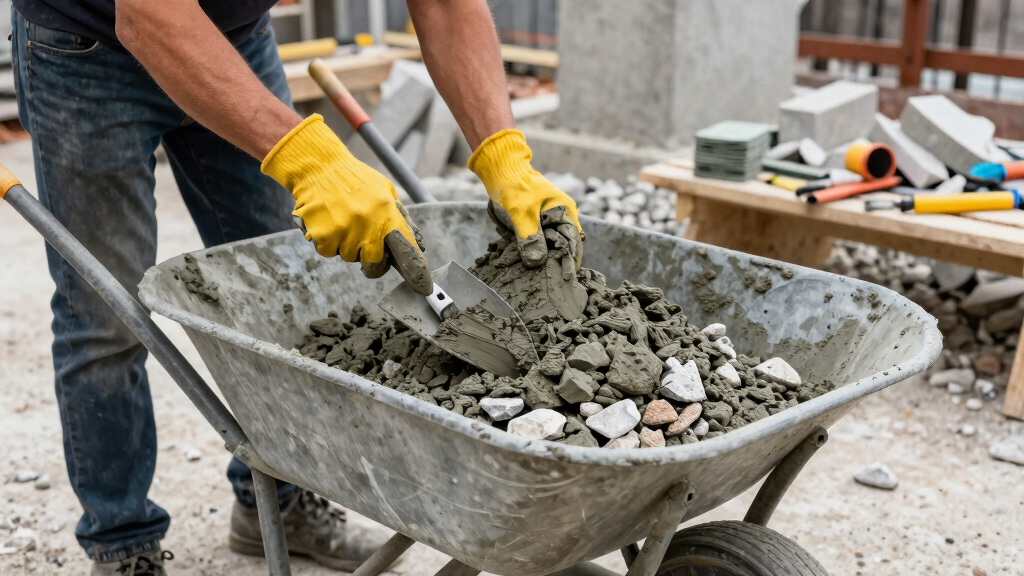
Founded in 2012, Urbi et Orbi’s studio in Athens has long explored the organic potential of concrete, blending raw earth-born components with innovative techniques. Their latest project leverages the studio’s Zero Waste Project, launched in 2020, which intercepts 100% of internal industrial waste from their workshops. Heavy concrete rubble is crushed to replace traditional gravel, while dust from sawing and grinding is captured and reused as fine fillers in new mixes. The result is objects containing between 20% and 80% recycled components, producing textures that are both contemporary and unpredictable.
The studio’s experimental approach extends to design objects such as the Saroma side table, which embeds fibers from traditional straw brooms into textured concrete, and the Legante series, which incorporates mineral scraps from local marble and ceramic workshops. These pieces reflect a cultural stratification of materials, transforming waste into aesthetic and functional objects. The Oikos side table, designed by Sara Ricciardi, further exemplifies this circular process, utilizing zero-waste methods to produce integrated terrazzo accents in earth tones, translating historic forms into modern monoliths.
Why Upcycling Industrial Waste Matters for Design
This development demonstrates how sustainable practices can redefine material use in architecture and design. By transforming industrial rubble into high-quality, aesthetic objects, Urbi et Orbi showcases a circular approach that reduces waste and minimizes environmental impact. This approach could influence industry standards, encouraging broader adoption of recycled materials in contemporary design and construction, thus contributing to a more sustainable future.
As an affiliate, we earn on qualifying purchases.
Background on Urbi et Orbi’s Circular Design Approach
Urbi et Orbi, based in Athens, has been pioneering innovative concrete applications since 2012. The studio emphasizes environmental responsibility through its Zero Waste Project, which intercepts industrial waste and incorporates it into new products. Their experimentation with recycled concrete and mineral scraps aligns with a broader movement toward circular economy principles in design, aiming to extend the lifecycle of materials and reduce reliance on virgin resources.
Previous collections have incorporated cultural and local materials, such as fibers from traditional brooms and mineral scraps from nearby workshops, blending craftsmanship with sustainability. Their work reflects a Mediterranean ethos of harmony between built and natural environments, now extended through upcycling and waste reduction.
“Urbi et Orbi’s innovative use of industrial rubble exemplifies how circular economy principles can be integrated into high-design objects.”
— an anonymous researcher
Uncertainties About Long-term Durability and Scalability
It is not yet clear how these upcycled concrete objects perform over extended periods, particularly in terms of structural integrity and weather resistance. Additionally, the scalability of this process for large-scale construction or mass production remains uncertain, as the current focus appears to be on design objects and small series.
Next Steps for Broader Adoption and Testing
Urbi et Orbi plans to further test the durability of their recycled concrete objects through long-term studies and real-world applications. They may also explore scaling their process for larger architectural projects, potentially influencing industry standards for sustainable construction materials. Public exhibitions and collaborations with industry partners are expected to showcase the practical viability of their approach.
Key Questions
How does Urbi et Orbi ensure the quality of recycled concrete?
The studio uses a combination of crushed industrial rubble and captured dust from their workshops, integrating these into their mixes with careful control of proportions to maintain durability and aesthetic qualities.
Can this recycled concrete be used in structural applications?
Currently, the focus is on design objects and small-scale applications. Further testing is needed to confirm suitability for structural use in large buildings or infrastructure.
What types of waste materials are used in the process?
Heavy concrete rubble from industrial waste and airborne residues from sawing and grinding are the primary materials reused, along with mineral scraps from local marble and ceramic workshops.
Is this approach commercially viable?
While promising for design objects, the commercial viability for large-scale construction remains under evaluation, with ongoing research into durability and process scalability.
How does this project impact environmental sustainability?
By repurposing 100% of waste materials from their workshops, Urbi et Orbi reduces landfill waste and minimizes the extraction of new raw materials, aligning with circular economy principles.
Source: designboom
Halloween Picks
halloween
As an affiliate, we earn on qualifying purchases.