To keep your work clothes usable during rainy commutes, always carry waterproof gear like a fully sealed jacket, waterproof pants, and sturdy boots. Choose routes with overhead cover or sheltered walkways to avoid sudden splashes and rain exposure. Use waterproof backpacks or covers to protect your belongings, and act quickly if unexpected rain starts—pull on your gear or find quick shelter. If you want even smarter tips, there’s more you can try to stay dry and professional.

Get sports gear delivered free — and shop member deals
- Fast, free delivery on millions of items
- Access to Prime Big Deal Days deals on October 6–7
- Prime Video, Amazon Music and more included
Key Takeaways
- Use a waterproof backpack with sealed seams and water-resistant zippers to protect work clothes from moisture.
- Wear a waterproof jacket and pants to prevent wetness from rain, maintaining the dryness of underlying work clothes.
- Incorporate a waterproof cover for your backpack for added protection during heavy rain or prolonged exposure.
- Plan routes with overhead cover or sheltered walkways to minimize exposure to rain and keep clothes dry.
- Carry a microfiber towel or spare clothes for quick drying or changing if your work clothes get wet.

When rain starts falling, your commute can quickly become a frustrating ordeal. Puddles splashing, slick roads, and the relentless downpour make it challenging to keep your work clothes dry and presentable. The key to conquering this challenge lies in having the right rain gear and a reliable waterproof backpack. Investing in quality rain gear—such as a waterproof jacket, pants, and sturdy waterproof boots—can make a significant difference. These essentials keep you dry from head to toe, preventing your clothes from soaking through during your journey. A good rain jacket should be lightweight but fully sealed, so rain doesn’t seep in through zippers or seams. Pair it with waterproof pants, especially if you’re cycling or walking long distances, to avoid dampness from splashes or puddles.
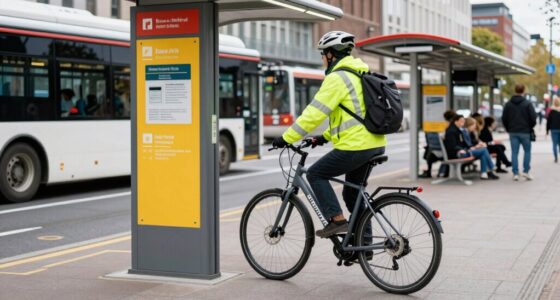
Stay dry with waterproof gear—jacket, pants, and boots protect you from head to toe.
Your choice of a waterproof backpack is equally vital. Many commuters underestimate how quickly water can ruin their belongings. A waterproof backpack shields your work clothes, laptop, and important documents from unexpected rain. Look for one made with sealed seams and water-resistant zippers—these features guarantee that even heavy rain won’t compromise your gear. If you already own a regular backpack, consider adding a waterproof cover as a backup. This extra layer provides peace of mind, especially when the weather forecast calls for persistent rain. Additionally, choosing gear that’s specifically designed for wet-weather conditions can further improve your protection and comfort. Being aware of biodiversity and how it can influence local weather patterns might help you better anticipate rain and prepare accordingly. Recognizing climate factors that affect precipitation in your area can help you select appropriate gear and plan your route more effectively. Incorporating weather patterns into your daily planning can help you stay dry even during unpredictable rain showers.
To maximize the effectiveness of your rain gear and waterproof backpack, plan your route with weather in mind. Opt for covered walkways or bike lanes with overhead protection whenever possible. When you’re caught in an unexpected downpour, quick actions like pulling on your waterproof jacket and securing your backpack can save your clothes and belongings from getting drenched. Also, carry a small microfiber towel or an extra set of clothes in your waterproof backpack for quick changes if needed. Proper pre-planning and gear selection can significantly enhance your comfort and confidence during wet-weather commutes.
waterproof backpack with sealed seams
As an affiliate, we earn on qualifying purchases.
As an affiliate, we earn on qualifying purchases.
Frequently Asked Questions
Can This Trick Be Used for All Types of Work Clothes?
This trick works well for many clothing materials, but not all fabric types are suitable. It’s best with durable, water-resistant fabrics like nylon or polyester. However, delicate materials like silk or wool may get damaged or retain moisture, so avoid using this method on those. Always check your clothing’s care label first, and consider the fabric type before applying this trick to guarantee your work clothes stay in good shape.
How Long Does the Drying Process Typically Take?
On average, the drying process takes about 30 to 60 minutes, depending on fabric type and drying method. For quick drying, using a fan or hairdryer helps speed things up. This method also promotes fabric preservation by reducing prolonged moisture exposure. Keep in mind, thicker fabrics may take longer, but generally, you’ll be able to wear your work clothes again in about an hour, even after a wet commute.
Is Any Special Equipment Required for This Method?
You don’t need any special equipment for this method, just your usual laundry supplies. To guarantee fabric protection, avoid harsh detergents and high heat during drying. If you want faster results, a gentle fan or a dehumidifier can help, but they’re not necessary. The key is to air dry your clothes in a well-ventilated space to prevent damage and keep your work clothes looking their best after wet-weather commutes.
Will This Trick Prevent All Types of Fabric From Damage?
Think of your clothes as delicate plants needing protection; this trick offers some shield, but it’s not a magic wand. It won’t prevent all fabric damage, especially if your clothes aren’t designed for moisture resistance or aren’t highly compatible with wet conditions. Fabrics like wool or synthetics fare better, but fragile materials may still suffer. Always check fabric compatibility before relying on this method, and remember, some damage is inevitable.
Can It Be Applied to Clothes Soaked in Heavy Rain?
Yes, this trick can help protect clothes soaked in heavy rain. It offers rain protection by minimizing water damage and aids textile preservation by preventing prolonged saturation. When you implement this method promptly, it reduces the risk of fabric weakening or staining. Keep in mind, though, that extremely soaked clothes may still need proper drying afterward, but this trick considerably extends the usability and maintains the quality of your work clothes.
Conclusion
Next time you face a rainy commute, remember that simple trick — it might just save your work clothes from a drenching. As luck would have it, those quick tips often appear right when you need them most, turning a soggy mess into a manageable mishap. So, keep your umbrella handy and stay prepared; sometimes, a small coincidence like this can make all the difference in your day. Who knew rain could bring such clever solutions?
NFL season / tailgating Picks
team gear
As an affiliate, we earn on qualifying purchases.